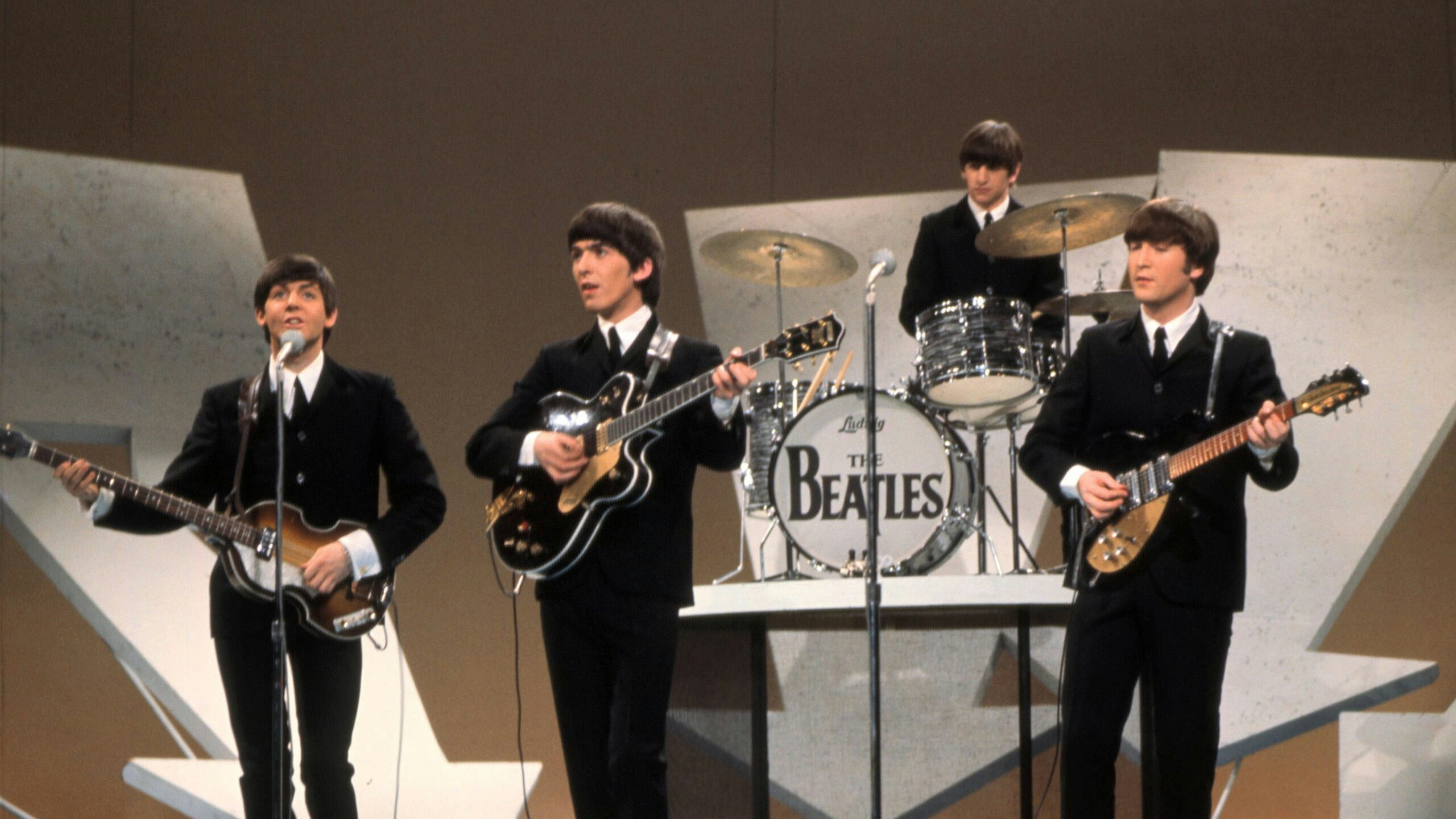
When John, Paul, George, and Ringo stepped onto the Ed Sullivan stage in 1964, America didn't just hear a new sound—they looked at a complete anomaly. Their hair fell forward across their foreheads, completely hiding their ears and eyebrows. In an era when men favored military-style buzz cuts and slicked-back pompadours, the Beatles hairstyle looked positively radical. It wasn't just a quirky choice of haircut; it was a visual shockwave that permanently altered male grooming standards across the globe.
Before the Fab Four popularized the mop-top, post-war masculinity was defined by strict conformity. Hair was short, tidy, and heavily managed with pomade or hair tonic. The Beatles shattered this norm entirely by accident. During their grueling residency in Hamburg, Germany, in the early 1960s, the young musicians lacked the time and money for regular barber visits. They let their hair grow out naturally, adopting a shaggy fringe inspired by artists and bohemian youths they encountered abroad.
The Anatomy of the Mop-Top
What made the look so striking was its deliberate rejection of traditional barbering geometry. Instead of fading cleanly up the sides and parting neatly on the side, the Beatles cut relied on a uniform shape that treated the head as a single canvas.
Key structural elements of the original style included:
- A heavy, straight-across fringe that grazed the eyebrows or upper bridge of the nose.
- Equal length distributed heavily across the top and crown of the head.
- Tapered or blocked sides that dropped straight down over the ears without an abrupt fade.
- A low, rounded neckline that broke every rule of contemporary corporate grooming.
Maintenance was surprisingly simple compared to the pomade-heavy styles of the 1950s, though it required frequent trims to keep the fringe out of the eyes. This deceptive simplicity made it instantly replicable for millions of teenagers who wanted to rebel against their parents' generation using nothing more than a pair of kitchen scissors.
Cultural Shockwaves and Parental Panic
The reaction from older generations was swift and hostile. Parents, teachers, and politicians viewed the haircut as a direct threat to public decency, cleanliness, and order. School administrators across North America and Europe banned the style outright, suspending students who refused to visit a barber.
This backlash only fueled the fire. For teenage boys, the haircut became an effortless badge of tribal allegiance. You didn't even need to own a record player to participate in Beatlemania; you just needed to let your hair grow over your ears. It proved that youth culture could organize visually on a mass scale, independent of adult approval.
Barbershops found themselves entirely unprepared for the shift. Traditional barbers who spent decades mastering the high-and-tight suddenly faced lines of young men demanding the "Beatles cut." Manufacturers of men's hair pomades watched their sales dip as a generation abandoned greasy styling products in favor of a natural, tousled look that dried on its own.
The Evolution of the Look
The Beatles didn't keep the exact same haircut throughout their career. As their music evolved from catchy pop anthems to psychedelic experimentation, their hair changed right along with them.
By 1965, the locks grew slightly longer and shaggier, pushing past the collar. By the time Sgt. Pepper's Lonely Hearts Club Band dropped in 1967, the original mop-top had morphed into shoulder-length hair and Victorian facial hair. Yet, the initial 1964 silhouette remained etched in the public consciousness as the defining aesthetic of the early sixties.
This trajectory established a new blueprint for pop stars and counterculture figures alike. Musicians realized that hair was a powerful narrative tool. You could signal your worldview, your politics, and your artistic alignment simply by letting it grow.
Lasting Legacy in Modern Grooming
The ripples of that Hamburg hotel room experiment are still visible in modern barbering. The indie rock fringes of the 1990s, the Britpop cuts of the 2000s, and the modern textured crops popular today all trace their lineage directly back to the Fab Four.
Barber shops today routinely pull inspiration from mid-century retro aesthetics, blending the clean-tapered sides of the traditional era with the loose, forward-swept top pioneered in the early sixties. By proving that men could experiment with longer, softer hairstyles without losing their cultural footing, the Beatles cracked open the door for modern male self-expression.
To explore more about how the band shaped the era, read the historical archives at The Rock and Roll Hall of Fame or check out cultural studies via The British Library.
Frequently Asked Questions
Who originally created the Beatles hairstyle?
The exact origin is often credited to a German photographer and friend of the band named Astrid Kirchherr, whose then-boyfriend Stuart Sutcliffe first adopted a similar fringe. The band members gradually copied the look because it was easy to manage while living on the road in Hamburg.
Did the Beatles wear wigs?
No. Despite persistent urban legends from their touring days claiming they wore synthetic hairpieces on television, contemporary photographs and band accounts confirm the hair was entirely real.
Why was the haircut considered so rebellious in the 1960s?
For decades, short hair on men was tied to hygiene, discipline, military service, and respectability. Hair falling over the forehead and ears signaled an intentional rejection of those conservative societal values.
How did the haircut impact the beauty industry?
It forced traditional barbers to learn new cutting techniques and sparked a massive boom in unisex hair salons and specialized men's styling products that favored natural movement over stiff lacquer.



