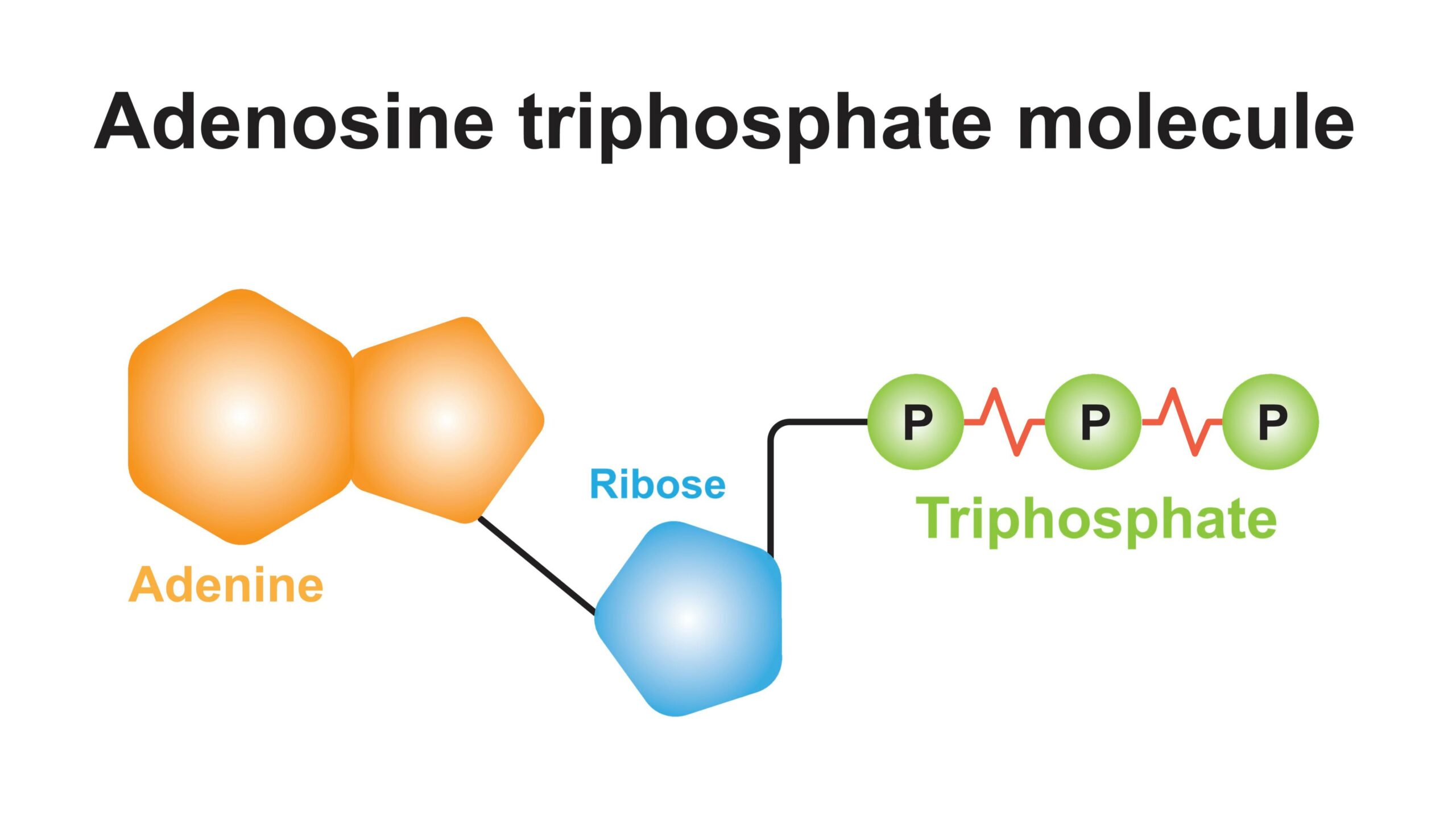
Adenosine triphosphate (ATP) hydrolysis is the core chemical reaction that drives biological work across all living systems. When a cell breaks the terminal phosphate bond of an ATP molecule, it releases stored free energy to power mechanical movement, active transport, and biochemical synthesis. For decades, researchers viewed this process strictly through a physiological lens. Today, industrial scientists and bioengineers are harnessing the mechanics of ATP hydrolysis to build artificial molecular machines, optimize biocatalysis, and pioneer targeted nanotechnologies.
Understanding how this cellular fuel transforms raw biochemical energy into controllable work requires looking past basic textbook definitions. Industrial applications now manipulate the precise kinetic pathways of ATP-dependent enzymes—such as kinesins, ATPases, and molecular pumps—to engineer synthetic systems that mimic nature's efficiency. By decoding the structural transitions that occur during phosphate cleavage, laboratories are scaling biological reactions for manufacturing, diagnostics, and advanced materials.
The Biochemical Mechanics of ATP Hydrolysis
At the molecular level, ATP consists of an adenosine molecule bonded to a chain of three phosphate groups. The bonds linking these phosphates are thermodynamically unstable yet kinetically stable, meaning they don't break down spontaneously without a catalyst. When an enzyme like an ATPase binds to ATP, it stabilizes the transition state and accelerates the cleavage of the gamma-phosphate group.
This reaction yields adenosine diphosphate (ADP), an inorganic phosphate ion ($P_i$), and a standard Gibbs free energy release of roughly 30.5 kJ/mol under physiological conditions. Cells couple this exergonic reaction to endergonic processes that would otherwise be thermodynamically unfavorable. To get more information on this issue, detailed reporting can be read on The New York Times.
- Phosphate Transfer: Enzymes frequently transfer the released phosphate group directly to a substrate molecule, altering its conformation and reactivity.
- Conformational Switching: Motor proteins undergo massive structural changes as ADP and $P_i$ depart, allowing them to step along cytoskeletal tracks.
- Ion Gradients: Transmembrane pumps utilize the liberated energy to drive ions against their electrochemical gradients, maintaining cellular homeostasis.
Industrial Applications in Bionanotechnology
Engineers are moving past traditional chemical synthesis by adopting cell-free systems that rely on controlled ATP hydrolysis. Because conventional manufacturing often requires high temperatures or toxic organic solvents, biomanufacturing uses enzyme cascades powered by recycled ATP to synthesize complex pharmaceuticals and fine chemicals with high stereospecificity.
Nanotechnology applications frequently utilize biological motor proteins attached to synthetic substrates. By anchoring molecular motors like kinesin or myosin to solid supports, devices can transport cargo across microfluidic chips. These bio-electronic hybrid systems rely entirely on an optimized supply of ATP hydrolysate to power microscopic conveyor belts, enabling precise sorting of DNA strands and proteins at the nanoscale.
For deeper insights into how cellular machinery is standardized for industrial use, review guidelines from the National Institute of Standards and Technology on biotechnology metrics.
Overcoming Kinetic Bottlenecks in Synthetic Systems
Replicating cellular efficiency outside a living membrane presents distinct technical challenges. Isolated enzymes often degrade rapidly, and maintaining a continuous supply of high-energy cofactors without expensive stoichiometric inputs remains difficult.
[Raw Substrate] --> (ATP-Dependent Enzyme) --> [Target Product]
                          ^
                          | (Regeneration Loop)
                    [Polyphosphate / Acetate Kinase]
To solve this, bioengineers deploy enzymatic regeneration modules. Instead of adding stoichiometric amounts of costly ATP, systems use secondary enzymes—such as acetate kinase or polyphosphate kinase—to constantly phosphorylate ADP back into ATP using cheap secondary substrates. This closed-loop configuration prevents product inhibition caused by ADP accumulation and keeps reaction rates steady.
Common Engineering Mistakes
- Ignoring Thermal Limits: Most ATP-dependent enzymes denature above specific temperature thresholds, halting the hydrolysis cycle.
- Improper Stoichiometry: Failing to balance regeneration enzyme concentrations leads to immediate ATP depletion.
- Neglecting Chelation: Free magnesium ions ($Mg^{2+}$) are required to stabilize ATP in solution; omitting them stops enzymatic turnover entirely.
Scaling Up: From Benchtop to Bioreactor
Transitioning ATP-driven processes from microfluidics to industrial bioreactors requires precise control over mass transfer and shear stress. Large agitators can physically shear delicate protein structures, destroying the active sites responsible for nucleotide binding.
Modern facilities utilize airlift bioreactors or immobilization techniques, binding enzymes to porous silica beads or magnetic nanoparticles. This immobilization protects the protein structure from hydrodynamic shear and allows easy separation from the final product stream, reducing purification costs.
Frequently Asked Questions
What happens when a system runs out of ATP?
When ATP levels drop drastically, cells or synthetic systems enter energy failure. Membrane potentials collapse, active transport ceases, and motor proteins stall in rigid rigor states, leading to structural degradation or cell death.
Can ATP hydrolysis occur without enzymes?
Yes, spontaneous non-enzymatic hydrolysis occurs in water, but the rate is extremely slow due to a high activation energy barrier. Enzymes accelerate this rate by factors of millions, making the energy immediately available for work.
How is industrial ATP recycling managed economically?
Using pure ATP for large-scale manufacturing is cost-prohibitive. Facilities use multi-enzyme regeneration cascades that convert cheap donor molecules, such as polyphosphate, back into usable ATP continuously during the reaction cycle.
What are the main limitations of cell-free biocatalysis?
Primary constraints include enzyme instability, sensitivity to pH fluctuations, and the complexity of managing multi-step cofactor recycling pathways under non-physiological conditions. Additional details on metabolic engineering standards can be found through the National Institutes of Health.



