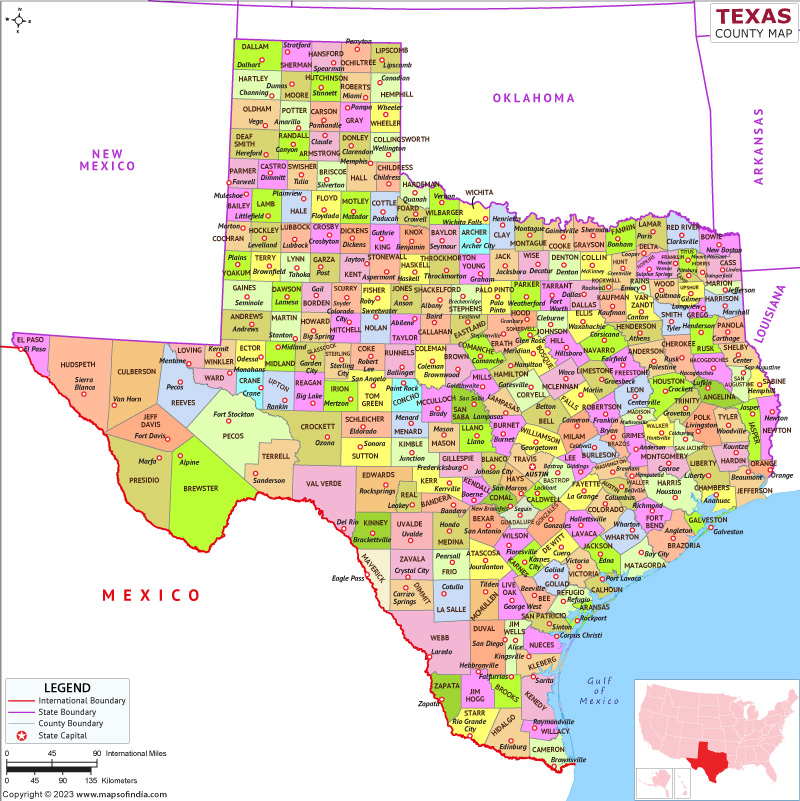
Most of Texas operates on Central Time, but the state's immense size creates unique geographical boundaries that split its counties across two distinct zones. Central Standard Time (CST) and Central Daylight Time (CDT) govern roughly ninety-seven percent of the population, covering major economic hubs like Houston, Dallas, Austin, and San Antonio. Meanwhile, the far western edge of the state, centered around El Paso and Hudspeth County, follows Mountain Standard Time (MST) and Mountain Daylight Time (MDT). This western sliver belongs to the same time zone as neighboring New Mexico, creating an intrastate time difference that catches many travelers off guard.
Understanding how Texas divides its hours requires looking past simple state lines and examining county-level legislation, historical railroad routes, and federal standard time boundaries. Whether you're coordinating cross-country shipments, planning travel through the Lone Star State, or scheduling remote meetings with Texas businesses, knowing the exact demarcation lines prevents costly scheduling errors.
The Dual Time Zone Breakdown of Texas
Texas is split between two of the four primary US time zones used in the contiguous United States. This division is established by federal law under the Department of Transportation, which sets the boundaries between Central and Mountain time zones within the state.
Central Time Zone Coverage
The overwhelming majority of Texas—254 counties in total—operates on Central Time. This zone spans from the Sabine River in the east to the rolling plains of West Texas, stretching all the way down to the Rio Grande Valley.
- Major Cities: Houston, Dallas, Austin, San Antonio, Fort Worth, Corpus Christi, and Amarillo.
- Commercial Impact: Because financial markets, major corporate headquarters, and government operations are concentrated in this zone, Central Time functions as the default business clock for the entire state.
Mountain Time Zone Coverage
Only a small fraction of West Texas operates on Mountain Time. This includes all of El Paso County and Hudspeth County, along with a small portion of northern Culberson County near the New Mexico border.
- Major City: El Paso.
- Geographical Context: El Paso is geographically closer to the Pacific Ocean than to Houston, making Mountain Time a logical extension of the Mountain West region. Residents here live on the exact same time as Ciudad Juárez across the border in Mexico and Las Cruces, New Mexico.
The Historic Boundary Shift: Culberson and Hudspeth Counties
The boundary between Central and Mountain time in Texas hasn't always been static. Historically, parts of West Texas shifted their official observance based on local economic ties and transportation corridors.
The most notable shifts occur near the Guadalupe Mountains. While El Paso and Hudspeth counties remain firmly in the Mountain Time Zone, commercial entities near the county lines often coordinate closely with Midland-Odessa, which sits squarely in the Central Time Zone. Travelers driving west along Interstate 10 encounter the time change just west of Van Horn in Culberson County, where signs mark the transition from Central to Mountain time.
For a deeper look at federal regulations governing these boundaries, you can review the official guidelines provided by the National Institute of Standards and Technology.
Daylight Saving Time Observance Across Texas
Texas observes Daylight Saving Time (DST) uniformly across both time zones. On the second Sunday in March, clocks spring forward one hour, and on the first Sunday in November, they fall back one hour.
Unlike states such as Arizona, which exempt themselves from the biannual switch, Texas adheres strictly to federal mandates. This consistency simplifies scheduling for airlines, freight carriers, and television networks operating within the state. However, the one-hour shift creates an intriguing daily phenomenon: during summer months, the westernmost corners of the state experience sunsets as late as 8:45 PM local time, given their combination of Mountain Daylight Time and their westernmost longitude.
Practical Impact on Travel and Business
Navigating two time zones within a single state creates specific logistical hurdles for logistics managers, commuters, and tourists.
- Scheduling Calls: If you're scheduling a meeting between an office in Dallas (Central Time) and a branch in El Paso (Mountain Time), remember that El Paso is one hour behind Dallas.
- Flight Connections: Major airports like Dallas/Fort Worth International (DFW) and George Bush Intercontinental (IAH) operate on Central Time, while El Paso International Airport (ELP) operates on Mountain Time. Double-check your departure and arrival tickets when booking multi-leg flights within the state.
- Border Commuting: Thousands of residents cross daily between El Paso, Texas, and Ciudad Juárez, Chihuahua. Because Mexico reformed its daylight saving rules in recent years, travelers must stay alert to temporary mismatches during seasonal transitions.
To check real-time official clocks and atomic time synchronization across these regions, consult the U.S. Naval Observatory for precise timekeeping data.
Frequently Asked Questions
Does all of Texas share the same time zone?
No. While the vast majority of Texas is on Central Time, El Paso and Hudspeth counties in West Texas are on Mountain Time, putting them one hour behind cities like Houston and Dallas.
What time zone is Austin, Texas in?
Austin is in the Central Time Zone. It observes Central Standard Time (CST) during the winter and Central Daylight Time (CDT) during the summer.
Why is El Paso on a different time zone than the rest of Texas?
El Paso is located in the far western corner of the state, geographically isolated from the major population centers of East and Central Texas. Its economy and geography are closely tied to New Mexico and Ciudad Juárez, Mexico, making Mountain Time a natural fit.
Do all counties in Texas observe Daylight Saving Time?
Yes. Every county in Texas shifts its clocks forward in March and backward in November in accordance with federal law.



