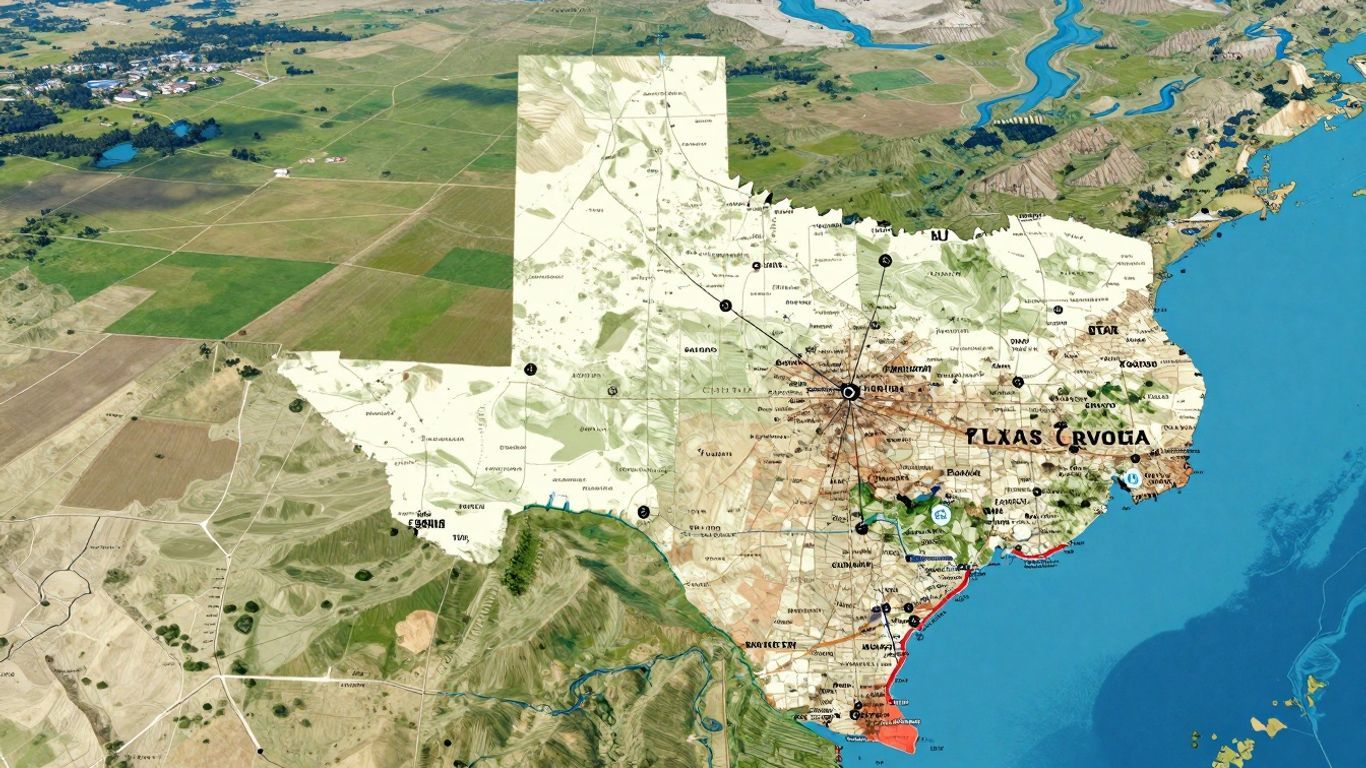
Texas is adding residents faster than almost anywhere else in the country, crossing the milestone of 31.7 million people. But understanding the Lone Star State's urban landscape requires looking past simple statewide totals. Growth isn't happening equally across the board; it's concentrating heavily in specific regional corridors, exploding in outer-ring suburbs, and changing the economic realities of both major metropolises and quiet rural outposts.
If you're tracking where people, jobs, and capital are moving, you have to look closely at how the Texas urban network actually functions. From the economic pull of the Texas Triangle to the rapid expansion of secondary cities, the state's geography is undergoing a structural shift.
The Powerhouse Core: The Texas Triangle
The foundation of modern Texas rests on the Texas Triangle—a massive megaregional grid anchored by Dallas-Fort Worth, Houston, San Antonio, and Austin. Connected by major interstate highways, this geometric shape holds the vast majority of the state's population and economic output.
Rather than functioning as isolated entities, these metro areas operate as an interconnected economic machine. When a tech firm moves its headquarters to Austin or a logistics hub expands in the outer edges of Dallas, it ripples across the entire regional network.
- Dallas-Fort Worth: Serves as a dominant corporate relocation hub, financial center, and logistics crossroads. Fort Worth recently crossed the one million population threshold, showcasing steady momentum.
- Houston: Acts as the world's energy capital while aggressively diversifying into healthcare, aerospace, and international trade through the Port of Houston.
- Austin: Functions as a high-tech and venture capital magnet, though it faces ongoing growing pains regarding housing affordability and traffic infrastructure.
- San Antonio: Anchors military, cybersecurity, tourism, and healthcare industries while maintaining a distinct historical and cultural identity.
The Suburban Explosion and Core Softening
A common misconception is that massive growth floods directly into downtown urban cores. Recent U.S. Census Bureau data shows a different reality. While outer-ring suburbs and exurbs are booming at historic rates, several major urban core cities—including Dallas, El Paso, and Arlington—have experienced flat or slightly declining populations within their primary city limits.
People are voting with their moving vans, favoring newly developed master-planned communities over denser urban living. Towns on the edge of major metros, such as Celina north of Dallas or Fulshear near Houston, routinely rank among the fastest-growing municipalities in the entire United States.
This shift is driven by several distinct factors:
- Housing Affordability: Single-family homes on suburban lots offer more square footage per dollar compared to downtown high-rise condos.
- New Infrastructure: Master-planned developments feature modern schools, retail centers, and community amenities built concurrently with housing.
- Perceived Safety and Schools: Many families prioritize suburban school districts and lower local crime rates.
Secondary and Micropolitan Realities
Outside the four main metro heavyweights, secondary cities play a vital role in the Texas urban matrix. Places like Lubbock, Amarillo, Tyler, Brownsville, and Midland-Odessa serve as regional service, medical, and agricultural hubs.
However, growth patterns here vary dramatically. Cities tied to specific commodity booms—such as the Permian Basin oil economy—experience distinct economic cycles. Meanwhile, many rural counties and smaller micropolitan areas face demographic aging and population loss as younger generations migrate toward the major metro job markets. According to data from the Texas Demographic Center, rural aging is accelerating faster than urban aging, presenting unique infrastructure and healthcare challenges for county leaders.
Infrastructure, Water, and Grid Pressures
Rapid urbanization brings immediate stress to physical infrastructure. Water rights and supply management remain perennial concerns for fast-growing central and West Texas communities. Municipal leaders must secure long-term water pipelines and reservoirs to sustain subdivisions built on former ranchland.
Similarly, the Texas electrical grid, managed by the Electric Reliability Council of Texas (ERCOT), faces unprecedented demand spikes driven by residential growth, manufacturing expansions, and energy-intensive data centers. Urban planners across the state are racing to upgrade transmission lines and integrate localized energy storage to prevent grid instability during extreme seasonal weather.
Common Mistakes When Analyzing Texas Cities
- Treating Texas as a monolith: Economic conditions, housing costs, and growth rates in West Texas bear little resemblance to the booming tech corridors of Central Texas or the heavy industrial zones of the Gulf Coast.
- Assuming downtowns drive all growth: Failing to recognize that suburban and exurban fringe counties generate the lion's share of net population gains.
- Ignoring demographic aging: Overlooking the fact that while Texas is younger on average than many states, its rural and suburban pockets are aging rapidly.
Frequently Asked Questions
Which Texas city is currently growing the fastest?
Outer-ring suburbs around Dallas-Fort Worth and Houston consistently lead the nation in percentage growth. Municipalities like Celina and Princeton have seen their populations multiply rapidly over short multi-year spans.
What is the Texas Triangle?
The Texas Triangle is the megaregion formed by the Dallas-Fort Worth, Houston, San Antonio, and Austin metropolitan areas. It contains the majority of the state's population, economic activity, and infrastructure investment.
Are people still moving to major downtown urban cores?
While downtown districts in cities like Austin and Houston retain strong commercial and cultural gravity, residential population growth is heavily skewed toward suburban rings where new housing development is easier and more affordable.
How does the Texas economy impact its urban landscape?
A business-friendly regulatory climate, absence of state personal income tax, and corporate relocations continue to pull employers and workers into the state, directly fueling housing demand and commercial real estate expansion across its primary metro corridors.


