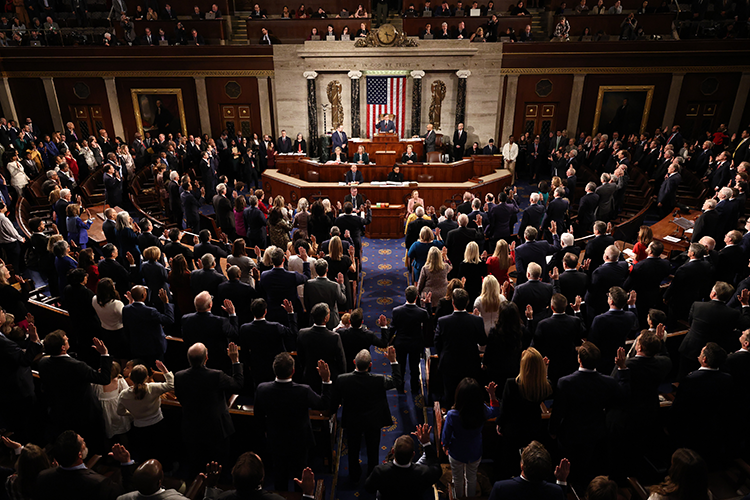
When an urgent crisis or specialized issue lands on Capitol Hill, standard legislative machinery can move too slowly. Standing committees bogged down by jurisdictional turf wars often fail to address fast-moving national challenges. To bypass these legislative bottlenecks, leadership turns to a specialized tool: the temporary congressional committee, commonly known as a select or ad hoc committee. These short-term panels cut through procedural red tape, investigate high-stakes controversies, and force urgent policy debates into the national spotlight.
Understanding how these temporary bodies operate reveals a great deal about modern lawmaking. While permanent standing committees handle routine oversight, temporary panels are engineered for speed, focus, and political impact. They reshape how Congress handles complex crises, shifting the balance of power between parties and dictating which legislative priorities survive.
The Structural Mechanics of Temporary Committees
Unlike permanent standing committees that span multiple legislative sessions, temporary select or special committees are established by a simple resolution in the House or Senate to examine a specific matter. Once their mandated task concludes or a specific congressional term expires, they dissolve unless formally renewed.
This temporary nature changes the internal dynamics of the group. Lawmakers assigned to these panels are handpicked by party leadership, meaning the roster usually reflects an intense strategic alignment. Without the heavy bureaucratic baggage of a multi-year standing committee, temporary panels can rapidly hire specialized staff, subpoena witnesses, and issue sweeping investigative reports.
- Focused Mandate: Every temporary committee operates under a strict resolution defining its boundaries, preventing the scope creep that often plagues permanent bodies.
- Investigative Power: Many of these panels focus heavily on fact-finding, using public hearings to frame public perception around scandals, intelligence failures, or emerging economic threats.
- Direct Legislative Influence: While some select panels are purely investigative and lack the power to report legislation, others draft bills that bypass traditional committee friction points.
Why Leadership Deploys Temporary Panels
When major policy debates stall, standing committees often become graveyard trenches where bipartisan compromises go to die. Standing committees protect strict turf boundaries, making cross-jurisdictional issues difficult to manage. For instance, cybersecurity policy might touch the Armed Services, Judiciary, and Homeland Security committees simultaneously, leading to paralyzing turf disputes.
A temporary committee bypasses this fragmentation. By drawing members from multiple jurisdictional backgrounds into a single unified task force, leadership creates an ad-hoc forum tailored for negotiation. This structure forces opposing factions to confront specific policy dilemmas rather than hiding behind routine procedural delays.
Furthermore, temporary panels serve as powerful signaling mechanisms. When public pressure mounts over a crisis—ranging from financial panics to technological disruptions—establishing a select committee signals immediate, visible action to voters and markets. It concentrates media attention, transforming diffuse public anxiety into structured legislative proposals.
Historical Impact on Urgent Policy Debates
Temporary committees have shaped some of the most critical turning points in American history. In the 1970s, the Senate Select Committee on Presidential Campaign Activities—widely known as the Watergate Committee—investigated the break-in at the Democratic National Committee headquarters. That temporary panel did not just uncover abuses of power; its televised hearings transformed public opinion, fundamentally altering the trajectory of the presidency and campaign finance law.
Similarly, temporary joint committees and select intelligence panels have historically managed crises that standard committees were ill-equipped to process. By operating outside the standard legislative flow, these groups construct narratives and build consensus that eventually force the full House and Senate to vote on measures they might otherwise avoid.
Common Misconceptions About Temporary Panels
Observers often misunderstand the power and permanence of these legislative bodies. A common myth is that temporary committees possess unilateral authority to pass binding laws. In reality, select committees typically recommend legislation or publish findings; the actual statutory heavy lifting must still clear the House, the Senate, and the presidential desk.
Another frequent confusion involves the distinction between "select" and "permanent" designations. While historical select committees always dissolved quickly, modern Congresses maintain several select committees (such as intelligence oversight panels) that function as permanent standing entities despite their title. True temporary committees remain rare, high-stakes interventions reserved for unique institutional friction points.
Frequently Asked Questions
What is the primary difference between a standing committee and a temporary committee?
Standing committees are permanent fixtures established by chamber rules to handle ongoing legislative oversight and routine bills within a specific jurisdiction. Temporary or select committees form for a limited duration to investigate a specific crisis or handle an issue that falls outside normal jurisdictional boundaries.
Can temporary committees write and pass laws directly?
No. Temporary committees investigate issues, hold hearings, and draft recommendations or bills. For those measures to become law, they must still be introduced, debated, and approved by the full House and Senate, then signed by the president.
Why do congressional leaders prefer select committees for crises?
Standard standing committees are often slowed down by rigid rules, jurisdictional turf wars, and heavy legislative backlogs. Temporary panels allow leadership to handpick members, hire specialized experts quickly, and focus public attention entirely on an urgent priority.
Do temporary committees have subpoena power?
It depends on the authorizing resolution passed by the chamber. However, high-profile temporary committees investigating national security, ethics violations, or major scandals are routinely granted subpoena authority to compel testimony and document production.


