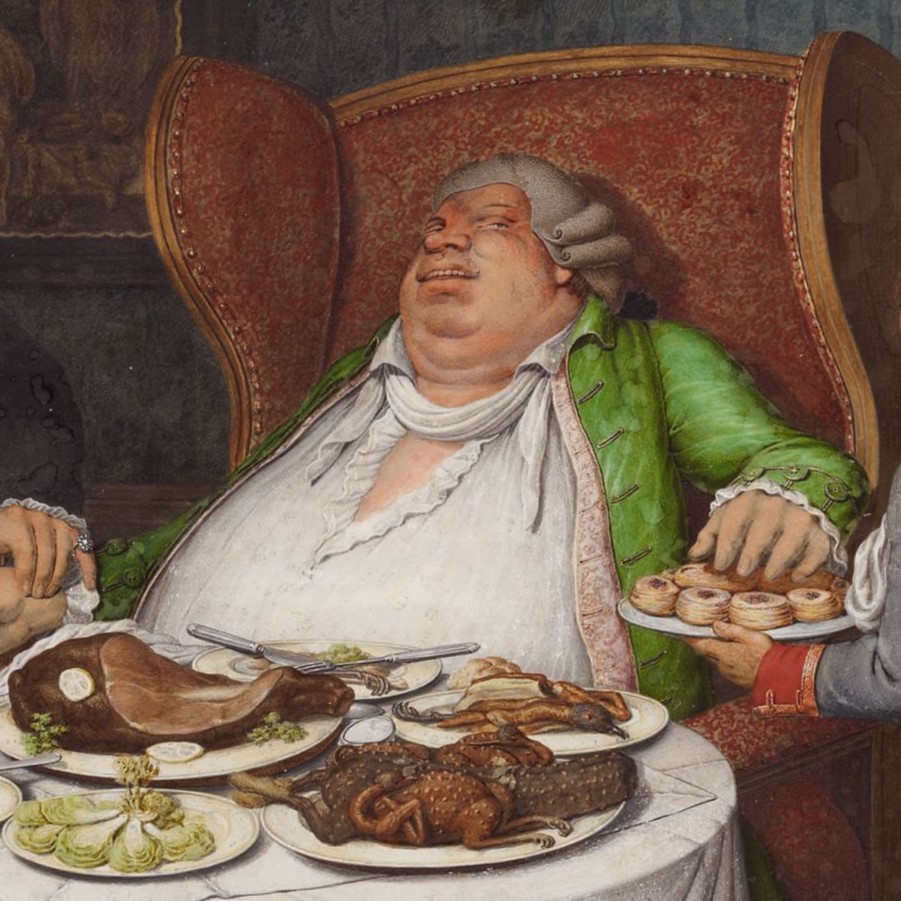
In the late 18th century, a French showman and soldier named Tarrare possessed an insatiable, monstrous appetite that baffled contemporary physicians. While medical records from the era document numerous strange conditions, few match the horrifying reality of a man who could consume live animals, stones, and human flesh while remaining emaciated. His life stands as one of the most chilling physiological puzzles in medical history, bridging the gap between sideshow spectacle and pathological abnormality.
Understanding this phenomenon requires looking beyond the sensationalism of his public acts. Modern medical science evaluates his symptoms through the lens of extreme polyphagia, hyperthyroidism, and potential psychiatric or neurological disorders, offering a rational framework for a case that shocked the French Revolution.
The Early Life and Sideshow Spectacle of Tarrare
Born around 1772 in rural France, Tarrare displayed an abnormal appetite from adolescence. His parents couldn't afford to feed him, forcing him to leave home as a teenager. He traveled through the provinces as part of a roving troupe of thieves, prostitutes, and performers, where his unique "talent" quickly became a sideshow attraction.
Tarrare would swallow whole live cats, snakes, puppies, and immense quantities of apples in a single sitting. Witnesses noted that after eating a live cat, he would vomit up the skin, bones, and fur. He also ingested corks, stones, and dead animals, treating non-nutritious objects as casual meals.
Despite consuming food that would kill an ordinary person, Tarrare remained remarkably thin. As a young adult of roughly seventeen years, he weighed only 100 pounds. His skin was extraordinarily loose; witnesses reported he could wrap the folds of skin from his abdomen around his waist. Furthermore, his body radiated a distinct, severe foul odor, and his skin was hot to the touch, causing him to sweat profusely.
Military Service and Espionage Tasks
When the War of the First Coalition broke out, Tarrare enlisted in the French Revolutionary Army. However, standard military rations were completely insufficient for his metabolic demands. He scavenged for garbage, ate animal offal from camp butcher shops, and consumed the rations of several fellow soldiers.
Severely weakened by malnutrition despite his massive intake, Tarrare was admitted to a military hospital in Soultz-Haut-Rhin. Army surgeons, intrigued and alarmed by his condition, placed him under observation. To test his limits, they provided him with a meal intended for fifteen workers, which he devoured completely.
General Alexandre de Beauharnais decided to test whether Tarrare's unique skills could serve a military purpose. He employed Tarrare as a spy, tasking him with swallowing a wooden box containing a secret message, passing through enemy lines, and retrieving it after it passed through his digestive tract.
Tarrare successfully completed the mission across Prussian lines, though he was eventually captured, beaten, and subjected to a mock execution before being released back to the French lines. Traumatized by this espionage attempt, he begged military doctors to cure his condition.
Medical Treatments and Hospital Experiments
Physicians at the hospital, including Dr. Courville and Dr. George Didier, attempted various treatments to suppress his appetite. They administered laudanum, tobacco pills, wine vinegar, and massive quantities of boiled eggs, but nothing curated his hunger or altered his emaciated appearance.
During his hospital stay, Tarrare's behavior grew increasingly erratic and dangerous. He was caught sneaking into the hospital mortuary to consume corpses left by other patients. Rumors also circulated that he was responsible for the disappearance of a 14-month-old toddler from the hospital ward, though this was never definitively proven. Outraged by his dangerous behavior and suspected cannibalism, the hospital administrators discharged him.
Death and the Post-Mortem Examination
Tarrare disappeared for several years until 1798, when a hospital in Versailles reported that he was gravely ill and nearing death. He suffered from severe, foul-smelling diarrhea and tuberculosis, which ultimately caused his death at approximately age 26.
Upon his death, the attending physicians seized the opportunity to perform an autopsy to discover the anatomical source of his bottomless stomach.
The post-mortem revealed shocking internal findings:
- Enlarged Organs: His esophagus was abnormally wide, allowing food to pass in massive boluses, and his stomach was gigantic, filling a vast portion of his abdominal cavity.
- Intestinal Tract: His liver and gallbladder were excessively large, and his intestines were described as being ulcerated and corrupted.
- Chest Cavity: His body was filled with pus, and his internal organs showed advanced decay and abnormal tissue wear.
The surgeons noted that his entire abdominal cavity was filled with purulent matter, and the stench of his corpse was so overwhelming that the autopsy had to be prematurely halted.
Modern Medical Perspective on Tarrare's Condition
While 18th-century doctors could only document the external and internal symptoms, modern endocrinologists and historians have proposed several plausible diagnoses for Tarrare's condition.
Hyperthyroidism
The combination of an insatiable appetite, rapid weight loss, excessive sweating, heat intolerance, and fine tremors or hyperactivity points strongly toward severe hyperthyroidism. An overactive thyroid gland accelerates the metabolic rate to an extreme degree, forcing the body to burn calories faster than they can be ingested.
Amygdala Damage
Another hypothesis suggests a lesion or tumor in the amygdala, a region of the brain that regulates hunger, satiety, and primitive drives. Damage to this area can result in hyperphagia, a condition where the brain's satiety center is permanently switched off, preventing the individual from ever feeling full regardless of how much they eat.
Pica and Behavioral Disorders
Tarrare's consumption of non-food items like stones, glass, and dead animals aligns with severe manifestations of pica, compounded by a lack of access to proper nutrition during his formative years in impoverished rural France.
Frequently Asked Questions
Did Tarrare actually eat a live baby?
While hospital records and contemporary accounts state that a toddler vanished from the ward and that Tarrare was suspected due to his habit of eating human remains, there was no conclusive proof or legal conviction, though the accusation led to his expulsion from the hospital.
Why didn't Tarrare gain weight?
His extreme metabolic rate—likely driven by severe hyperthyroidism or a hyperactive endocrine system—burned energy at a rate that far exceeded his massive food intake, keeping him thin and emaciated.
How much food could Tarrare eat in one sitting?
In documented tests by military physicians, he consumed a meal meant for fifteen laborers in a single sitting, alongside live animals and large quantities of fruits and vegetables.
What caused his death?
Tarrare died of advanced tuberculosis in 1798 at the age of 26, exacerbated by his severely compromised physical state and internal organ damage from consuming inedible objects.



