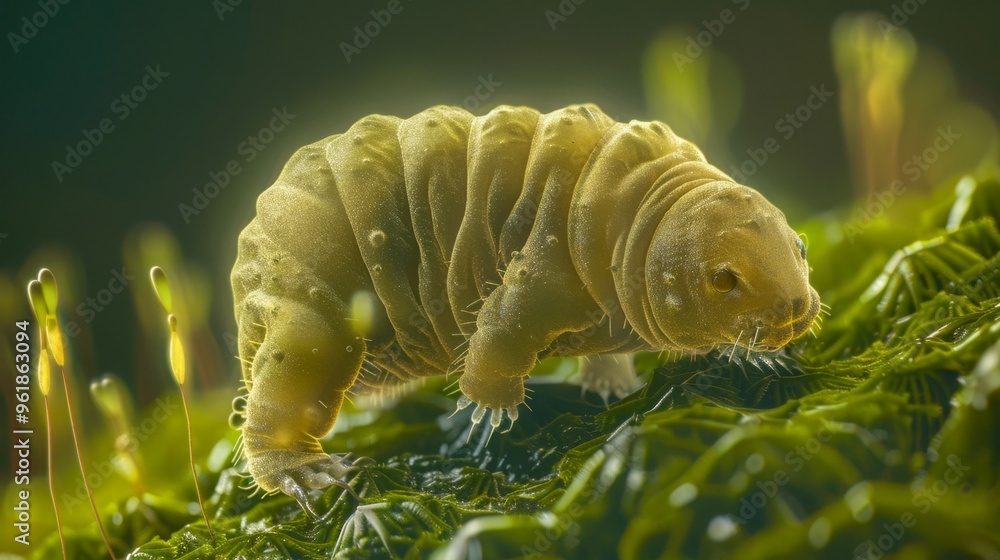
Tardigrades, frequently called water bears or moss piglets, are microscopic, eight-legged animals measuring less than half a millimeter in length. Despite their cuddly nicknames, they are Earth's most resilient extremophiles, capable of surviving boiling heat, freezing outer space, and intense radiation. While they belong to the invertebrate phylum Tardigrada, their biology defies standard animal limitations through specialized physical and cellular adaptations.
Two main traits define their survival superiority: the ability to undergo extreme cryptobiosis by replacing body water with trehalose, and an advanced DNA-protection system featuring unique damage suppressor proteins. Understanding these mechanisms reveals how these tiny organisms withstand conditions that destroy normal cellular life.
The Science of Cryptobiosis and Anhydrobiosis
When environmental conditions turn hostile, tardigrades don't simply hide; they shut down their metabolism almost completely through a process known as cryptobiosis. Specifically, when facing severe drought, they enter anhydrobiosis, expelling nearly all the water from their bodies—dropping from roughly 85% water content down to less than 3%.
To prevent their cell membranes from rupturing and proteins from unfolding during this severe dehydration, tardigrades synthesize massive amounts of the sugar trehalose. This non-reducing sugar forms a thick, glassy matrix inside and outside the cells, replacing the missing water molecules and locking cellular structures in place.
- Tun formation: As water leaves, the tardigrade contracts its body into a compact, barrel-like shape called a tun.
- Metabolic arrest: Oxygen consumption drops to less than 0.1% of normal resting rates.
- Suspended animation: Biological time effectively stops, allowing specimens to remain in this state for decades.
Researchers have successfully revived tardigrades from museum moss samples that sat dry for over a hundred years. Unlike cysts or spores produced by bacteria, anhydrobiosis is an active physiological shutdown of a fully multicellular organism. Once liquid water returns, the tun absorbs moisture, rehydrates cellular components, and resumes normal crawling within minutes to hours.
Unique Radiation Tolerance and Cellular Shielding
Beyond surviving drought and temperature extremes, tardigrades tolerate ionizing radiation doses up to 1,000 times higher than what would kill a human. A dose of 5,000 to 6,200 grays of gamma radiation can be endured by certain species, whereas just 5 grays is typically fatal to humans.
This resistance stems from specific molecular defenses evolved over millions of years to combat extreme oxidative stress. Chief among these is a unique nuclear protein discovered in species like Ramazzottius varieornatus, known as the Damage Suppressor (Dsup) protein.
- DNA binding: Dsup binds directly to chromatin, wrapping around nuclear DNA like a physical shield.
- Radical neutralization: The protein neutralizes hydroxyl radicals generated by radiation before they can cleave the DNA double strands.
- Enzymatic repair: Specialized ligases and repair enzymes work overtime to fix any minor genetic nicks that manage to slip past the initial protein shield.
Without this specialized protein and high baseline levels of intracellular antioxidants, the radiation would shatter their chromosomes and cause immediate cell death. According to research published by the National Institutes of Health, introducing Dsup into human cultured cells in laboratories even confers a similar radiation resistance boost, highlighting potential biomedical applications.
Ecological Roles and Habitat Distribution
Tardigrades inhabit moss cushions, lichen, damp soil, leaf litter, and aquatic ecosystems ranging from deep-sea trenches to high-altitude mountain peaks. Far from being rare laboratory curiosities, a single handful of damp moss can house thousands of individual specimens grazing on plant cells, algae, and bacteria.
They feed by piercing plant or bacterial cell walls with sharp oral stylets and sucking out the cell contents. Despite living in micro-habitats that freeze solid in winter and bake in summer sun, their population density remains remarkably stable due to their ability to cycle between active feeding and tun dormancy. For further details on extremophile classification, consult the Smithsonian Institution.
Frequently Asked Questions
How fast do tardigrades move?
Active tardigrades move slowly across surfaces using their four pairs of unjointed legs, earning them their scientific name Tardigrada, which translates to "slow steppers." They cover only a few millimeters per minute.
Can tardigrades survive in outer space?
Yes. Space exposure experiments, including missions led by the European Space Agency, placed tardigrades in low Earth orbit exposed to vacuum and unfiltered solar UV radiation. A significant percentage survived and successfully reproduced after returning to Earth.
Are tardigrades insects or arachnids?
Neither. While they share a distant evolutionary ancestor with arthropods, tardigrades belong to their own distinct phylum (Tardigrada) and are more closely related to velvet worms and arthropods combined in the clade Ecdysozoa.
How do tardigrades reproduce?
Most species reproduce sexually by laying eggs inside their old cuticle (shed skin) during molting, though some species undergo parthenogenesis, where females produce offspring without fertilization.



