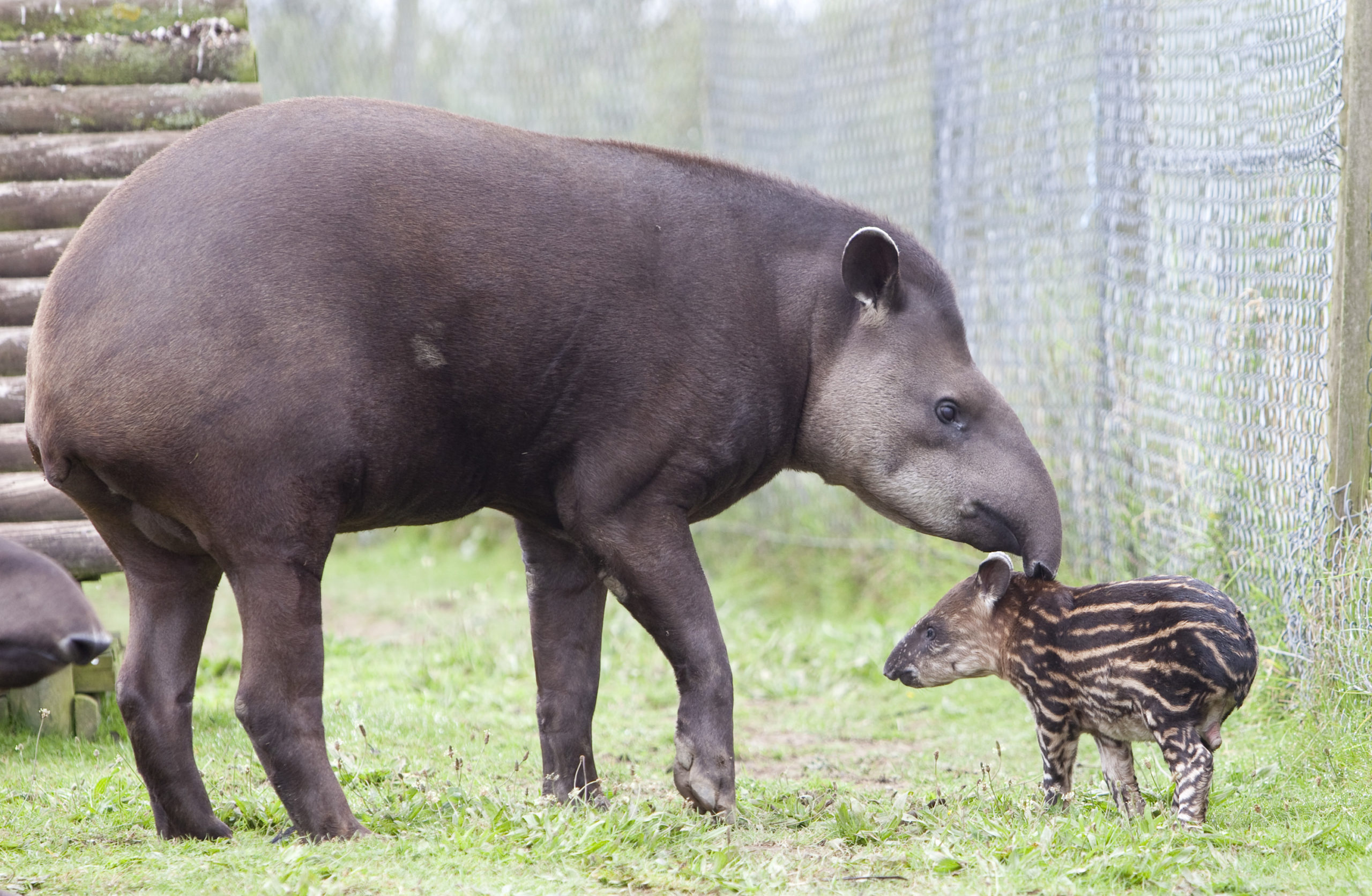
Anatomy of the Tapir Proboscis
The tapir's snout is a specialized hydrostatic organ built entirely from muscle, connective tissue, and cartilage, operating without a single bone. Unlike an elephant trunk, which fuses both the nose and upper lip, a tapir proboscis is an elongation of the nasal cavity and upper lip musculature working in unison.
Inside this muscular column, thousands of fine muscle fibers run in multiple directions. This structural matrix allows the animal to shorten, lengthen, curl, and twist the snout with fine precision. Blood vessels weave through the muscle bundles, providing instant hydrostatic rigidity when the animal needs extra leverage to snap a stubborn branch or strip leaves from a tough stem.
This internal architecture supports two distinct physical movements:
- Micro-Pinching: The tip features a muscular pad and high concentrations of tactile hairs that function like human fingers, allowing the animal to pluck single flower petals or delicate berries.
- Macro-Tension: Surrounding muscles contract to wrap the entire snout around thick vines or low-hanging branches, exerting enough pulling force to haul down foliage from unreachable heights.
What a Tapir Can Grasp and Manipulate
Because these herbivores inhabit dense tropical rain forests and swampy lowlands, their survival depends on accessing high-calorie food hidden in tangled brush. A tapir can grasp and manipulate objects ranging from delicate aquatic stems to thick woody vegetation with surprising dexterity. To explore the complete picture, we recommend the excellent analysis by The New York Times.
Foliage and Branch Stripping
When foraging in secondary growth, a tapir doesn't simply bite blindly into bushes. It wraps its proboscis around a branch, pulls it toward the mouth, and uses the inner lip pad to strip off tender leaves while leaving coarse, unpalatable bark behind. This selective grazing prevents plant damage and allows the animal to maximize nutrient intake per minute of feeding.
Aquatic Vegetation Harvesting
As strong swimmers, tapirs spend significant time submerged or wading in slow-moving rivers and lakes. Their flexible snout acts as both a snorkel and an excavator. They reach down into muddy riverbeds, wrap the proboscis around aquatic plants, and uproot submerged tubers without swallowing excess silt.
Seed Dispersal Mechanics
By handling diverse fruits—such as large palm nuts and fallen figs—tapirs act as keystone seed dispersers. The proboscis positions fruits into the powerful back molars for cracking while keeping seeds intact for excretion across their home range. Research published by the San Diego Zoo Wildlife Alliance details how this specialized diet directly shapes forest regeneration patterns across Central and South America.
Behavioral Uses Beyond Foraging
Feeding represents only one function of this versatile appendage. Tapirs rely on their snouts for complex social interactions and daily survival tasks.
Greeting rituals between adult tapirs involve gentle nose-to-nose contact, where both animals exchange chemical signals via Jacobson's organ located in the roof of the mouth. Mothers use the tip of the proboscis to nudge, steer, and groom their striped calves, maintaining close contact in dense, low-visibility undergrowth.
Tactile exploration is constant. When encountering unfamiliar objects in their territory, tapirs test texture and temperature with sensitive mechanoreceptors lining the interior rim of the nostrils before deciding whether to investigate further or retreat.
Common Mistakes in Understanding Tapir Dexterity
Observing tapirs in captivity or film often leads to a few persistent misconceptions about their physical capabilities:
- Equating it to an Elephant Trunk: While both are prehensile, tapir snouts lack the finger-like grasping lobes found at the tip of an elephant trunk. They cannot lift heavy logs or pick up tiny manufactured objects like coins.
- Assuming Weak Muscle Control: Many assume a boneless nose is limp or purely hydrostatic in a passive sense. In reality, the high muscle density allows tapirs to exert surprising pulling tension relative to their body weight.
- Ignoring Sensory Function: Viewers often view the snout solely as a tool for grabbing food, overlooking its primary role as an advanced olfactory and tactile radar system.
Frequently Asked Questions
Can a tapir pick up small objects like an elephant can?
No. While they can pluck individual berries and leaves with precision, they lack opposable digits or specialized terminal fingers. Their grip relies on wrapping muscle around an object rather than fine pinching.
Do all tapir species have the same snout length?
There are minor anatomical variations among species. For instance, the Baird's tapir and the Mountain tapir exhibit slight differences in snout length and muscular density, primarily adapted to their respective forest or high-altitude mountain niches.
How does the tapir breathe while using its snout to grasp?
The nostrils are located at the very tip of the proboscis and remain open during most foraging actions, allowing the tapir to breathe while its mouth is full of vegetation or while swimming underwater.
Are baby tapirs born with a prehensile snout?
Yes, calves are born with a functional, albeit smaller, proboscis. It grows rapidly during their first year as they transition from milk to foraging independently in dense brush.



