Yes, tangent is equal to sine divided by cosine. In any right-angled triangle or on the unit circle, the trigonometric identity is expressed as $\tan(\theta) = \frac{\sin(\theta)}{\cos(\theta)}$. This isn't just a convenient shortcut; it's a foundational relationship that connects right-triangle ratios directly to coordinate geometry and calculus.
If you're working through trigonometry problems or trying to understand how these three functions tie together, knowing this ratio lets you simplify complex expressions, solve for unknown angles, and graph functions without memorizing separate rules for every single identity. Let's break down why this relationship holds true, how to use it in practice, and where learners often get tripped up.
Geometric Proof in Right Triangles
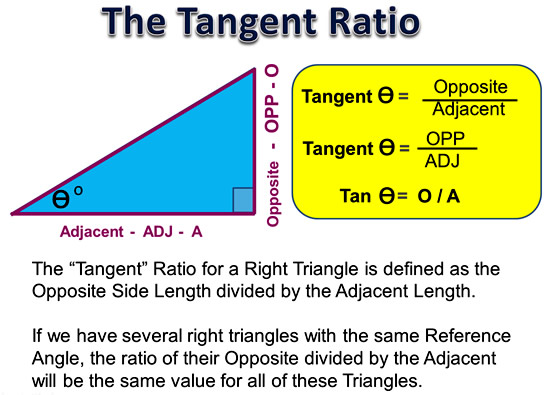
To see why tangent equals sine over cosine, you can start with the basic definitions in a right triangle. Let's look at an acute angle $\theta$.
- Sine: The ratio of the opposite side to the hypotenuse ($\frac{\text{Opposite}}{\text{Hypotenuse}}$).
- Cosine: The ratio of the adjacent side to the hypotenuse ($\frac{\text{Adjacent}}{\text{Hypotenuse}}$).
- Tangent: The ratio of the opposite side to the adjacent side ($\frac{\text{Opposite}}{\text{Adjacent}}$).
When you divide sine by cosine, you are dividing one fraction by another. Let's set it up algebraically:
$$\frac{\sin(\theta)}{\cos(\theta)} = \frac{\frac{\text{Opposite}}{\text{Hypotenuse}}}{\frac{\text{Adjacent}}{\text{Hypotenuse}}}$$
When you multiply the numerator by the reciprocal of the denominator, the hypotenuse terms cancel out completely:
$$\frac{\text{Opposite}}{\text{Hypotenuse}} \times \frac{\text{Hypotenuse}}{\text{Adjacent}} = \frac{\text{Opposite}}{\text{Adjacent}}$$
That final result is the exact definition of tangent. For a practical example, imagine a right triangle where the opposite side is $3$ units, the adjacent side is $4$ units, and the hypotenuse is $5$ units. The sine is $\frac{3}{5}$ ($0.6$) and the cosine is $\frac{4}{5}$ ($0.8$). If you divide $0.6$ by $0.8$, you get $\frac{3}{4}$ ($0.75$), which matches the direct tangent calculation.
The Unit Circle Perspective
While right triangles work well for acute angles under $90^\circ$, the unit circle expands this concept to any angle. On the unit circle centered at the origin with a radius of $1$, any point $(x, y)$ on the circumference corresponds to an angle $\theta$ formed with the positive x-axis.
In this coordinate system, the x-coordinate represents the cosine of the angle, and the y-coordinate represents the sine of the angle:
- $\cos(\theta) = x$
- $\sin(\theta) = y$
Since the slope of a line passing through the origin and the point $(x, y)$ is calculated as $\frac{\text{rise}}{\text{run}}$, the slope is $\frac{y}{x}$. Substituting the trigonometric definitions gives us $\frac{\sin(\theta)}{\cos(\theta)}$. Therefore, the tangent of an angle on the unit circle is literally the slope of the line segment that terminates at that angle's point on the circle.
You can explore more about coordinate definitions and periodic functions through resources like Khan Academy Trigonometry.
Working with Identities and Simplifying Expressions
Knowing that $\tan(\theta) = \frac{\sin(\theta)}{\cos(\theta)}$ is your primary tool for simplifying complex trigonometric expressions. When you encounter equations filled with secants, cosecants, and cotangents, converting everything into sine and cosine terms is a reliable problem-solving strategy.
Consider the expression $\tan(\theta) \times \cos(\theta)$. If you substitute the quotient identity in place of the tangent, you get:
$$\left(\frac{\sin(\theta)}{\cos(\theta)}\right) \times \cos(\theta) = \sin(\theta)$$
The cosine terms cancel out, leaving you with just $\sin(\theta)$. This kind of reduction appears frequently in calculus when evaluating integrals or finding derivatives. For a deeper dive into standard algebraic manipulations of trig functions, check out Paul's Online Math Notes.
Common Mistakes to Avoid
Even though the formula is straightforward, learners often make a few predictable errors when applying it:
- Flipping the numerator and denominator: Remember that tangent is sine over cosine, not cosine over sine. If you use $\frac{\cos(\theta)}{\sin(\theta)}$, you are actually calculating the cotangent.
- Ignoring domain restrictions: Because cosine is in the denominator, the tangent function is undefined whenever $\cos(\theta) = 0$. This happens at odd multiples of $90^\circ$ ($\frac{\pi}{2}$, $\frac{3\pi}{2}$, etc.), creating vertical asymptotes on a graph.
- Confusing inverse functions: $\tan^{-1}(x)$ is not the same thing as $\frac{1}{\tan(x)}$. The former is arctangent (finding an angle from a ratio), while the latter is cotangent.
Frequently Asked Questions
Why does dividing sine by cosine cancel out the hypotenuse?
Because both sine and cosine share the hypotenuse as their denominator in right-triangle geometry. When you divide one fraction by another, dividing by a common denominator eliminates it from the final ratio.
Is this identity true for negative angles?
Yes. Because both sine and cosine maintain consistent sign rules across all four quadrants of the coordinate plane, the quotient identity holds true for negative angles, angles greater than $360^\circ$, and radian measures alike.
How do calculators use this identity?
Many older or specialized computing devices compute tangent values internally by taking pre-programmed sine values and dividing them by cosine values, though modern processors often use specialized algorithmic series expansions for direct computation.
What happens when cosine equals zero?
When $\cos(\theta) = 0$, you end up dividing by zero. Since division by zero is undefined in standard arithmetic, the tangent function has no real value at those points, which manifests as vertical asymptotes on a coordinate graph.


