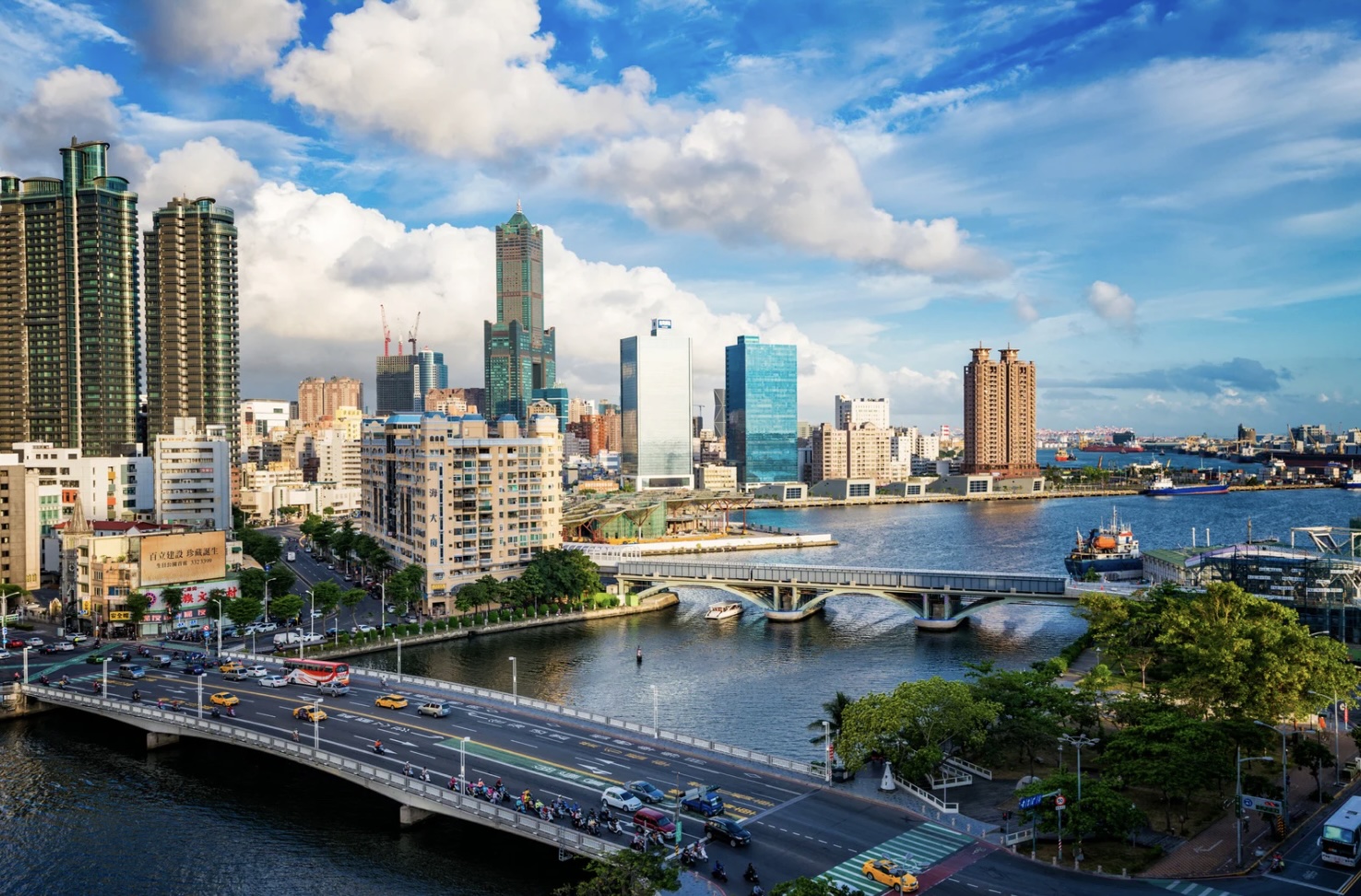
Taiwan is an independent island nation located in East Asia, sitting in the western Pacific Ocean roughly 100 miles off the southeastern coast of mainland China. It is neither part of China nor part of Japan today, though its complex history and proximity to both nations often cause confusion. Geographically, it forms part of the first island chain, positioned directly between the East China Sea to its north and the South China Sea to its southwest. Politically, Taiwan functions as a self-governing democracy, completely separate from the governance of the People's Republic of China (PRC) in Beijing and distinct from Japan, which lies further to the northeast.
Understanding why people ask whether Taiwan belongs to China or Japan requires looking at both modern political geography and colonial history. While China claims sovereignty over the island under its "One China" principle, and Japan ruled the island as a colony for fifty years prior to 1945, Taiwan operates with its own constitution, military, passport, and currency. This guide breaks down the exact physical location of Taiwan, its historical ties to both neighbors, and how its modern status remains distinct.
Exact Geographic Location and Neighbors
Geographically, Taiwan is an isolated island separated from the Asian continent by the Taiwan Strait. This body of water is roughly 100 miles (160 kilometers) wide at its narrowest point, acting as a natural maritime barrier between the island and Fujian province in mainland China.
To the immediate north and northeast of Taiwan lie the southernmost islands of Japan, including the Yaeyama and Ryukyu chains (such as Yonaguni Island, which is only about 68 miles or 110 kilometers away). To the south, across the Luzon Strait, lies the Philippines. To the east opens the vast expanse of the Philippine Sea and the open Pacific Ocean. Similar reporting regarding this has been published by BBC.
- Western Neighbor: Mainland China, separated by the Taiwan Strait.
- Northern Neighbor: Japan, across the East China Sea.
- Southern Neighbor: The Philippines, across the Bashi Channel.
The island spans roughly 245 miles north to south and 90 miles east to west, featuring a rugged central mountain range that forces most of the population of 23.5 million people to live along the western coastal plains.
Historical Ties to China
Taiwan's cultural and linguistic roots are predominantly Chinese. Waves of migration from the Chinese mainland over the centuries—particularly during the Ming and Qing dynasties—brought Han Chinese settlers, traditions, and language to the island.
The political separation that defines modern times began in 1949. Following the Chinese Civil War, the defeated Nationalist government (Kuomintang), led by Chiang Kai-shek, retreated to Taiwan. They re-established the government of the Republic of China (ROC) on the island, while the victorious Chinese Communist Party established the People's Republic of China (PRC) on the mainland. For decades, both regimes claimed to be the sole legitimate government of all China. Today, Beijing views Taiwan as a breakaway province that must be reunified, while Taipei operates as a de facto independent democratic nation.
Historical Ties to Japan
The question of whether Taiwan is in Japan usually stems from its era under the Japanese Empire. Following its defeat in the First Sino-Japanese War, the Qing dynasty ceded Taiwan and the Pescadores Islands to Japan in perpetuity via the 1895 Treaty of Shimonoseki.
Japan ruled Taiwan as a colony for half a century until its defeat in World War II in 1945. During this colonial period, Tokyo heavily invested in the island's infrastructure, building railways, establishing modern educational systems, and introducing industrial frameworks. When Japan surrendered at the end of World War II, control of Taiwan was transferred back to the Republic of China in accordance with the Cairo Declaration. Japan formally renounced all rights and claims to Taiwan in the 1951 Treaty of San Francisco, meaning Japan holds zero territorial sovereignty over Taiwan today.
Common Misconceptions About Taiwan's Status
Global confusion about Taiwan's political standing often appears on digital maps and international forums.
- Cartographic Discrepancies: Major tech platforms and mapmakers often display different borders depending on the user's geographic location. Within mainland China, maps depict Taiwan as an administrative province. In Taiwan, it is shown as an independent state. Global map publishers often use dashed boundary lines to avoid taking an explicit diplomatic side.
- United Nations Representation: Taiwan was a founding member of the United Nations as the Republic of China. However, in 1971, Resolution 2758 transferred China's seat in the UN to the People's Republic of China. Consequently, Taiwan lacks formal UN member status today, though it maintains robust unofficial trade and cultural ties with dozens of nations globally.
- Cultural Hybridity: While the dominant culture is Han Chinese—sharing traditions, lunar holidays, and Mandarin Chinese—Taiwan's indigenous Austronesian roots, combined with fifty years of Japanese colonial administration, have created a distinct, pluralistic society unique to the island.
You can explore more about official governance structures through the Taiwan Government Portal or review regional context via Britannica's Taiwan Guide.
Frequently Asked Questions
Is Taiwan recognized as an independent country by the United Nations?
No. The United Nations recognizes the People's Republic of China (PRC) in Beijing as the sole representative of China. Taiwan (ROC) lost its UN seat in 1971 and currently maintains official diplomatic relations with only a small number of allied nations, though it operates independently in practice.
Do people in Taiwan speak Japanese or Chinese?
The official national language is Mandarin Chinese. Additionally, many locals speak Taiwanese Hokkien and Hakka. While Japanese is popular as a foreign language taught in schools and older generations who grew up during colonial rule spoke it fluently, it is not a primary spoken native language today.
Can citizens of other countries travel to Taiwan using a Japanese passport?
No. Taiwan handles its own immigration, customs, and border control independently from both China and Japan. Travelers from most Western nations can enter Taiwan visa-free for short tourism stays using their own national passports, processed entirely by Taiwanese border authorities.
How far is Taiwan from Japan geographically?
The closest Japanese territory to Taiwan is Yonaguni Island, part of the Ryukyu chain, which sits roughly 68 miles (110 kilometers) northeast of Taiwan's eastern coast. However, traveling to mainland Japan (such as Tokyo or Osaka) requires a flight of roughly three to four hours.



