Taco Bell didn't start with a standalone Mexican fast-food empire; its founder, Glen Bell, spent years selling standard American fare like hot dogs and hamburgers before popularizing the crispy taco. When Glen Bell opened the very first official Taco Bell restaurant in Downey, California, in July 1962, the original menu featured a modest lineup of five core items priced at just 19 cents each: tacos, burritos, tostadas (then called tostados), chili burgers, and frijoles. The surprising answer to what he served originally before that—dating back to his earliest days running food stands in San Bernardino—was actually hot dogs, hamburgers, and french fries, long before he reverse-engineered the hard-shell taco from his neighbors across the street.
Understanding how a simple hot dog stand vendor transformed into a pioneer of American fast food requires looking past corporate myths. Glen Bell's journey involved multiple iterations, failed partnerships, and a famous culinary inspiration drawn from a local Mexican cafe that changed the trajectory of roadside dining forever.
From Hot Dogs to Hard Shells
In 1948, a young veteran named Glen Bell operated a hot dog and hamburger stand called Bell's Drive-In in San Bernardino, California. Business was steady, but Bell noticed a phenomenon happening just across Mount Vernon Avenue. A local eatery named the Mitla Cafe drew massive, unending lines of customers waiting for their specialty: hard-shell tacos (tacos dorados).
Intrigued by the crowds, Bell became a regular customer, eating there frequently and attempting to reverse-engineer the food. Eventually, he befriended the owners and head cooks, who showed him how they fried tortilla shells ahead of time and filled them with spiced ground beef, shredded cheese, lettuce, and tomatoes.
Realizing that mass-producing these items could revolutionize quick-service dining, Bell adapted the process. He built custom fry baskets to pre-form corn tortillas into rigid, crunchy shells that could be loaded quickly with pre-cooked ingredients. He added these tacos to his existing hamburger stand menu in December 1951. Legend states that the very first customer to try one immediately turned around and said, "Gimme another."
The Evolution of Early Concepts: Taco-Tia and El Taco
Before opening the flagship Taco Bell location in Downey, Bell tested his operational model through several collaborative business ventures:
- Taco-Tia: Opened in San Bernardino in 1954, this standalone venture focused heavily on the newly minted hard-shell tacos, proving that Mexican-inspired fast food could appeal to mainstream American consumers.
- El Taco: Partnering with other investors, Bell expanded the concept further, refining the speed-of-service kitchen layout that allowed line cooks to assemble meals in seconds.
After parting ways with his partners, Bell took full ownership of the operational framework, dropped the old names, and branded his new enterprise around his own surname.
The Opening Day Menu in Downey (1962)
When the doors officially opened at 7112 Firestone Boulevard in Downey on July 6, 1962, the restaurant was a modest, 400-square-foot building featuring mission-style arches and a walk-up window. There was no indoor dining room and no drive-thru lane; customers ordered from the sidewalk.
The menu was intentionally streamlined to maximize speed and lower food costs. Every single item cost 19 cents:
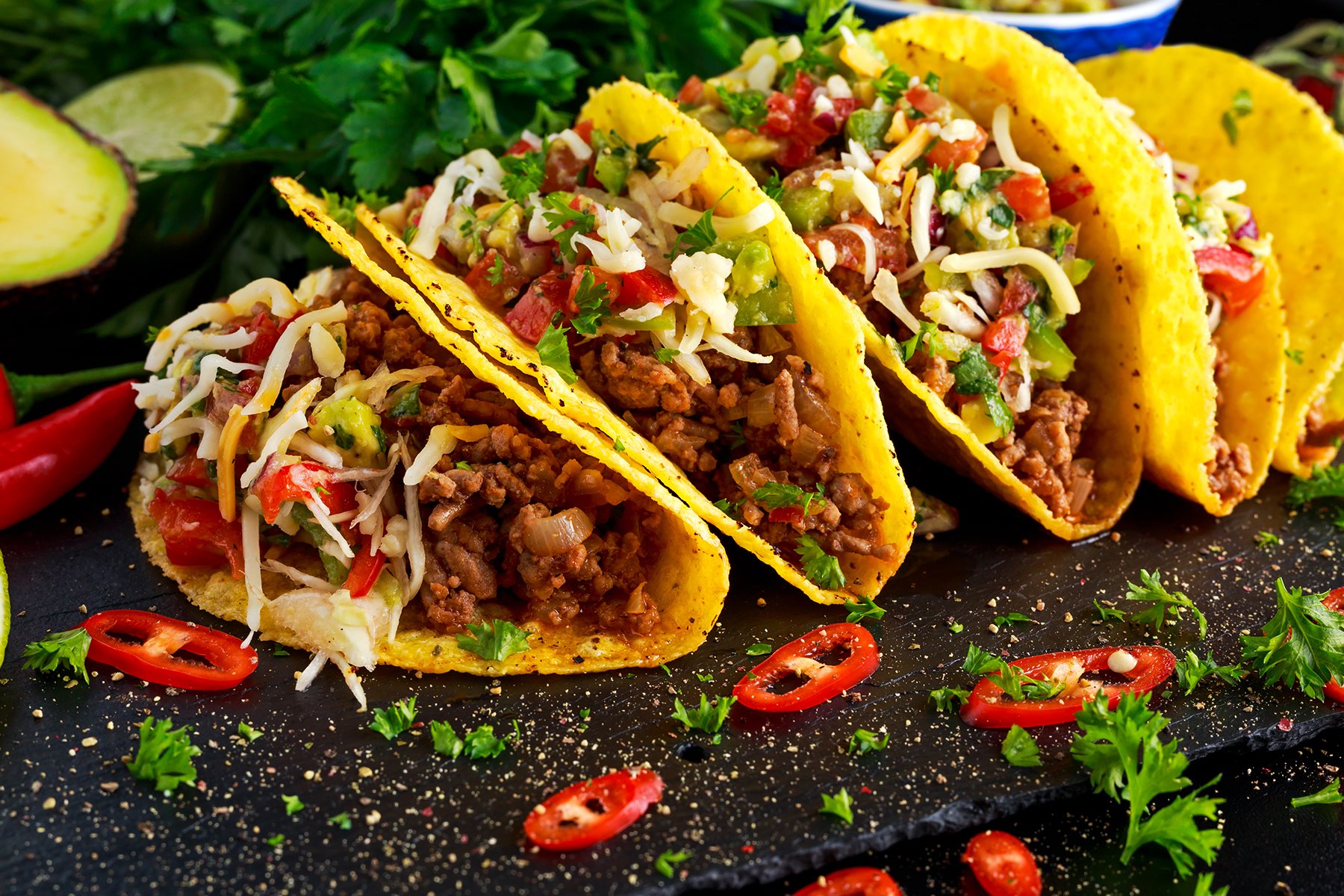
- Tacos: The flagship hard-shell corn tortilla filled with seasoned ground beef, shredded cheddar cheese, lettuce, and diced tomato.
- Burritos: Simple flour tortillas wrapped around savory meat and bean fillings.
- Tostados: A flat, crispy corn tortilla base layered with refried beans, red sauce, lettuce, and cheese.
- Frijoles: Small cups of warm, saucy pinto beans topped with melted cheese.
- Chili Burgers: A nod to Bell's hamburger-stand roots, featuring a bun filled with taco-seasoned beef, special spicy sauce, and cheese.
This structure ensured that kitchen staff could prepare meals in seconds, setting a new standard for American fast-food efficiency that rivaled early competitors like McDonald's.
Scaling Up and the Transition to Franchising
The small walk-up stand format proved immensely popular. By 1964, a retired police officer named Kermit Bekke purchased the company's very first franchise license, opening a location in Torrance, California. Expansion accelerated rapidly from there. By 1967, the 100th restaurant opened its doors in Anaheim.
As the brand scaled nationwide throughout the late 1960s and 1970s, the menu evolved to incorporate indoor seating, drive-thrus, and new product variations. In 1978, Glen Bell sold his portfolio of 868 restaurants to PepsiCo Inc. for $125 million, cementing his legacy in culinary history before passing away in 2010. Today, the original Downey building—affectionately nicknamed "Taco Bell Numero Uno"—resides at the corporate headquarters in Irvine, California, serving as a monument to where the 19-cent taco revolution began.
You can read more about the brand's timeline directly on the official Taco Bell History page. For a broader look at early roadside eateries, explore historical archives via PBS SoCal.
Frequently Asked Questions
Did Glen Bell invent the hard-shell taco?
No. Hard-shell tacos, known as tacos dorados, were already popular in Mexican cuisine and were famously served at the Mitla Cafe in San Bernardino. Glen Bell adapted, commercialized, and popularized the style for American mass consumption by creating pre-formed shells and assembly-line kitchen workflows.
What happened to the original Taco Bell building?
The original 1962 walk-up stand in Downey, California, faced demolition in 2015. Preservationists and corporate leaders intervened, lifting the entire structure onto a flatbed truck and moving it 45 miles to the Taco Bell corporate campus in Irvine, where it remains preserved.
Why did the original menu feature hamburgers?
Glen Bell originally ran hot dog and hamburger stands before transitioning to Mexican-inspired food. Including chili burgers on the 1962 menu acted as a transitional safety net for American consumers who were unfamiliar with Mexican cuisine at the time.
When did drive-thrus become standard at Taco Bell?
When Taco Bell first launched, restaurants featured only walk-up windows. Indoor seating began appearing sporadically in the late 1960s, but drive-thru lanes did not become an industry standard for the chain until 1980.



