System control engineering determines how large industrial facilities, transport networks, and automated manufacturing plants regulate physical processes without constant human intervention. In metropolitan Sydney—spanning logistics hubs in Western Sydney, manufacturing plants along the Parramatta River, and water infrastructure managed by Sydney Water—control engineers design the feedback loops, programmable logic controllers (PLCs), and supervisory control and data acquisition (SCADA) networks that keep complex operations stable.
If you're evaluating how to implement or upgrade an automated control system, you need more than generic definitions. You need to understand how controllers process signals, how to choose between proportional-integral-derivative (PID) tuning parameters, and how to avoid costly downtime during integration.
Core Architecture of Industrial Control Systems
Every industrial control system relies on a continuous closed-loop architecture. Sensors measure physical variables—such as pressure, temperature, flow rate, or motor speed—and transmit electrical or digital signals to a central controller.
The Sensor-to-Actuator Loop
- Measurement: Transducers convert physical phenomena into standardized signals (typically 4–20 mA current loops or digital protocols like Modbus and Profibus).
- Processing: The controller (PLC or Distributed Control System) compares the incoming process variable against a pre-set target value, calculating the error.
- Action: The controller adjusts an actuator, such as a control valve position or a variable frequency drive (VFD) frequency, to minimize the error.
When designing these loops in Sydney facilities, engineers must account for local environmental factors, including ambient temperature swings in Western Sydney warehouses and strict compliance mandates set by SafeWork NSW regarding hazardous chemical processing and machinery safeguarding.
Practical Implementation Steps for Control System Upgrades
Upgrading legacy control infrastructure requires a disciplined, multi-stage engineering approach to prevent costly operational stoppages.
- Audit Existing I/O Points: Catalog every sensor, actuator, and communication bus currently wired to legacy panels. Document unused spare channels for future expansion.
- Define Control Philosophy and P&IDs: Update Piping and Instrumentation Diagrams to reflect desired automation logic, fail-safe states, and emergency shutdown (ESD) sequences.
- Select Hardware and Communication Protocols: Choose industrial controllers that support open standards. Avoid proprietary vendor lock-in by utilizing Ethernet/IP, PROFINET, or OPC UA for cross-platform data exchange.
- Conduct Factory Acceptance Testing (FAT): Simulate software logic in a controlled environment before deploying code to live plant floors. Test sensor failure scenarios and emergency stop triggers thoroughly.
- Execute Site Acceptance Testing (SAT): Commission the system on-site with live I/O validation, loop tuning, and operator training sessions.
Common Engineering Mistakes to Avoid
Many automation projects fail not from faulty hardware, but from poor software architecture and inadequate configuration management.
- Over-Tuning PID Loops: Setting proportional gain too high causes continuous oscillation around the setpoint, accelerating mechanical wear on valves and motor drives. Always start with manual step-testing before enabling auto-tune routines.
- Ignoring Cybersecurity Hardening: Connecting SCADA networks directly to corporate local area networks without industrial firewalls or demilitarized zones (DMZs) exposes critical infrastructure to unauthorized remote access.
- Neglecting Documentation Control: Failing to version-control PLC ladder logic or structured text code leads to troubleshooting blind spots when technicians upload unverified modifications during night shifts.
Frequently Asked Questions
What qualifications are required to practice system control engineering in Sydney?
Practicing engineers typically hold a Bachelor of Engineering (Honours) in Mechatronics, Electrical, or Mechanical Engineering. For major infrastructure projects in New South Wales, professional registration under the statutory Engineers Australia National Engineering Register (NER) or equivalent professional engineering credentialing is standard practice.
How do PID controllers maintain stability in dynamic environments?
A PID controller calculates an error value as the difference between a desired setpoint and a measured process variable. It applies a correction based on proportional (present error), integral (accumulated past errors), and derivative (predicted future error) terms, smoothing out process disturbances automatically.
What is the difference between a PLC and a DCS?
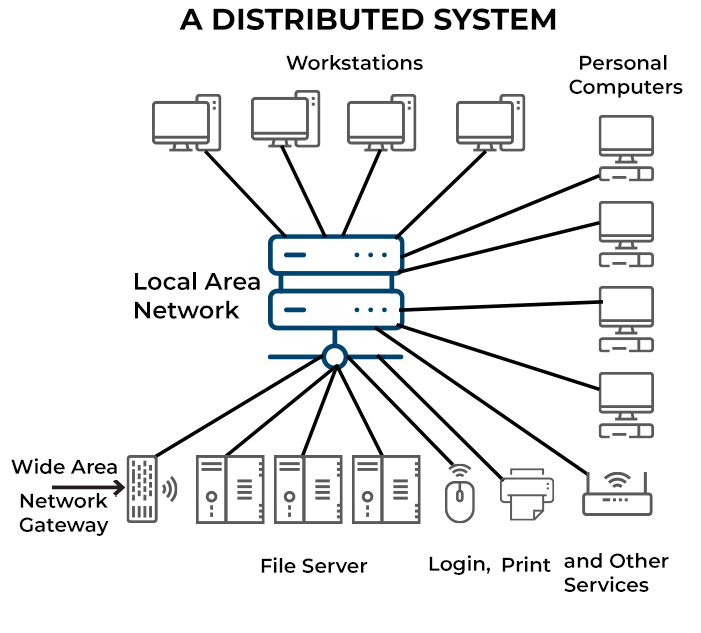
Programmable Logic Controllers (PLCs) handle discrete, high-speed logic operations for specific machine cells or production lines. Distributed Control Systems (DCS) manage large-scale, continuous process plants—such as water treatment facilities or chemical refineries—where control tasks are distributed across multiple localized controller nodes.
How are legacy analog control systems integrated with modern IoT platforms?
Engineers deploy industrial edge gateways that bridge legacy serial protocols (like RS-485 or Modbus RTU) with modern MQTT or OPC UA cloud architectures. This enables real-time telemetry streaming to cloud analytics dashboards without replacing foundational field instrumentation.


