Comparing Suriname vs El Salvador brings together two vastly different societies tucked into separate corners of the Americas. While both share a history shaped by colonial extraction and post-independence struggles, their geographic realities, cultural roots, and modern economic paths couldn't be more distinct. El Salvador sits as a densely populated, Spanish-speaking Central American republic, whereas Suriname spans the northern coast of South America as a sparsely populated, ethnically diverse former Dutch colony.
Understanding how these two countries stack up requires looking beyond standard global maps. They represent divergent models of national development: one fights for density-driven security and urban expansion, while the other manages vast tropical rainforest resources with a small, multicultural population. Examining their metrics reveals deep insights into modern nation-building across the Americas.
Geographic and Demographic Realities
Geography dictates destiny in both nations, creating contrasting daily experiences for their citizens. El Salvador is the smallest country in Central America, packed tightly with over six million people into roughly 8,000 square miles. That setup yields a high population density of nearly 800 people per square mile, creating bustling urban centers, intense land use, and zero room for vast wilderness buffers.
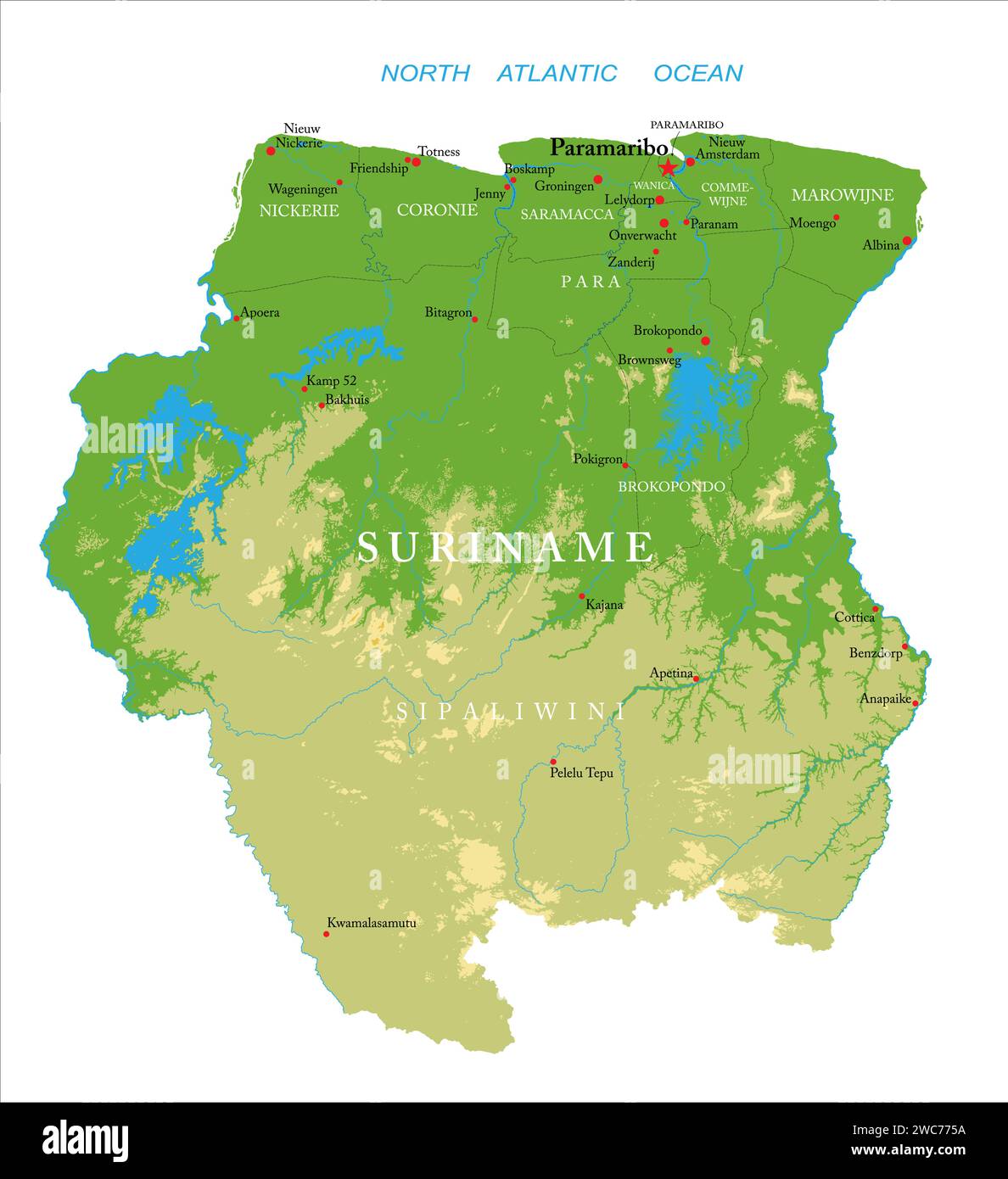
Suriname tells the exact opposite story. Covering nearly 62,000 square miles, it houses a modest population of around 640,000 people. Most of that land consists of pristine Amazonian rainforest, pushing the vast majority of the population to live in a narrow coastal strip centered around the capital city of Paramaribo.
Demographics reveal a cultural split as well. El Salvador boasts a largely homogeneous mestizo population rooted in Spanish and Indigenous Pipil heritage. Suriname operates as a cultural mosaic with no single dominant group, blending Hindustani, Creole, Javanese, Maroons, and Indigenous communities. This diversity is visible in Suriname's religious landscape, where mosques, Hindu temples, churches, and synagogues often sit side by side.
Economic Structures and Growth Drivers
Economic profiles for these two nations highlight different survival strategies in global markets. El Salvador relies heavily on a service-oriented economy, remittances from citizens living abroad, and manufacturing. According to World Bank data, El Salvador maintains a nominal GDP of roughly $36.7 billion. Its government has also grabbed international headlines for shifting monetary policy and fiscal reforms.
Suriname's economy depends directly on natural resource extraction. Gold, crude oil, and bauxite drive its export revenues. With a nominal GDP of about $4.52 billion, its fortunes rise and fall with global commodity prices. When gold and oil prices surge, the national budget expands; when they drop, the country faces severe fiscal pressure and inflation.
When looking at output per person, purchasing power parity (PPP) adjustments show interesting dynamics. Suriname often tracks higher in specific GDP per capita PPP metrics due to its wealth of natural resources distributed across a tiny population. However, inflation and heavy national debt routinely complicate everyday living standards for ordinary families in both nations.
Governance, Security, and Social Policy
Institutional development and public safety shape how citizens experience daily life in both countries. El Salvador underwent a massive transformation in public security over recent years, dramatically reducing gang violence through aggressive state crackdowns. This shift altered the social fabric, boosting internal tourism and small business confidence, even as international observers debate the long-term balance between civil liberties and public safety.
Suriname operates within a parliamentary democracy framework rooted in its Dutch legal heritage. Its governance challenges tend to revolve around administrative transparency, fiscal discipline, and managing resource rents sustainably. While Suriname doesn't face the urban gang violence seen historically in parts of Central America, it grapples with infrastructural deficits in its deep interior, where remote villages lack the connectivity found on the coast.
Infrastructure and Connectivity
Infrastructure development highlights the friction of geography in both places. El Salvador's compact size makes road networks easier to map and connect, though mountainous terrain requires constant maintenance against landslides and rainy season damage. Internet penetration and mobile connectivity link most urban and semi-urban hubs efficiently.
Suriname faces unique engineering hurdles. Traversing the country means confronting wide rivers with limited bridging, making travel to the interior heavily reliant on small planes or riverboats rather than paved highways. While the coastal capital enjoys modern telecom services, remote communities remain isolated from digital integration, posing hurdles for national education and healthcare delivery.
Frequently Asked Questions
What are the main official languages spoken in each country?
El Salvador is overwhelmingly Spanish-speaking. Suriname features Dutch as its official language for government, business, and education, alongside Sranan Tongo (an English-based creole) as a widespread lingua franca, plus several other community languages.
How do their population sizes compare?
El Salvador has roughly 6.4 million residents, making it more than ten times larger by population than Suriname, which sits at around 640,000 people.
Which country has a larger land area?
Suriname is much larger geographically, covering nearly 62,000 square miles compared to El Salvador's 8,000 square miles. Most of Suriname is covered by dense tropical forest.
What are the primary exports of Suriname?
Suriname's economy relies heavily on natural resources, with gold and crude oil serving as its leading export commodities on global markets.
Are citizens of both countries part of the same regional blocs?
Both nations participate in broader hemispheric bodies like the Organization of American States (OAS). However, El Salvador is integrated into Central American integration systems, while Suriname maintains strong ties to Caribbean entities like CARICOM due to its cultural and historical alignment with the region.



