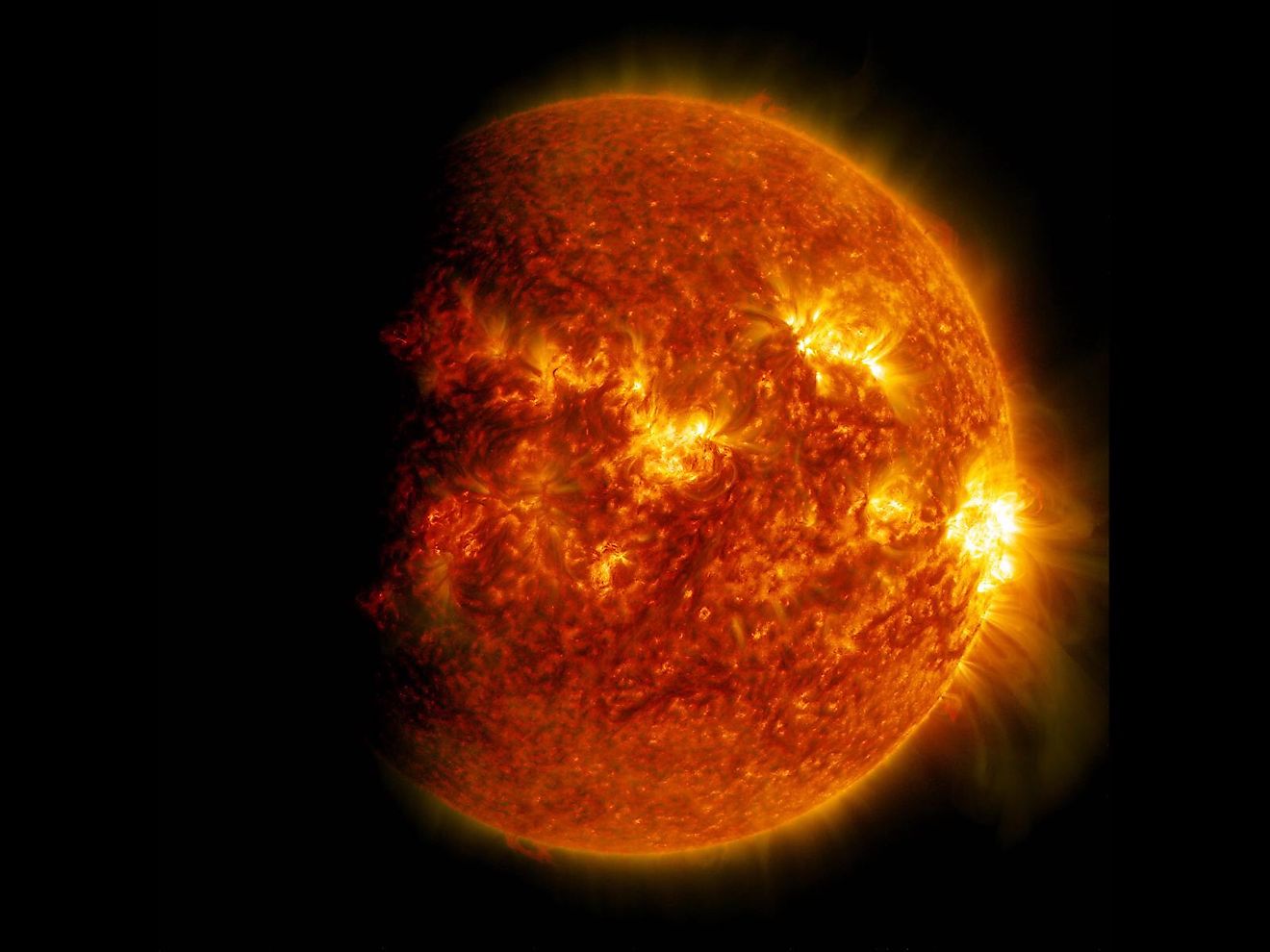
When astrophysicists talk about the chemical composition of stars, they divide the universe into three simple categories: hydrogen, helium, and everything else. In stellar physics, every single element heavier than helium is broadly lumped together under a single label: metals. The mass fraction of these heavier elements is known in mathematical models as the Z factor. For our star, the Sun's metallicity defines how much iron, oxygen, carbon, and neon speckle its vast plasma structure, anchoring our understanding of galactic evolution and planetary formation.
The Z factor dictates how a star absorbs radiation, how long it lives, and whether it can host rocky worlds. While it sounds like a straightforward accounting metric, it has sparked decades of intense debate among astronomers trying to balance computer models with real-world solar data. Let's look at how this vital parameter shapes our cosmic neighborhood.
Defining the Z Factor: What Counts as a Metal?
To understand stellar chemistry, you have to forget chemistry class. On Earth, we classify gold, iron, and copper as metals, while carbon, oxygen, and nitrogen are nonmetals. In astronomy, anything heavier than helium is a "metal." This includes oxygen—the most abundant heavy element in the Sun—along with carbon, nitrogen, neon, magnesium, silicon, and iron.
Stars are giant nuclear furnaces primarily composed of hydrogen and helium forged during the Big Bang. All heavier elements are manufactured inside previous generations of stars and scattered across space through supernova explosions or stellar winds. When a new star is born from a collapsing interstellar cloud, it inherits whatever heavy elements happen to float around in that nursery.
The composition of a star is split into three mass fractions:
- Hydrogen mass fraction ($X$)
- Helium mass fraction ($Y$)
- Heavy element mass fraction ($Z$)
These three variables must always add up to one, meaning $X + Y + Z = 1$. In the modern Sun, hydrogen makes up about 73% of its mass, helium accounts for roughly 25%, and the remaining 2% belongs to the Z factor. That 2% might look small, but it controls the physical behavior of the entire star.
Measuring Solar Metallicity: Spectroscopy Versus Helioseismology
For a long time, standard solar models assumed a heavy element mass fraction of roughly $Z = 0.02$. Spectroscopic measurements—analyzing the light absorbed by atoms in the solar photosphere—matched this expectation nicely. Researchers read the absorption lines of sunlight to tally up carbon, nitrogen, and oxygen relative to hydrogen.
Then, around the mid-2000s, advanced three-dimensional radiation-hydrodynamic models turned those measurements upside down. These newer, more sophisticated spectroscopic calculations suggested that the Sun contains roughly 30% fewer heavy elements than previously thought, dropping the Z factor closer to $0.013$ or $0.014$.
This sparked a major crisis in astrophysics known as the solar metallicity problem. Why? Because of helioseismology—the study of sound waves bouncing through the interior of the Sun.
[Core Nuclear Reactions] --> [Radiative Zone Opacity (Controlled by Z)] --> [Convective Zone Sound Waves]
Sound waves traveling through the Sun depend heavily on interior opacity, which is directly tied to the Z factor. Heavier elements block radiation, making the plasma more opaque. If you lower $Z$ to match the newer spectroscopic values, the sound wave profiles inside computer models stop matching actual seismic data from the Solar and Heliospheric Observatory (SOHO) spacecraft. The outer convective zone depth and helium abundance calculations break down entirely.
To explore how researchers track these tiny elemental signatures across space, you can read more about stellar composition studies via NASA Science.
Why the Z Factor Matters for Star Evolution
The amount of heavy elements in a star dictates its opacity, which acts as a blanket trapping core heat. Higher metallicity means higher opacity, changing how efficiently photons escape to the surface.
- Stellar Lifespan: High-metallicity stars burn through their fuel faster because opacity traps heat, driving up core temperatures and accelerating nuclear fusion rates.
- Color and Temperature: Heavy elements absorb specific wavelengths of light, shifting a star's spectral output and effective surface temperature.
- Planet Formation: Protoplanetary disks rich in heavy elements provide the rocky material needed to build terrestrial planets like Earth, Mars, and Venus. Gas giants also form more easily around metal-rich stars because solid core accretion happens faster.
Without a precise Z factor, our stellar evolution timelines fall apart. If the Sun's interior composition is miscalculated, our calibration of distant stars across the Milky Way is thrown off, since astronomers use the Sun as the primary baseline for cosmic chemistry.
Resolving the Discrepancy: Where Do We Stand?
Astrophysicists have spent years trying to reconcile the mismatch between modern spectroscopy and helioseismology. Several solutions have been proposed to save both the new lower Z factor and the integrity of solar models:
- Upgraded Opacity Tables: Researchers suspect that laboratory measurements of iron and oxygen opacities at extreme temperatures might be slightly underestimated. If laboratory opacity calculations are boosted by 15% to 20%, the low-Z models work.
- Neon and Oxygen Re-evaluations: Because neon cannot be easily measured in the cool solar photosphere, its abundance is often inferred from other elements. If the Sun actually harbors more neon than current low-Z models assume, it could account for the missing opacity.
- Accretion History: Some models suggest the Sun ingested metal-poor material after its formation, meaning its surface composition doesn't perfectly match its deep interior.
Pinpointing these variables requires ongoing refinement of atomic physics data. For deep technical archives on how these elemental abundances are cataloged, check the National Institute of Standards and Technology (NIST) database resources on atomic spectra.
Frequently Asked Questions
What is the exact value of the Sun's Z factor today?
Traditional models historically placed it around $Z = 0.02$, but modern 3D spectroscopic revisions push it down toward $0.013$ to $0.014$, creating an ongoing scientific debate with seismic data.
How do astronomers measure elements we cannot see on the surface?
For elements hidden deep inside or hard to read directly, scientists rely on solar neutrinos produced by core nuclear reactions and helioseismic inversions that map sound waves bouncing through different solar layers.
Does every star have the same Z factor?
No. Metallicity varies wildly across the universe. Older stars born in the early universe have very low metallicity (population II stars) because few heavy elements had been forged yet, while younger stars like our Sun (population I stars) are richer in heavy elements.
Why are carbon, oxygen, and iron called metals in astronomy?
Astronomers group elements based on how they affect stellar physics and opacity. Since hydrogen and helium dominate the mass and behavior of stars, everything else acts similarly in terms of opacity and electron structure, earning the collective term "metals."


