When a sharp tailored outfit feels off balance, the issue often traces back to underlying structural friction. A noticeable outline or unexpected fabric tension around the lower torso can ruin an otherwise clean silhouette. Fixing this requires understanding how garments interact with the human form, along with knowing the right adjustments to make at the tailor shop.
The primary keyword, suit bulge, refers to unwanted fabric distortion or visible protrusion around the front trousers or jacket closure area. This occurs when cloth lacks adequate room to drape naturally, forcing it to cling, pull, or bunch up against the body. Addressing this phenomenon isn't just about aesthetics; it's about comfort, fabric longevity, and dressing with confidence. Let's look at why this happens and how to fix it permanently.
Anatomy of a Proper Trouser Fit
Most wardrobe issues stem from buying off-the-rack garments designed for an idealized, generic body type rather than your actual proportions. Trousers hang from the waist and hips, but they also accommodate movement, sitting, and standing. If the rise is too short or the crotch curve is too tight, the fabric has nowhere to go. It pulls upward and outward, creating an awkward front contour.
When shopping for tailored trousers, pay close attention to the rise—the distance from the crotch seam to the top of the waistband. A low rise on a man with a longer torso or fuller thighs forces the trousers to sit incorrectly, generating immediate tension. Conversely, a proper mid-rise or high-rise trouser sits securely at the natural waist, allowing the fabric to fall straight down the leg without unnecessary strain.
The Role of Fabric Weight and Stiffness
Fabric choice plays a massive role in how garments react to body contours. Lightweight fabrics like tropical wool or fine linen drape softly, but they also reveal underlying lines more easily if the fit is too tight. Heavy fabrics like tweed or structured cavalry twill hold their shape better, but if they pull too tight across the pelvis, they form rigid, prominent creases.
- High-twist wools: Offer natural resilience and bounce back, resisting stubborn wrinkles and unwanted bunching.
- Linen and cotton blends: Tend to crease and mold to body heat, meaning a slim cut can quickly turn into a restrictive, strained fit by midday.
- Synthetic linings: Can trap air and cling awkwardly to undergarments, creating static-driven bulges that ruin clean lines.
Tailoring Adjustments for Front Tension
If your favorite trousers suffer from unsightly front distortion, a skilled tailor can often rescue them. The fix depends entirely on where the tension originates. You can check out the International Master Tailors Association for professional standards on garment alterations.
First, examine the crotch extension. If the front curve is cut too shallow, the fabric presses directly against the body. Letting out the crotch seam provides extra breathing room, allowing the cloth to drape smoothly. Second, look at the waistband width. If the waistband is too tight, it pinches the upper hips, forcing fabric downward and outward. Expanding the waist by an inch or two often relieves the entire front panel.
Choosing the Right Undergarments
The underwear you pair with tailored trousers matters more than you might think. Bulky waistbands, thick boxer shorts with excessive fabric folds, or loose boxers that bunch up underneath slim-fit trousers create artificial lumps that disrupt the outer line of the suit.
Switching to streamlined undergarments makes a noticeable difference. Low-profile briefs or snug boxer briefs made from moisture-wicking modal or silk-cotton blends lie flat against the skin. They eliminate redundant fabric layers, ensuring that your trousers interact only with your natural shape rather than fighting against extra underwear fabric.
Jacket Length and Button Stance Interference
Sometimes the issue isn't the trousers at all; it's the jacket. A poorly balanced jacket can draw the eye directly to the midsection or create conflicting lines that emphasize fabric tension.
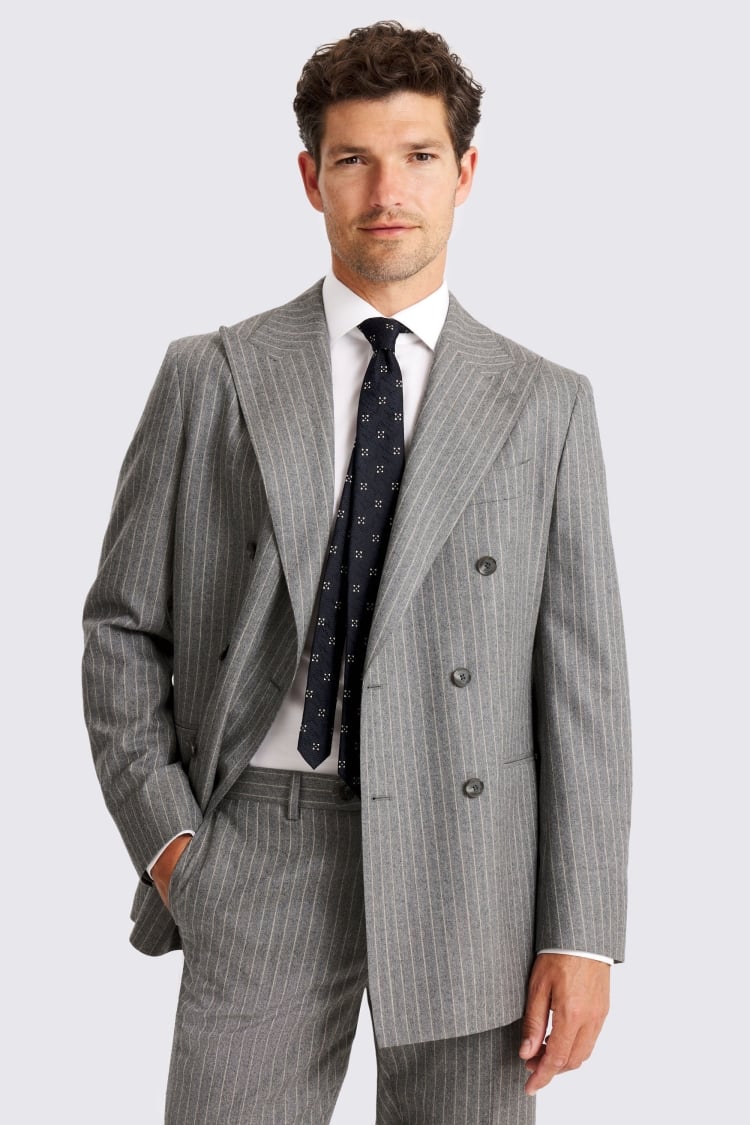
The button stance—the location of the jacket's top button—dictates where the jacket pulls when buttoned. If the button stance is too high or the jacket is too narrow across the chest and ribs, the button pulls tight, creating an 'X' shaped wrinkle pattern across the stomach. This tightness forces the jacket skirts to flare out, casting shadows and making the lower torso look bulkier than it actually is.
- Check the button test: If your jacket pulls into an 'X' when buttoned, it's too tight in the torso. You need to let out the side seams or move the button slightly.
- Evaluate jacket length: A jacket that ends too high cuts the body awkwardly, while a classic length that covers the seat creates a balanced, vertical line.
- Review venting: Center vents can pop open awkwardly if the hips are too wide for the jacket skirt, whereas double side vents accommodate movement gracefully without gaping.
Common Mistakes When Fixing Fit Issues
Many men try to solve fit problems using the wrong methods, often making the situation worse. Here are pitfalls to avoid when refining your wardrobe.
- Sizing up blindly: Buying a larger suit size fixes waist tightness but leaves the shoulders, chest, and sleeves baggy and uncoordinated. Always buy for your largest point and tailor down.
- Ignoring posture: Slouching pushes the pelvis forward and caves the chest, causing trousers to bunch up at the front regardless of how well they are tailored. Stand tall to let garments hang properly.
- Overlooking rise adjustments: Trying to fix front tension solely by letting out the side seams won't work if the issue is a restrictive crotch depth. Address the structural foundation first.
Frequently Asked Questions
Why do some suits look smooth while others show every contour?
The difference comes down to pattern drafting, fabric weight, and precision tailoring. Off-the-rack suits use standardized blocks, while bespoke or heavily altered garments are shaped to match your exact physical posture and dimensions.
Can a tailor completely eliminate front trouser pulling?
In most cases, yes, provided there is enough seam allowance left inside the garment. If trousers are purchased far too small, however, the fabric cannot be magically expanded.
Does the pleat style of trousers affect front volume?
Yes. Flat-front trousers rely on a clean, close fit across the pelvis, which leaves little room for error. Single or double pleated trousers offer natural folds of fabric that expand smoothly when sitting or moving, reducing tight pulling.
How does body weight fluctuation impact suit fit?
A fluctuation of even five pounds can change how structured garments sit on the waist and hips. Opting for trousers with side adjusters instead of rigid belt loops allows for subtle, quick adjustments throughout the year.