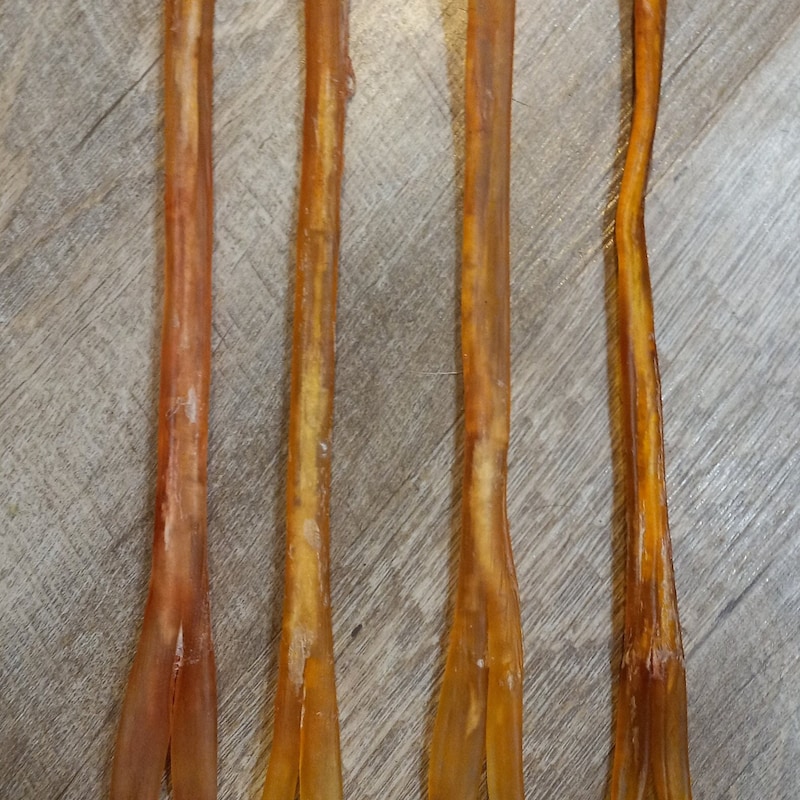
Building strong and agile muscles requires focusing on more than just muscle fibers. Tendons and connective tissues, often referred to in traditional contexts as sinew, dictate how efficiently your body transmits force, absorbs shock, and springs back from rapid movements. If you've ever hit a plateau in your strength or struggled with recurring joint stiffness, your training regimen likely neglected the structural integrity of your connective network.
To develop true physical resilience, you need a training approach that conditions both contractile tissue and the surrounding collagen matrix. When you load tendons progressively through specific movement patterns, your body remodels its extracellular matrix to handle higher forces. This guide breaks down the physiology of connective tissue, the exact mechanical loading strategies required for adaptation, and practical programming adjustments to bulletproof your joints.
The Mechanics of Connective Tissue Strength
Muscles generate the engine power, but connective tissues act as the transmission system. Tendons and fascia transfer the force produced by muscle fibers directly to the skeleton. Without stiff, responsive connective tissue, much of that muscular force gets absorbed as internal slack rather than translating into external movement.
Your connective network adapts to mechanical tension through mechanotransduction. When you subject tissue to tension, resident cells called fibroblasts sense the physical load and synthesize new collagen fibrils. Unlike muscle tissue, which receives a massive blood supply and repairs quickly, connective tissue has limited vascularity. It adapts at a much slower rate, which means heavy, slow-load training or isometric holds are necessary to stimulate structural changes without causing overuse injuries.
Collagen Synthesis and Remodeling
Collagen makeup determines the tensile strength of your connective structures. Type I collagen dominates tendons and ligaments, offering high resistance to elongation. When you perform resistance training, your body breaks down old, damaged collagen and lays down new parallel strands.
Timing matters during this remodeling phase. Research published in the Journal of Physiology shows that targeted loading combined with specific nutrient timing can enhance collagen synthesis rates within hours of a workout. Neglecting this mechanical stimulus leaves tendons prone to tendinopathies and reduces your overall movement velocity.
Training Protocols for Resilient Connective Tissues
Standard bodybuilding splits often focus on high pump volume and metabolic stress, which build muscle size but do little to strengthen connective tissue stiffness. To build strong and agile muscles, you must integrate specific loading modalities that challenge the elastic properties of your frame.
Heavy Slow Resistance Training
Heavy slow resistance involves lifting loads at a controlled, deliberate tempo—often taking three to five seconds on both the eccentric and concentric phases. This protocol keeps tension on the tendon for an extended duration, forcing the collagen matrix to adapt.
- Use loads between 70% and 85% of your one-rep maximum for multi-joint movements.
- Maintain a strict cadence, such as a 3-second lowering phase and a 3-second lifting phase.
- Prioritize compound lifts like squats, Romanian deadlifts, and overhead presses.
Isometric Loading for Pain Relief and Stiffness
If you experience nagging tendon discomfort around the knees or elbows, heavy isometric holds can reduce pain while increasing tendon stiffness. Isometrics allow you to apply massive tension to a tendon without moving the joint through a vulnerable range of motion.
- Perform mid-range pin squats or heavy calf raises on a leg press machine.
- Hold the load statically for 30 to 45 seconds per set.
- Complete 4 sets with 2 minutes of rest between efforts.
Enhancing Muscle Agility Through Plyometrics
Agility isn't just about quick footwork; it's about the nervous system's ability to switch rapidly from an eccentric deceleration phase to a concentric explosion. This is known as the stretch-shortening cycle. When you land from a jump, your tendons store elastic energy like a stretched rubber band. Releasing that energy efficiently separates average athletes from elite performers.
Plyometric training conditions the neuromuscular system to tolerate high impact forces and utilize stored elastic recoil. If your tendons lack stiffness, energy leaks out during ground contact, slowing down your change of direction.
Progressive Plyometric Integration
Don't jump straight into advanced depth jumps if you haven't built a baseline of structural strength. Start with low-intensity pogo hops and work your way up to reactive multi-directional drills.
- Pogo Hops: Keep your knees relatively stiff and bounce off the balls of your feet, focusing on minimal ground contact time.
- Countermovement Jumps: Drop into a quarter squat immediately before exploding upward, training the tendon to catch and return load instantly.
- Lateral Skaters: Bound from side to side, sticking the landing momentarily to build frontal plane stability and lateral connective tissue resilience.
Common Mistakes That Sabotage Tissue Adaptation
Many fitness enthusiasts derail their progress by mismanaging recovery or chasing fatigue rather than structural adaptation. Avoid these common missteps to keep your connective system healthy.
- Skipping the eccentric phase: Dropping weights too fast robs your tendons of crucial deceleration stimulus and increases sheer stress on joints.
- Ignoring variation: Sticking to the exact same rep ranges and movement vectors starves your connective tissue of the multidirectional loading it needs.
- Overtraining without deloads: Because connective tissue has poor blood supply, it accumulates micro-damage faster than muscle. Failing to take planned recovery weeks leads straight to chronic tendinitis.
- Chasing muscular fatigue over tension: Doing endless high-rep sets burns out muscle energy systems without creating the heavy mechanical tension required to stimulate collagen synthesis.
Frequently Asked Questions
How long does it take to strengthen tendons and connective tissue?
Connective tissue adapts much slower than muscle tissue because of lower blood flow. While you can notice muscle strength gains in weeks, significant structural remodeling in tendons typically takes 8 to 12 weeks of consistent, heavy mechanical loading.
Can stretching improve muscle agility?
Static stretching right before explosive activity can temporarily decrease power output and tendon stiffness. Instead, use dynamic warm-ups and active mobility drills to prepare your joints and connective tissue for rapid movements.
Are supplements like collagen effective for joint health?
Clinical studies, such as those reviewed by the National Institutes of Health, suggest that consuming hydrolyzed collagen peptides alongside Vitamin C roughly 60 minutes before a loading session can meaningfully increase collagen synthesis in connective tissues.
How do I know if my tendons are overloaded?
Early signs include localized stiffness that improves after a warm-up, dull aching pain the morning after a heavy training session, or tenderness directly over the tendon structure when pressed. Don't push through sharp pain; adjust your training volume immediately.



