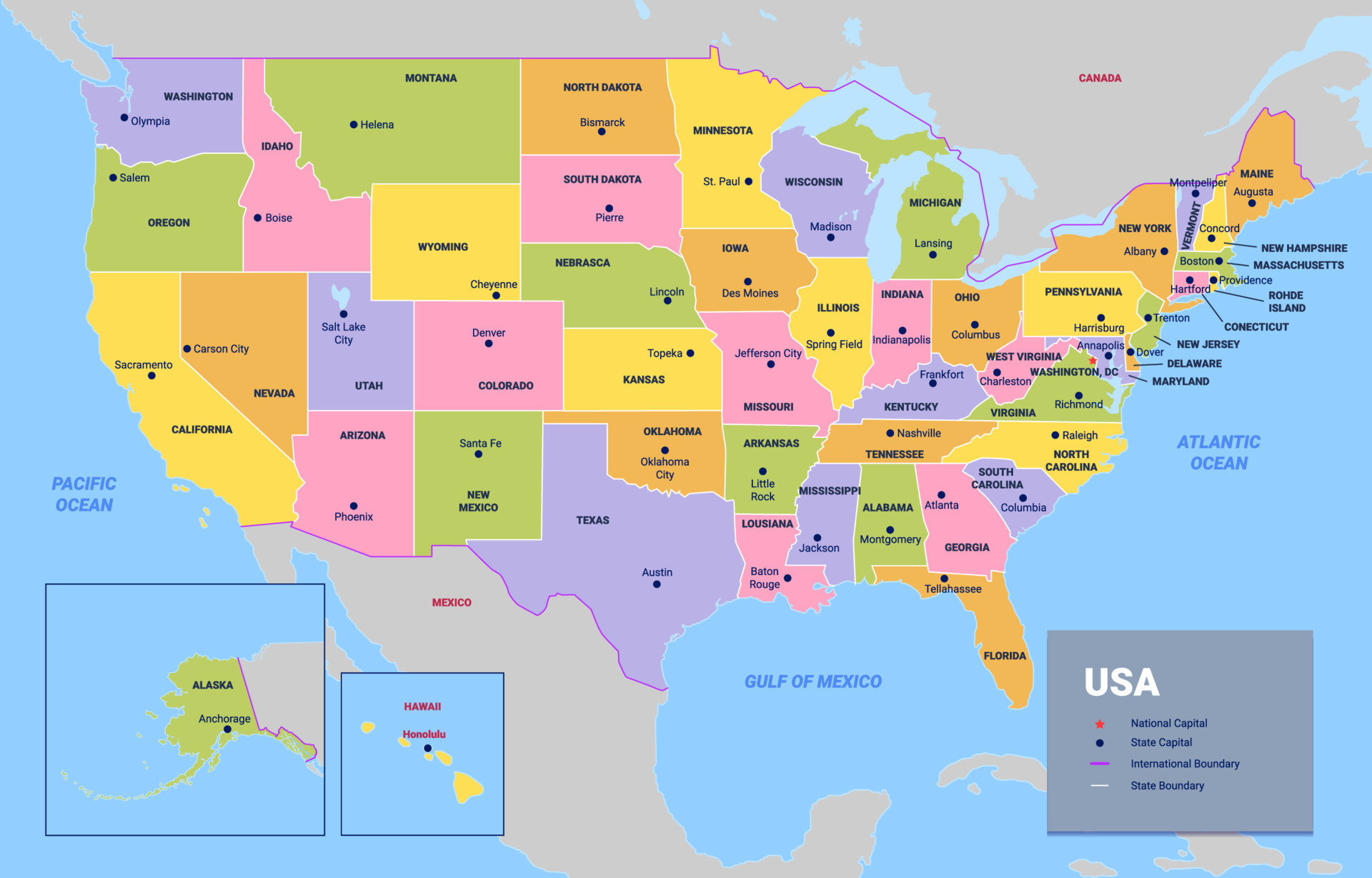
The tension between state sovereignty and federal authority isn't a modern political talking point. It's the central friction that shaped the American republic from its inception. When the framers drafted the Constitution in 1787, they didn't create a centralized unitary state. They engineered an experimental federal system designed to divide power. Over the centuries, that division sparked fierce battles over taxation, human bondage, civil rights, and economic regulation.
States' rights history reveals a recurring pattern where regional interests clash with national mandates. This dynamic has redefined the boundaries of American governance during moments of extreme crisis. Let's examine how these pivotal shifts altered the balance of power between Washington and the state capitals.
The Constitutional Compromise and Early Fractures
The Articles of Confederation established a weak central government that struggled to pay war debts or regulate commerce. To fix this, the 1787 Constitutional Convention in Philadelphia replaced them with a stronger federal framework. Yet, delegates worried about tyranny. They instituted a separation of powers and added the Tenth Amendment in 1791, reserving all powers not delegated to the federal government to the states or the people.
Almost immediately, politicians tested these boundaries. In 1798, the Federalist-controlled Congress passed the Alien and Sedition Acts, criminalizing harsh criticism of the government. In response, Thomas Jefferson and James Madison secretly drafted the Kentucky and Virginia Resolutions. These documents argued that states could judge federal laws and declare them unconstitutional within their borders—an early formulation of the compact theory of the Union.
The Nullification Crisis of 1832
Economic policy soon ignited the next major constitutional showdown. Congress enacted high protective tariffs in 1828 and 1832 to support northern manufacturing. Southern planters, particularly in South Carolina, relied on exporting cotton and buying foreign manufactured goods. They viewed these tariffs as an unfair tax favoring one region over another.
Led by Vice President John C. Calhoun, South Carolina adopted an Ordinance of Nullification. The state declared the tariff acts null, void, and non-binding within its boundaries, threatening to secede if the federal government tried to collect duties by force. President Andrew Jackson responded swiftly. While Jackson was a proponent of limited government, he firmly believed that nullification threatened the survival of the Union.
Jackson urged Congress to pass the Force Bill, authorizing military action against South Carolina, while simultaneously backing a compromised tariff reduction authored by Henry Clay. South Carolina backed down, but the crisis established a dangerous precedent. It linked economic grievances directly to the doctrine of state sovereignty.
Antebellum Clashes: The Fugitive Slave Act and Personal Liberty Laws
As the debate over slavery intensified during the antebellum era, northern and southern states weaponized state sovereignty against each other. The federal Fugitive Slave Act of 1850 required citizens in free states to assist in capturing escaped slaves and denied accused runaways a jury trial.
In response, several northern states—including Wisconsin and Vermont—passed Personal Liberty Laws. These statutes barred state officials from using state jails to hold fugitive slaves, required jury trials for recaptured individuals, and penalized kidnapping. When the Wisconsin Supreme Court declared the federal Fugitive Slave Act unconstitutional in Ableman v. Booth, the U.S. Supreme Court unanimously reversed the decision in 1859. Chief Justice Roger Taney reaffirmed federal judicial supremacy, proving that northern states were just as willing to invoke states' rights when it suited their moral and political goals.
Secession and the Civil War
The ultimate test of state sovereignty arrived with the election of Abraham Lincoln in 1860. Convinced that the federal government under a Republican administration would dismantle slavery, southern states chose secession. South Carolina seceded in December 1860, followed by ten other southern states forming the Confederacy.
The ensuing Civil War settled the primary constitutional question of the antebellum era: states did not possess a constitutional right to secede. The Union victory, codified by the Thirteenth, Fourteenth, and Fifteenth Amendments, fundamentally altered American federalism. The Fourteenth Amendment, in particular, applied the Bill of Rights to the states and introduced the Equal Protection Clause, permanently expanding federal oversight over civil rights.
Jim Crow, Massive Resistance, and Civil Rights
Decades after Reconstruction, southern states reasserted state sovereignty to bypass federal civil rights guarantees. Through poll taxes, literacy tests, and segregation ordinances, Jim Crow laws disenfranchised Black citizens.
When the Supreme Court ruled school segregation unconstitutional in the 1954 Brown v. Board of Education decision, southern politicians launched a campaign known as "Massive Resistance." Virginia and other states closed public schools rather than integrate them. In 1957, Governor Orval Faubus used the Arkansas National Guard to block Black students from entering Little Rock Central High School. President Dwight D. Eisenhower federalized the National Guard and deployed the 101st Airborne Division to enforce integration, demonstrating that federal executive power could override state defiance.
Modern Federalism: Healthcare, Immigration, and Marijuana
Today, the debate over states' rights looks different, but the underlying mechanisms remain active. States frequently challenge federal authority on contemporary issues through litigation and legislation.
- Healthcare: In the 2012 Supreme Court ruling National Federation of Independent Business v. Sebelius, the court upheld the Affordable Care Act's individual mandate as a tax, but struck down the federal government's penalty on states that refused to expand Medicaid, ruling it an unconstitutional form of coercion.
- Cannabis Legalization: While federal law classifies marijuana as a Schedule I controlled substance, numerous states have legalized medical and recreational use, creating a stark policy divergence between state statutes and federal enforcement priorities.
- Immigration: States like Texas and Arizona have enacted independent border enforcement measures, leading to ongoing constitutional challenges regarding whether immigration enforcement falls exclusively under federal jurisdiction.
Frequently Asked Questions
What is the legal foundation for states' rights in the US?
The Tenth Amendment of the Constitution serves as the primary legal text, stating that powers not delegated to the federal government are reserved to the states or to the people.
Did states ever have the legal right to secede?
No. The Supreme Court ruled in the 1869 case Texas v. White that the Constitution created an indestructible Union composed of indestructible states, meaning unilateral secession was legally impossible.
How did the Fourteenth Amendment change federalism?
Ratified after the Civil War, the Fourteenth Amendment limited state power by requiring states to provide due process and equal protection under the law, allowing federal courts to protect individual rights against state infringement.
Why do states pass laws that contradict federal statutes?
States often pass conflicting laws—such as marijuana legalization or immigration policies—to signal political opposition, pressure Congress for legislative reform, or test constitutional boundaries in federal courts.



