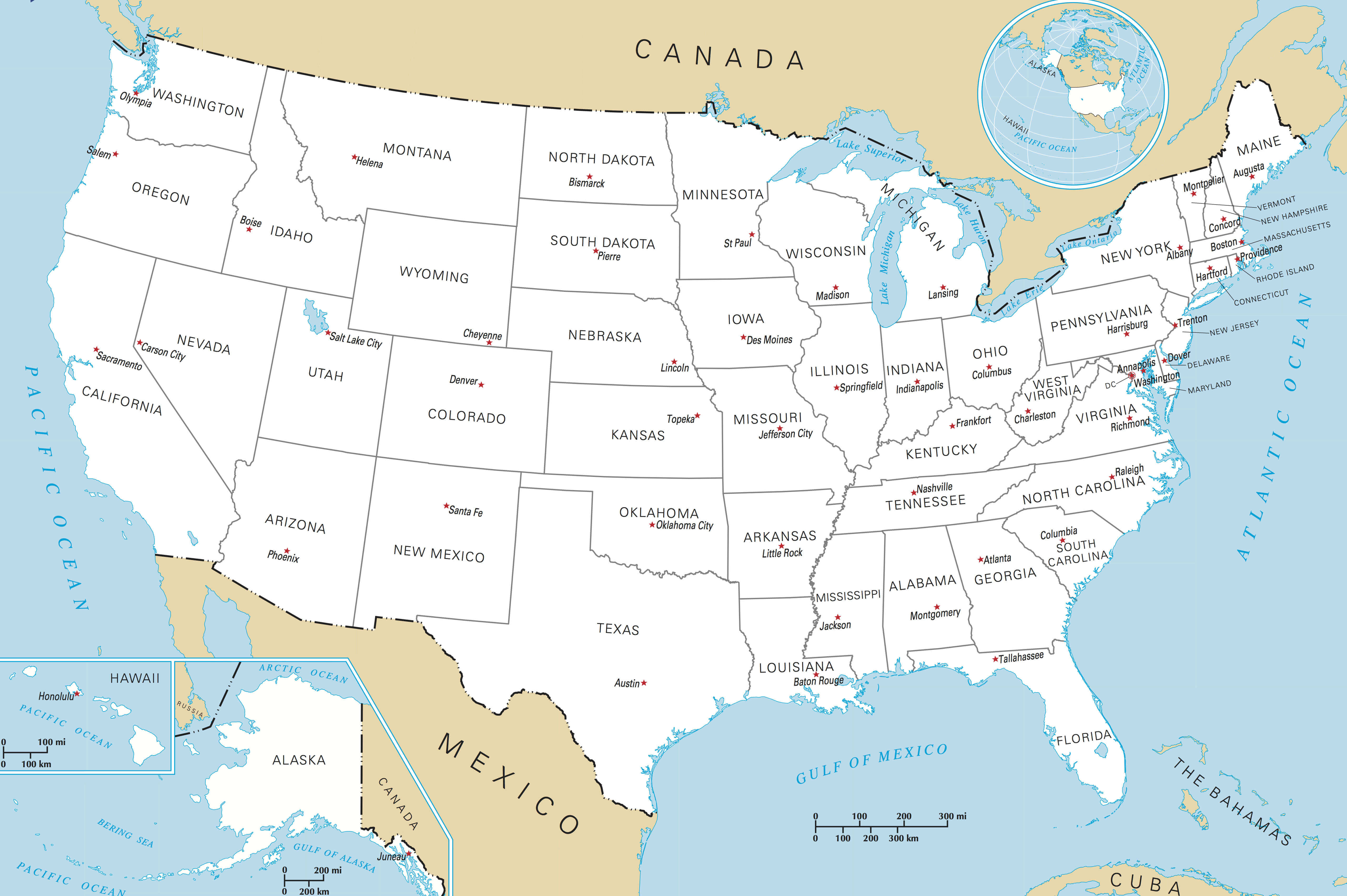
Two capital letters separate your home from a lost piece of mail, a rejected tax return, or a delayed package. The system of state abbreviations shapes how governments, shipping carriers, and databases process location data every single day. While we type these codes without thinking, their creation solved a massive logistical crisis for the United States Post Office Department in the 1960s.
Before this standardized system took hold, addresses required full state spellings that clogged sorting operations and slowed down mail delivery. The introduction of ZIP codes in 1963 changed everything, forcing a transition from traditional names to compact, uniform identifiers. Understanding how these two-letter codes work reveals a fascinating shift in American bureaucracy, data management, and national infrastructure.
The Postal Crisis That Forced Standardization
By the early 1960s, the volume of mail moving across the United States threatened to overwhelm postal facilities. Cities were expanding, populations were mobile, and sorting offices relied entirely on manual labor. Workers read handwritten or typed addresses line by line, memorizing regional routing rules to sort letters into pigeonholes.
Long state names created bottlenecks. Writing out "Massachusetts", "Pennsylvania", or "California" on every envelope took up valuable space on mailpieces and required extra time for sorting clerks to parse. With mail volume climbing toward billions of pieces annually, the Post Office Department needed an automated solution.
The turning point arrived with the launch of the ZIP Code system on July 1, 1963. Along with the five-digit numerical code, the agency realized that machine-reading technology required a standardized, uniform method for designating states. If every address followed a rigid structural template, mechanical sorters could eventually process mail faster. The two-letter state abbreviation was born out of this urgent need for machine-readable efficiency.
Rules of the Code: Why Some Make Sense and Others Puzzle Us
Designing a two-letter code for fifty states plus territories sounds simple, but the constraints were tight. Every code had to be exactly two characters long to fit neatly into fixed-width computer fields and standardized mail lines.
The USPS Postal Addressing Standards established logical guidelines, though anomalies crept in based on historical overlap and conflict prevention.
- First Letters and Direct Contractions: Many states use the first two letters of their name, such as NE for Nebraska or CO for Colorado. Others use the first and last letters, or prominent consonant clusters like TX for Texas or FL for Florida.
- Avoiding Duplication: The strictest rule prohibited any two states from sharing an abbreviation. This created conflicts when multiple states started with the same letters. For instance, NE was claimed by Nebraska, leaving Nevada to take NV and New York to take NY.
- Historical Adjustments: Early postal abbreviations were actually three or four letters long (like Calif. or Mass.). The shift to a strict two-letter limit required public education campaigns, as citizens and businesses had to unlearn decades of traditional local abbreviations.
The Shift From Bureaucratic Tool to Digital Infrastructure
When computers entered government and corporate offices in the 1970s and 1980s, database architects needed fixed data fields. Variable-length text fields for state names created messy datasets where "California", "Calif.", and "ca" all existed in the same table, breaking queries and reporting tools.
The two-letter postal code provided an ideal solution for relational databases. Programmers could allocate a strict two-character VARCHAR field for the state column, ensuring data integrity across payroll systems, tax databases, and census records.
Today, this infrastructure powers modern commerce. When you enter your shipping information on an e-commerce checkout page, address validation software instantly checks your ZIP code against your state abbreviation. If you type a mismatched pair, the system flags the error before your order ever leaves the warehouse. This automation saves shipping carriers millions of dollars annually in misrouted freight.
Common Pitfalls in Address Formatting and Data Entry
Even with a standardized system, errors happen frequently in both manual writing and software development. Recognizing these pitfalls helps businesses and individuals maintain clean records.
- Confusing Similar Codes: States with shared initials frequently cause mix-ups. MS (Mississippi) and MI (Michigan) or MA (Massachusetts) and MD (Maryland) are often transposed by fatigued data entry operators.
- Ignoring Territory Codes: Territories like Puerto Rico (PR), Guam (GU), and the U.S. Virgin Islands (VI) are frequently treated as foreign countries or omitted entirely from domestic software drop-down menus.
- Outdated Formatting: Writing old-style abbreviations like Pa. or Kan. on modern automated shipping labels can cause sorting machines to reject the package for manual inspection, delaying delivery by days.
Frequently Asked Questions
Why did the Post Office switch from three-letter abbreviations to two letters?
Two-letter codes were introduced alongside ZIP codes in 1963 to accommodate early data processing equipment and standardized mailing labels. A strict two-character limit allowed computer punch cards and automated sorting machines to parse location data without running out of space on pre-printed forms.
Are postal abbreviations the same as Associated Press style?
No. The Associated Press stylebook traditionally used traditional abbreviations like Calif., Mass., and Wash. for journalistic writing, while postal codes use strictly capitalized two-letter forms like CA, MA, and WA. Modern digital journalism has increasingly adopted postal codes for consistency, but differences remain in newsrooms.
Can two states ever share the same abbreviation?
Never within the United States postal system. Every single state, commonwealth, and federal territory possesses a completely unique two-letter identifier to prevent misrouting in the national mail stream.
Why do some states use letters that don't match their first syllable?
Codes like PA for Pennsylvania or LA for Louisiana were chosen to avoid conflicts with other states sharing similar starting letters, or to capture distinctive phonetic sounds within the state's name when the obvious two-letter combination was already taken.



