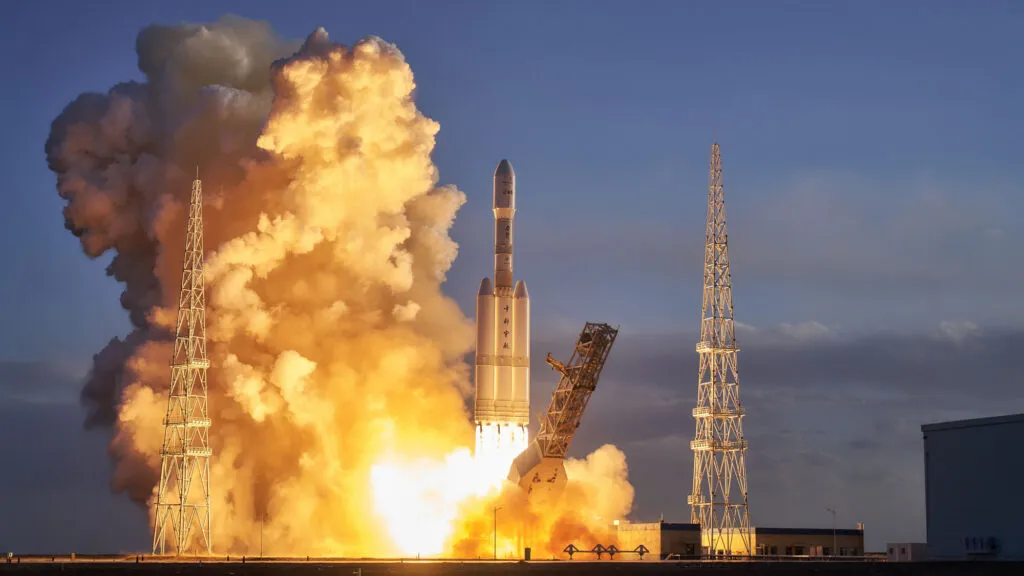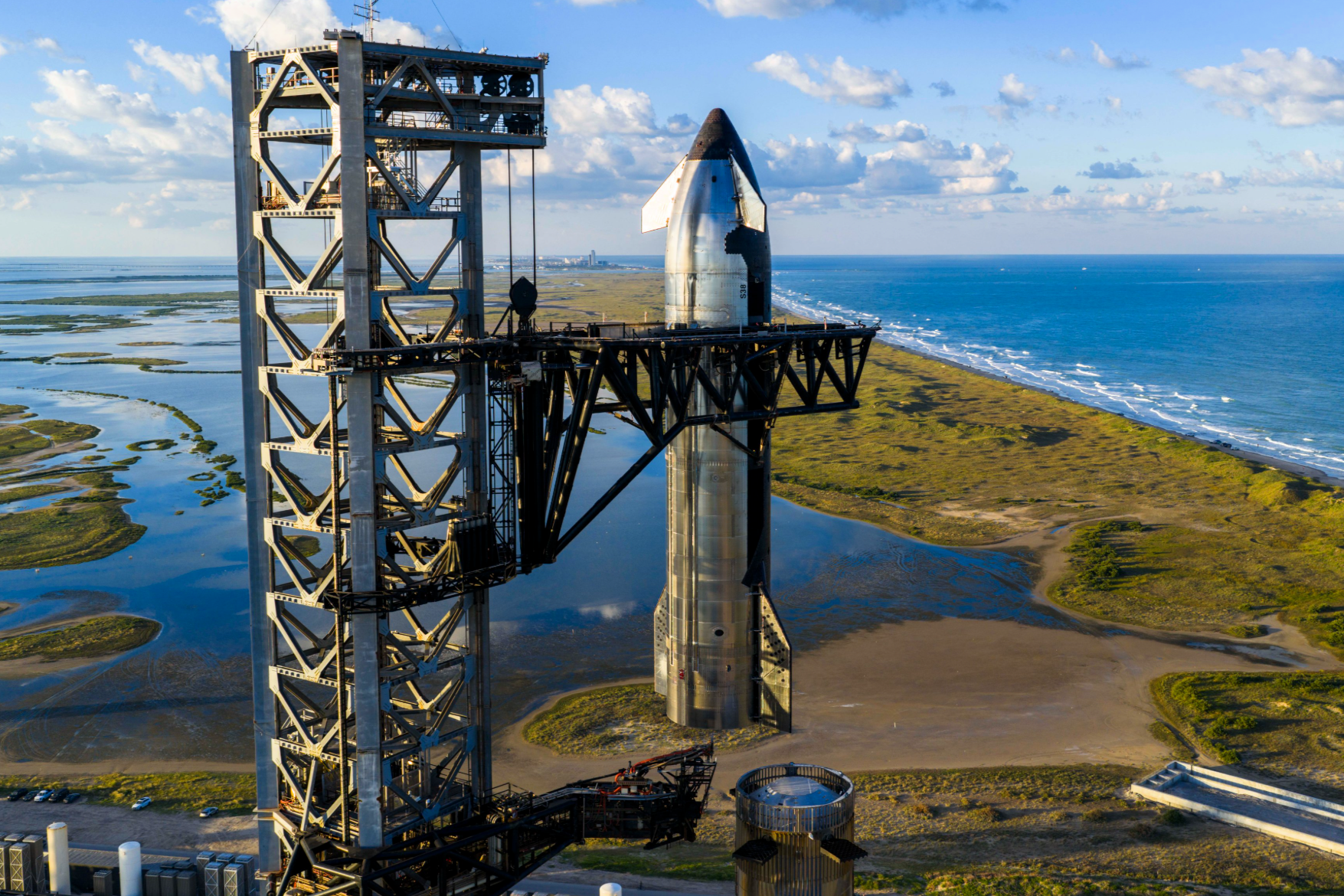
When people talk about the biggest rockets ever built, two names dominate the conversation: NASA's legendary Saturn V and SpaceX's modern Starship. Saturn V opened the road to the Moon in the 1960s and 1970s, standing as a monument to human engineering under intense geopolitical pressure. Starship represents a complete rethinking of aerospace manufacturing, aiming for full reusability and regular flights to Mars. Comparing them isn't just about matching numbers on a spreadsheet; it's about looking at two entirely different philosophies of space flight separated by half a century.
Starship holds the crown for raw power and physical scale, generating roughly double the liftoff thrust of Saturn V while utilizing a fully reusable two-stage architecture. Saturn V relies on a three-stage expendable design that burned through billions of dollars of hardware on every single launch. Yet Saturn V carries a pristine historical record of thirteen successful flights without a single catastrophic loss of payload, whereas Starship's flight-test campaign is an ongoing evolution of rapid iteration, destruction, and redesign.
Physical Dimensions and Structural Scale
At first glance, Starship edges out Saturn V in height, though their silhouettes tell different stories about mass and volume.
- Starship height: Approximately 122 to 124 meters (around 400 feet) depending on the specific ship configuration and payload bay variants.
- Saturn V height: 110.6 meters (363 feet).
- Starship diameter: 9 meters across the entire cylindrical body.
- Saturn V diameter: 10.1 meters at its widest base stage, tapering down through its upper sections.
Even though Starship stretches taller, Saturn V possessed a slightly larger maximum diameter in its first stage, giving it a unique internal volume profile. However, Starship's gross liftoff mass is significantly heavier, often pushing past 5,000 metric tons when fully fueled, compared to Saturn V's roughly 2,900 metric tons. That massive weight difference comes down to propellant mass fractions and the heavy steel-and-alloy construction choices SpaceX uses to make mass production viable.
Propulsion Systems: Raptor vs. F-1 and J-2
The beating heart of any heavy-lift vehicle is its engine architecture. The engineering choices made by Wernher Braun's team at NASA contrast sharply with the modern choices made by Elon Musk's propulsion engineers at SpaceX.
Saturn V used five massive Rocketdyne F-1 engines on its first stage (the S-IC), burning liquid oxygen (LOX) and RP-1 (refined kerosene). Each F-1 engine was a marvel of combustion stability and raw power, producing about 1.5 million pounds of thrust. The second stage (S-II) and third stage (S-IVB) switched to J-2 engines burning liquid oxygen and liquid hydrogen (LH2), providing high specific impulse for deep-space maneuvers.
Starship relies on the Super Heavy booster powered by a cluster of 33 Raptor engines, which run on sub-cooled liquid oxygen and liquid methane (CH4). Methane burns cleaner than kerosene, reducing soot buildup and making engine reuse practical for multiple flights. Together, those 33 Raptors produce roughly 16 million pounds of thrust at liftoff—more than double the 7.6 million pounds generated by Saturn V. The upper-stage Starship vehicle itself adds another six Raptor engines (three optimized for sea level and three for vacuum), creating an integrated spacecraft and upper stage that doesn't separate its payload from its main propulsion housing the way traditional capsule systems do.
Payload Capacities and Orbital Mechanics
Comparing payload numbers requires looking closely at how each rocket gets cargo to its destination.
Saturn V could lift roughly 140 metric tons into Low Earth Orbit (LEO) and about 40 to 50 metric tons directly toward translunar injection paths for the Apollo command, service, and lunar modules.
Starship targets a LEO payload capacity of 100 to 150 metric tons in its fully reusable configuration. If flown in an expendable mode without recovering the booster or ship, those numbers scale even higher. However, Starship's true capability for deep space missions to the Moon or Mars relies heavily on orbital refueling. Because Starship can dock with propellant tanker variants in low Earth orbit, it can top off its tanks before heading out. This orbital fill-up allows the vehicle to deliver massive payloads—up to 100 tons—all the way to the lunar surface or interplanetary trajectories, bypassing the single-launch mass limits that constrained Apollo.
Manufacturing Economics and Reusability
The most profound divergence between these two programs lies in economics and operational philosophy.
Saturn V was a bespoke, hand-crafted masterpiece of the Apollo era. Built by contractors like Boeing, North American Aviation, and Douglas Aircraft, every stage was treated as a single-use artifact. Adjusted for modern inflation, a single Saturn V launch cost upwards of $1.5 billion. Once it cleared the launch tower, millions of dollars of precision hardware burned up in the atmosphere or sank to the bottom of the ocean.
SpaceX builds Starship using rapid iterative prototyping, utilizing stainless steel alloys instead of expensive carbon composites or specialized aerospace aluminum-lithium sheets. This allows workers to weld rings together outdoors, test units to failure, and modify designs week by week. The primary goal is complete and rapid reusability: catching the Super Heavy booster with mechanical arms on the launch tower and landing the ship propulsively on landing pads or ocean surfaces. If SpaceX hits its long-term economic targets, marginal launch costs could drop toward $100 million or less per flight, transforming the financial barrier to entry for heavy payloads.
Historical Reliability vs. Iterative Development
When evaluating safety and execution, the context of each rocket matters immensely.
Saturn V flew 13 times. It suffered minor instrumentation issues during Apollo 6 and a lightning strike scare during Apollo 12, but every single flight accomplished its mission objectives without losing a crew or a primary vehicle. That 100 percent success rate came from exhaustive ground testing, rigorous quality control, and a massive government budget where failure was not an acceptable option.
Starship follows a "test, break, fix, repeat" methodology pioneered by commercial software developers. Early integrated flight tests experienced explosive anomalies, structural failures during staging, and thermal protection tile losses during re-entry. Rather than hiding these setbacks, SpaceX broadcasts them publicly, gathering real-world flight telemetry to update guidance software and heat shield designs between successive test campaigns tracked by agencies like the Federal Aviation Administration.
Frequently Asked Questions
Which rocket is physically larger?
Starship is taller at roughly 122 to 124 meters compared to Saturn V's 110.6 meters. However, Saturn V had a slightly wider base diameter on its first stage.
Can Starship carry more weight than Saturn V?
In terms of raw capability to Low Earth Orbit, they sit in a similar class (roughly 100 to 140+ metric tons). For missions to the Moon or Mars, Starship's payload potential is much higher if orbital refueling operations succeed.
Why does Starship use methane while Saturn V used kerosene?
Refined kerosene (RP-1) used in Saturn V's F-1 engines works well for single-use boosters, but it leaves heavy carbon soot deposits that complicate engine cleaning and reuse. Methane (CH4) burns much cleaner, making it ideal for multi-use rocket engines that need to fire repeatedly without extensive overhauls.
Did Saturn V ever fail a mission?
No. Across all 13 uncrewed and crewed flights executed during the Apollo and Skylab programs, Saturn V maintained a flawless success record.