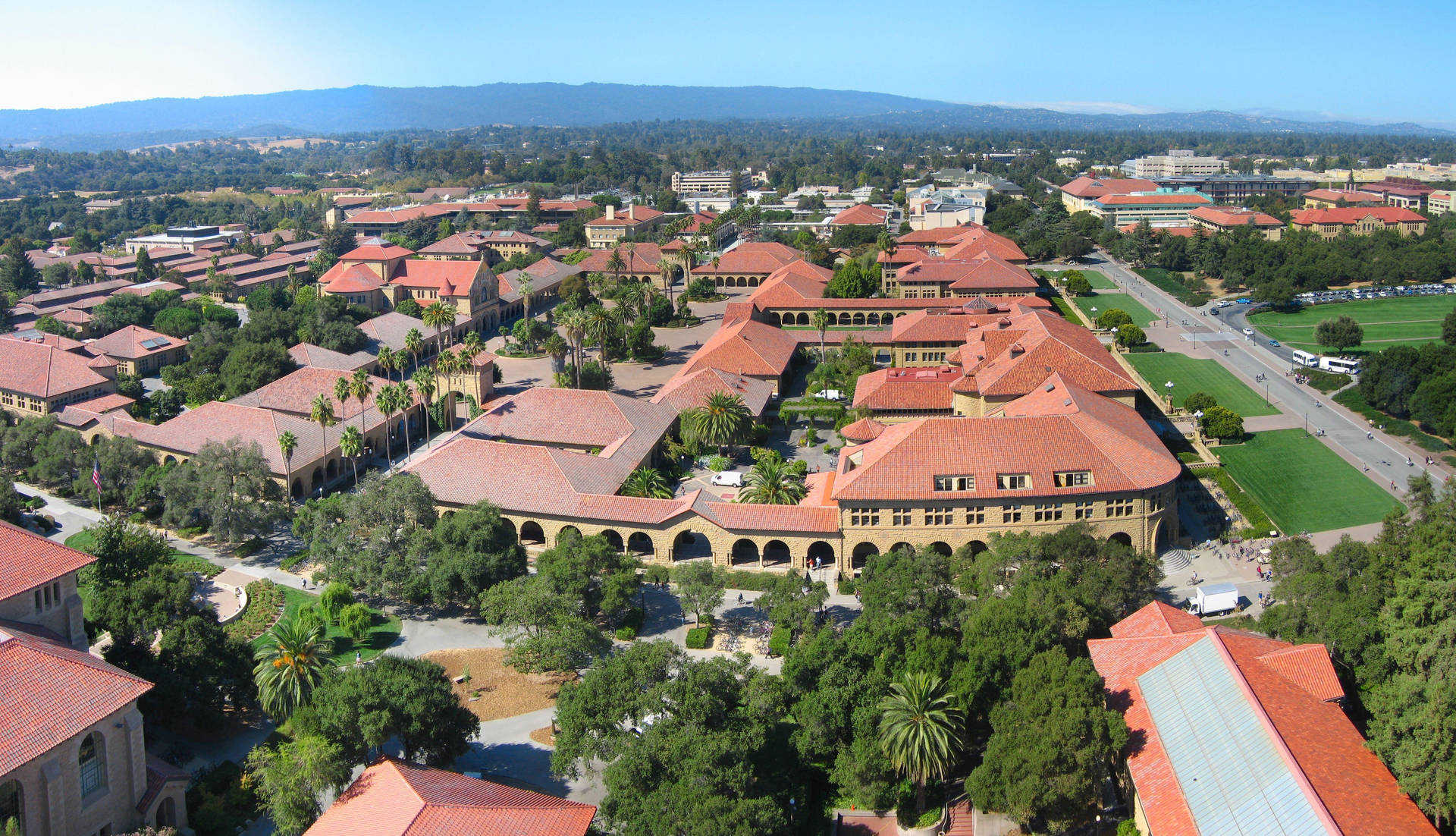
Getting into the Institute for Computational and Mathematical Engineering (ICME) doctoral program at Stanford University is an exercise in proving both mathematical rigor and applied computational vision. With an acceptance rate hovering around five percent and cohort sizes kept deliberately small at roughly ten to fifteen students each year, the admissions committee looks for candidates who can bridge advanced theoretical mathematics with scalable computational solutions. If you're planning your application, navigating the process requires precision, clarity, and an authentic presentation of your research trajectory.
This guide breaks down what the committee evaluates, how to curate your academic background, and how to avoid the common missteps that derail otherwise qualified applicants.
Decoding the ICME Admissions Criteria
The ICME admissions committee doesn't look for a single cookie-cutter profile. Because computational engineering sits at the intersection of computer science, applied mathematics, statistics, and domain sciences, your background might look different from another applicant's. However, successful candidates consistently demonstrate a few core competencies.
Mathematical maturity forms the foundation. You need to show high-level proficiency in linear algebra, multivariable calculus, numerical analysis, and probability. It's not enough to have taken these classes; you need top-tier grades in rigorous proof-based or advanced quantitative courses.
Programming capability is equally vital. The committee wants to see that you don't just write code for class assignments, but that you build computational models, handle large datasets, or contribute to open-source scientific software. Familiarity with modern scientific computing languages like Python, C++, or Julia is expected, along with an understanding of algorithmic efficiency.
Assembling Your Academic History and Transcripts
Your transcripts tell the story of your technical rigor. When you log your post-secondary institutions into the online portal, every grade matters.
Don't panic if your undergraduate degree isn't explicitly in computational mathematics. Many successful doctoral students come from mechanical engineering, physics, computer science, or pure mathematics. If your degree title diverges from traditional math or engineering, use your coursework history to highlight quantitative depth.
Stanford doesn't require or accept GRE scores for ICME admissions. This means your GPA, course difficulty, and letters of recommendation carry immense weight. If your university uses a non-4.0 grading scale, enter it exactly as reported on your official transcript rather than attempting a faulty conversion.
Crafting Letters of Recommendation That Stand Out
Your recommenders need to speak directly to your potential as an independent researcher. Generic letters praising your performance in a large lecture hall won't help you stand out.
- Choose research mentors: Professors or lab directors who have supervised your independent work provide the most compelling insights.
- Highlight problem-solving grit: Ask your recommenders to mention how you handle ambiguous research roadblocks, not just your final results.
- Provide context: Share your current CV, statement of purpose drafts, and project summaries with your letter writers well in advance so they can tailor their narrative.
Avoid asking prominent figures who barely know you just to secure a famous name on your application. A detailed, enthusiastic letter from an assistant professor who worked closely with you carries far more weight than a lukewarm endorsement from a department chair.
Writing the Statement of Purpose
Your statement of purpose is your chance to articulate why you belong in this specific ecosystem. Admissions readers want to understand your intellectual curiosity and your vision for computational science.
Start by defining the specific technical problems that keep you up at night. Are you working on climate modeling, uncertainty quantification, numerical linear algebra, or machine learning for physical systems? Connect your past research experiences directly to these interests.
Be specific about faculty members whose work aligns with yours. While you aren't locked into working with a specific advisor on day one, naming faculty whose labs you hope to join demonstrates that you've researched the department deeply.
Navigating the First-Year Milestone Realities
Understanding what happens after acceptance helps you frame your application contextually. Once admitted, you'll enter a structured environment designed to test and expand your quantitative limits.
During your first year, you'll undertake research rotations and prepare for qualifying exams. These written exams cover core material from foundational courses like numerical analysis and linear algebra. You must also align with a permanent research advisor by the summer quarter of your first year to secure ongoing funding and transition off the departmental fellowship. Keeping this lifecycle in mind helps you write a statement of purpose that reflects realistic alignment with the program's pace.
Frequently Asked Questions
Should I contact potential faculty advisors before applying?
Generally, you don't need to email faculty members prior to submitting your application. The admissions committee evaluates all applications holistically before students are admitted and begin the advisor-alignment process during their first year. If you have a very specific, niche overlap in published research, a brief, professional inquiry is acceptable, but don't expect extensive pre-application vetting.
How important are publications for a PhD application?
Having a peer-reviewed publication as an undergraduate is rare and not strictly required. However, having concrete research experience—demonstrated through posters, technical reports, or contributions to open-source scientific packages—is essential.
Can I apply with a three-year bachelor's degree?
Stanford accepts international three-year bachelor's degrees as long as they meet the university's minimum educational equivalence standards. Check the central graduate admissions portal for country-specific credential requirements.
What happens if I am not accepted into the PhD program?
ICME evaluates applicants for both MS and PhD tracks depending on selection, but you must choose your primary program track on the application. Re-applicants should demonstrate substantial growth, such as completing advanced coursework, gaining relevant industry R&D experience, or contributing to major research outputs.



