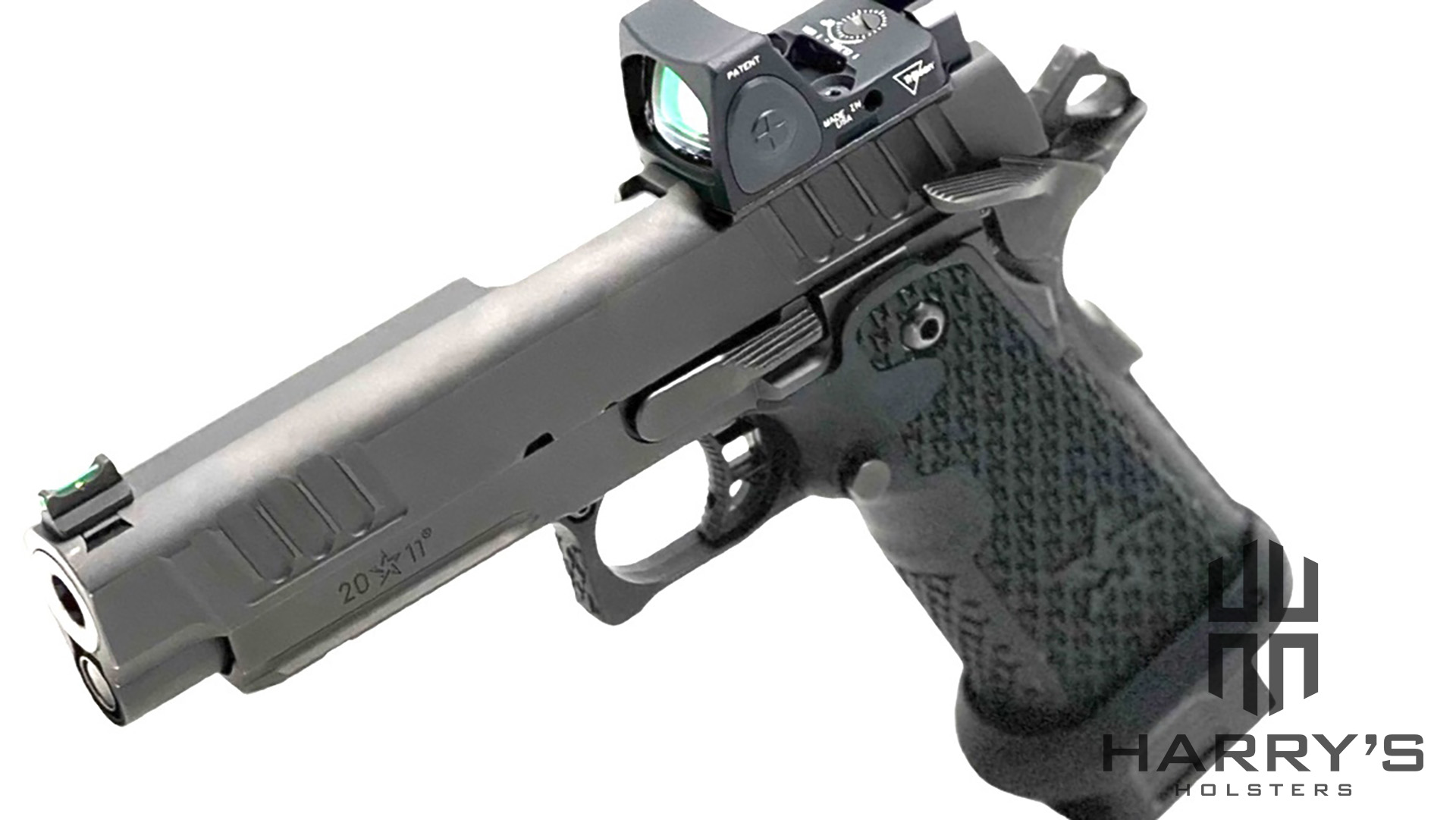
The traditional concealed carry market has long been dominated by polymer-frame striker-fired handguns. While reliable and lightweight, these pistols often leave much to be desired when it comes to trigger quality and flat-shooting performance. Enter the modern Staccato 2011 platform, which has fundamentally altered how shooters view high-end carry guns. Bringing single-action-only precision down to dimensions suitable for everyday carry, Staccato models like the CS, C, and C2 bridge the gap between duty-grade capability and concealability.
However, transitioning to a hammer-fired, manual-safety firearm for daily carry requires evaluating more than just brand prestige. Weight, maintenance, holster selection, and the manual of arms demand serious consideration before you swap out your current EDC setup.
Understanding the Staccato Carry Lineup
Staccato structures its compact and all-purpose handguns around specific barrel lengths, frame configurations, and grip dimensions. Knowing which model fits your lifestyle prevents buyer's remorse on a high-investment purchase.
- Staccato CS: Built with a 3.5-inch bull barrel and a dedicated micro-compact frame, this model is engineered for deep concealment. It utilizes a proprietary slim magazine design to keep the grip width minimal without sacrificing capacity.
- Staccato C: Featuring a 4.0-inch barrel and available in compact or full-size grip modules, this variant acts as an all-purpose tool. It handles duty holster requirements just as easily as concealed carry.
- Staccato C2: A legendary predecessor in the compact double-stack space, the C2 offers a 3.9-inch barrel and balanced dimensions, pairing high capacity with proven shootability.
Each of these platforms relies on aluminum-alloy frames to reduce weight, keeping empty carry weight hovering between 23 and 26 ounces.
The Manual of Arms: Single-Action Carry Mechanics
Carrying a Staccato means adopting a 1911/2011 manual of arms. Unlike standard striker-fired options, these pistols operate single-action-only and are designed to be carried "cocked and locked"—with a round in the chamber, the hammer back, and the thumb safety engaged.
This setup introduces distinct training requirements:
- The Thumb Safety Draw: Your thumb must sweep downward naturally during the grip acquisition phase. If you fail to build this into your repetition drills, you'll draw on target with a live safety engaged.
- Grip Safety Habit: Most Staccato carry variants incorporate a functional grip safety that requires proper palm pressure to disengage the trigger sear. High-thumbs grips or unconventional hand placements can cause a failure to fire if the web of your hand misses the lower safety pad.
- The Crisp Trigger Wall: Staccato triggers typically break between 4.0 and 4.5 pounds with an exceptionally short reset. While this aids accuracy immensely, it demands strict trigger finger discipline during high-stress presentation.
Weight, Bulk, and Concealment Realities
A common hesitation regarding double-stack metal-framed pistols is physical weight and printing. Polymer compacts are undeniably lighter, but weight distribution plays a massive role in how a firearm conceals.
Because the Staccato grip width measures around 1.2 inches, it distributes mass close to the body when paired with a claw-equipped appendix holster. The aluminum frame cuts top-heavy muzzle flip, but it also means you're carrying a dense steel slide and bull barrel combination. A sturdy, stiff-reinforced gun belt is non-negotiable; standard casual leather belts will cause the rig to sag and pull away from your torso.
Maintenance and Long-Term Reliability
High-tolerance handguns require disciplined maintenance schedules. Unlike loose-tolerance service pistols that run dry through thousands of rounds, tight-fitting 2011 platforms perform best when properly lubricated.
- Lubrication Points: Apply a few drops of quality gun oil to the slide rails, barrel hood, and locking lugs every few hundred rounds. Running a Staccato completely dry can lead to sluggish cycling during rapid strings of fire.
- Recoil Spring Intervals: Captured and tool-less recoil systems simplify field stripping, but springs wear out. Inspect and replace recoil springs according to manufacturer guidelines—typically every 3,000 to 5,000 rounds—to maintain consistent slide velocity and ejection patterns.
- Magazine Upkeep: Keep double-stack feed lips clean and free of carbon buildup. Debris accumulation inside the narrow geometry of compact 9mm magazines can induce feed stumbles.
Read more about platform engineering directly on the Staccato Official Site. For insights into holster compatibility and real-world carry dynamics, check out reviews on Lynx Defense.
Common Mistakes to Avoid
Transitioning to a high-end 2011 platform often exposes ingrained habits formed on polymer pistols.
Don't neglect dry-fire practice with an inert training barrel or snap caps specifically focused on disengaging the thumb safety smoothly from concealment. Another frequent error is limp-wristing; because the recoil impulse is deceptively soft, newer shooters sometimes relax their support hand grip, which disrupts the crisp cycling of the heavy slide assembly. Finally, avoid cheap universal holsters. A proper concealment holster requires rigid kydex molded precisely to the trigger guard and slide profile of your specific Staccato variant.
Frequently Asked Questions
Can I use standard 1911 magazines in a Staccato carry pistol?
No. Modern Staccato models use proprietary double-stack magazines engineered specifically for 9mm. Traditional single-stack 1911 magazines will not fit or feed correctly in a 2011 grip module.
Is a manual safety difficult to clear under stress?
It requires dedicated reps. With consistent dry-fire training, sweeping the safety off becomes an unconscious part of your natural draw stroke, mirroring the muscle memory required for AR-15 platforms.
How does the Staccato compare to polymer micro-compacts for everyday wear?
Staccato pistols are slightly thicker and heavier than micro-compact polymer options like the Glock 43X or Sig Sauer P365. However, they offer a vastly superior trigger pull and significantly flatter recoil management, trading a small amount of concealment comfort for maximum shooting performance.
Do Staccato carry models come optics-ready?
Yes. Most current production variants feature the Dawson Precision Optic (DPO) mounting system, allowing you to direct-mount popular micro red dot sights securely to the slide.


