When you're trying to trace family roots or find recent death notices, navigating local archives can feel overwhelming. St. Clair County obituaries serve as more than simple death notices. They act as community time capsules, tracking generations of families across Illinois and Michigan while preserving the everyday history of the region.
Finding accurate records shouldn't require guesswork. Whether you're researching a genealogy project or looking for service details for a community member, understanding where these records live and how they've changed makes all the difference.
The Evolution of Local Death Notices
Local records haven't always looked the way they do today. Decades ago, small-town newspapers printed brief death notices containing only the bare minimum: name, age, and date of interment. Space was limited, and publishing costs kept notices short.
Over time, these notices expanded into detailed life stories. Families began using the space to celebrate careers, community service, and personal milestones. In places like St. Clair County, this shift mirrored broader cultural changes. Obituaries transformed from clinical announcements into narrative portraits of local residents who built businesses, raised families, and shaped townships.
Today, digital platforms have completely rewritten the rules of access. Instead of flipping through microfilm in a basement archive, you can search decades of records online in seconds. However, this transition means modern notices are scattered across various funeral home sites, newspaper databases, and state platforms, which often complicates active searches.
Where to Find St. Clair County Records
If you're tracking down historical or current records in the area, you need to know where to look. Because different municipalities and townships handle archives differently, using a multi-step search strategy works best.
1. County Clerk and Vital Statistics Offices
For official legal records, the Illinois Department of Public Health or the Michigan Department of Health and Human Services maintain vital records depending on which St. Clair County you are researching (as both states feature counties with this name, though Illinois houses the prominent East St. Louis region). Certified death certificates require specific genealogical or familial relationship proofs, but they provide exact dates, causes of death, and parental lineage.
2. Local Newspapers and Digital Archives
Regional newspapers remain goldmines for detailed biographical content. Publications like the Belleville News-Democrat maintain extensive digital archives. Local libraries often provide free in-house access to historical newspaper databases like Newspapers.com, letting you pull obituaries dating back to the 19th century.
3. Funeral Home Databases
Modern funeral homes publish detailed online tributes that include service schedules, photo galleries, and interactive guest books. Checking specific funeral home sites operating within the county helps you find recent notices that haven't yet made it into broader library microfilms.
What Information St. Clair County Records Contain
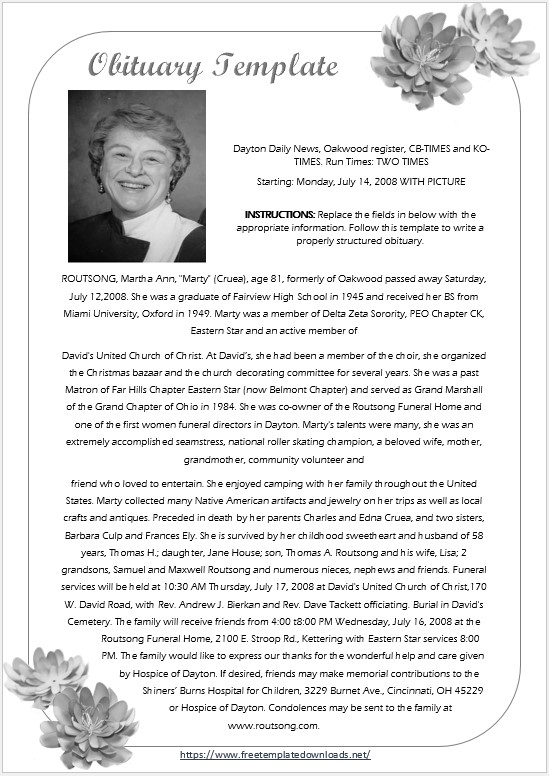
A well-crafted obituary offers far more than a date of passing. When you examine records from this region, you'll typically find a structured format designed to capture a complete portrait:
- Biographical Foundations: Full legal names, maiden names, birth dates, and birthplace details.
- Family Lineage: Names of surviving spouses, children, siblings, and predeceased relatives.
- Life Milestones: Education history, military service branches, and career achievements.
- Community Involvement: Memberships in local civic groups, churches, or fraternal organizations.
- Service Details: Visitation times, burial locations, and preferred memorial charities.
Spotting maiden names and parental connections makes these notices particularly valuable for family historians. They often bridge gaps that standard census data misses.
Common Mistakes in Genealogical Research
When researchers dive into local death records, they often run into preventable roadblocks. Avoiding these common errors saves time and frustration:
- Ignoring Spelling Variations: Surnames changed frequently in historical records due to phonetic spellings by census takers or newspaper compositors. Try searching with wildcards or partial names.
- Confusing Multiple Counties: Always verify whether you are searching in the Illinois or Michigan jurisdiction, as overlapping county names frequently trip up automated search engines.
- Depending on a Single Source: Never rely on a single transcription website. Always cross-reference online transcriptions with original newspaper scans or official vital records.
- Overlooking Casket and Cemetery Records: If an obituary is missing, local cemetery associations often hold burial logs that supply exact dates and plot locations.
Frequently Asked Questions
How far back do online St. Clair County obituary archives go?
Digital newspaper archives for the region often stretch back into the mid-1800s, though coverage density varies. Major towns feature near-continuous archives, while smaller townships might have gaps during specific historical decades.
Are online obituaries legally considered death certificates?
No. An obituary is a paid or submitted notice, not a legal vital record. For legal matters like estate settlement or insurance claims, you must request a certified death certificate from the county clerk or state health department.
Can I submit a historical obituary to a local archive?
Yes. Many local historical societies and public libraries accept family scraphems, old newspaper clippings, and personal photo collections to fill gaps in their community digital databases.
Why might an obituary not appear in online searches?
If a family chose privacy or opted out of publishing a formal notice, no public record will exist outside of the official state death register. Additionally, older local papers that never underwent digital scanning require physical archive visits.



