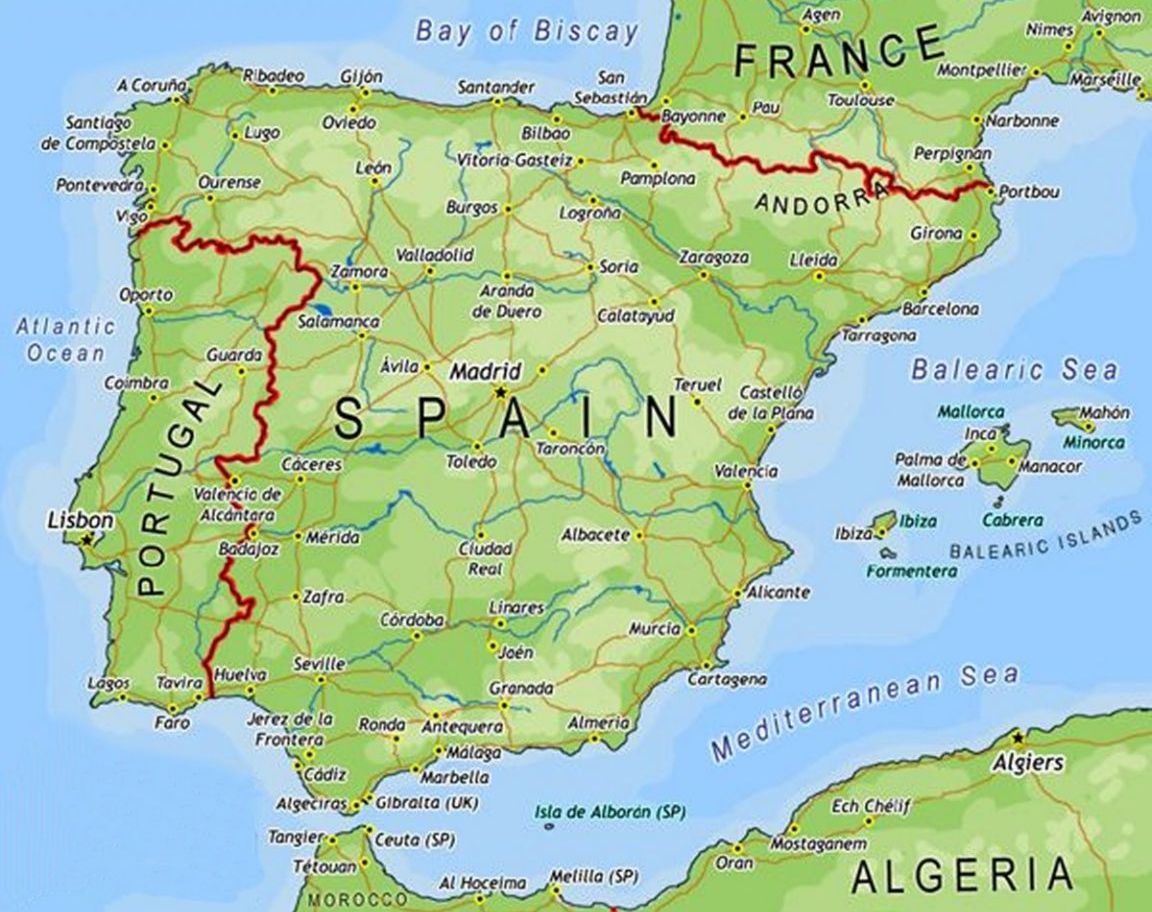
When the sun reaches its peak over Madrid, it's still early morning in San Francisco. The standard eight-hour time difference between Spain and California isn't just a quirk of the globe; it's the result of longitudinal geography, political alignment, and how daylight saving time shifts across continents. If you're scheduling meetings across the Atlantic or planning a trip, understanding how these time zones interact prevents missed calls and scheduling chaos.
At its core, Spain sits in the Central European Time zone (UTC+1 in winter, UTC+2 in summer), while California operates on Pacific Time (UTC-8 in winter, UTC-7 in summer). Because Earth rotates 15 degrees of longitude per hour, the distance between Madrid's meridian and California's Pacific baseline accounts for roughly eight hours of separation. However, political borders and mismatched seasonal clock changes mean this gap isn't always fixed at exactly eight hours throughout the year.
The Geographic Mechanics Behind the Offset
Time zones are anchored to Earth's rotation and the prime meridian in Greenwich, England. Madrid rests at roughly 3.7 degrees West longitude, which geographically places it close to Greenwich Mean Time. Despite this, Spain officially adopted Central European Time (CET) during the 1940s, aligning its clocks with Paris, Berlin, and Central Europe for political and economic coordination.
California spans a massive longitudinal range, but the state officially runs on Pacific Standard Time (PST), calibrated roughly to the 120th meridian west. When you calculate the longitudinal distance between Madrid and California's baseline, you find an arc of roughly 118 degrees. Dividing that span by the 15-degree hourly rate yields a theoretical difference of about 7.86 hours, which standardizes neatly into an eight-hour offset for commercial clocks. More details on this are detailed by Associated Press.
- Madrid Standard Time: CET (UTC+1)
- California Standard Time: PST (UTC-8)
- Standard Offset: Exactly 8 hours (California behind Spain)
How Daylight Saving Time Alters the Gap
Neither region keeps the exact same time year-round. Both Spain and California observe daylight saving adjustments, but they spring forward and fall back on different dates according to European Union and United States laws. This creates brief transitional weeks every spring and autumn where the standard eight-hour gap temporarily shifts to seven or nine hours.
In the United States, daylight saving time begins on the second Sunday of March, pushing clocks forward one hour into Pacific Daylight Time (PDT, UTC-7). Europe waits until the last Sunday of March to switch to Central European Summer Time (CEST, UTC+2).
For roughly two to three weeks every March, California has already moved forward while Spain remains on standard time, narrowing the gap to seven hours. A similar mismatch occurs in October. The U.S. ends daylight saving time on the first Sunday of November, while the European Union ends it on the last Sunday of October. During those final weeks of October, California falls back while Spain is still on summer time, temporarily stretching the difference to nine hours.
Real-World Scheduling Challenges
Managing transatlantic communication between Madrid and Los Angeles requires navigating a very narrow window of overlapping work hours. Because of the eight-hour lag, a standard morning routine in one location happens while the other is asleep.
When a professional in Madrid logs on at 9:00 AM, it is only 1:00 AM in Los Angeles. Conversely, when a team in San Francisco starts their workday at 9:00 AM, it's already 5:00 PM in Madrid, leaving only a brief, late-afternoon window for live collaboration.
- Madrid 9:00 AM: Los Angeles 1:00 AM (Previous night)
- Madrid 1:00 PM (Lunch): Los Angeles 5:00 AM
- Madrid 5:00 PM (End of Day): Los Angeles 9:00 AM (Start of workday)
- Madrid 9:00 PM: Los Angeles 1:00 PM (Midday lunch)
Companies with offices in both regions typically rely on asynchronous workflows, shared project management software, and tightly coordinated morning or evening syncs to bridge the divide. For instance, scheduling a meeting at 5:00 PM Madrid time places it at 9:00 AM in California, which works well for West Coast teams but cuts into personal evening time for Spanish workers.
Common Mistakes When Calculating Transatlantic Time
When people calculate time differences between Spain and California, several recurring errors lead to missed flights, late Zoom calls, and administrative confusion.
- Assuming the gap is constant: Forgetting that the U.S. and Europe change their clocks on different weekends in March and October results in being off by an hour.
- Confusing U.S. time zones: Treating California the same as New York or Chicago. California is on Pacific Time, three hours behind the East Coast and two hours behind Central Time.
- Ignoring internal travel shifts: Forgetting that if you travel from Madrid to the Canary Islands (which observe Western European Time, UTC+0), the time difference with California increases to nine hours during standard time.
To check current local times accurately, you can consult official time references like Time.is or the National Institute of Standards and Technology before locking in international schedules.
Frequently Asked Questions
Why does Spain use Central European Time instead of Greenwich Mean Time?
Geographically, Spain lines up with the same longitude as the UK and Portugal. However, in 1940, the government shifted the country's clocks forward one hour to align with Central Europe. The change remained permanent, meaning Spain operates one hour ahead of its solar position today.
Does California stay on daylight saving time all year?
No. California observes Pacific Daylight Time (PDT) from mid-March to early November and drops back to Pacific Standard Time (PST) for the rest of the year. Proposals to adopt permanent daylight saving time have stalled because federal U.S. law requires congressional approval for states to make that change.
How do TV broadcasts and live events handle the 8-hour gap?
Major sporting events like La Liga matches in Spain typically kick off in the afternoon or evening local time, which translates to early morning hours for viewers in California. Fans on the West Coast often watch matches live at 5:00 AM or rely on delayed streaming replays.
What is the best time of day for a phone call between Madrid and San Francisco?
The most reliable window is between 5:00 PM and 6:00 PM Madrid time. At that moment, it is 9:00 AM or 10:00 AM in California, giving both teams a fresh start or a clear midday slot to talk directly without disrupting sleep schedules.



