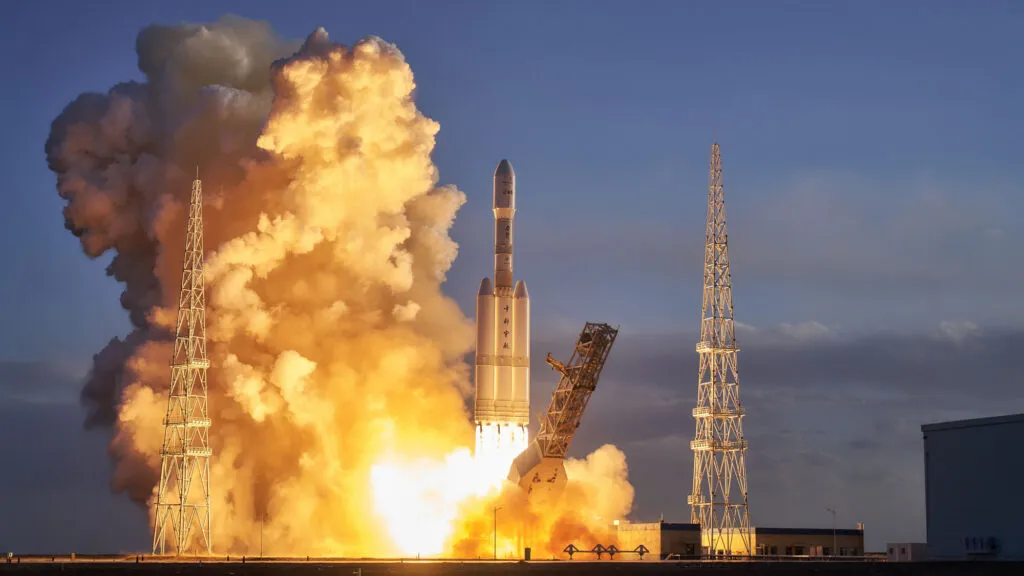
When people think about space exploration, they picture iconic astronauts planting flags or brilliant flight directors celebrating a successful splashdown. Yet behind every historic launch stand thousands of technicians, mathematicians, and quiet visionaries whose contributions rarely make headline news. These unseen figures built the calculations, materials, and infrastructure that made cosmic travel possible.
Understanding these quiet contributors requires looking past the glossy mission posters and examining the mechanical, mathematical, and logistical bedrock of modern spaceflight. From early orbital calculators to modern materials science, space exploration is fundamentally a collaborative web of overlooked ingenuity.
The Mathematical Pioneers Who Calculated the Path
Long before electronic computers automated flight trajectories, human computers performed the heavy lifting of orbital mechanics. During the mid-twentieth century, facilities like the National Advisory Committee for Aeronautics (NACA) relied heavily on pools of mathematicians to compute complex flight paths.
Many of these workers were women whose names were omitted from early mission summaries. They calculated launch windows, reentry angles, and orbital insertions by hand using desktop calculators and slide rules.
- Manual Error Checking: A single misplaced decimal point could cause a multi-million-dollar rocket to miss its target orbit entirely.
- Complex Geometry: Calculating non-linear trajectories required inventing new approaches to celestial mechanics on the fly.
- Pioneering Persistence: Figures like Katherine Johnson proved their reliability so thoroughly that astronauts specifically requested her sign-off before orbital flights.
Without these rigorous manual computations, early crewed missions would have lacked the navigational certainty required to return safely. Their work established the mathematical foundation that modern flight software still relies on today.
Engineering the Unknown: Materials and Environmental Control
Rockets face extreme thermal shifts, intense radiation, and severe atmospheric pressure changes. The engineers who design thermal protection systems and life support hardware rarely receive public acclaim, yet astronauts owe their lives directly to this specialized equipment.
Creating materials that can withstand reentry temperatures exceeding 1,500 degrees Celsius requires painstaking laboratory testing. Early teams experimented with ablative heat shields—materials designed to melt away systematically to dissipate thermal energy.
- Material Selection: Testing thousands of composite mixtures to find substances that balance weight and heat resistance.
- Closed-Loop Life Support: Designing systems to recycle water, scrub carbon dioxide, and regulate cabin temperature for months on end.
- Redundancy Planning: Building mechanical backups for every critical valve and seal to prevent catastrophic failure in a vacuum.
These engineering solutions operate silently behind the scenes. If a life support system functions correctly, nobody notices. If it fails, catastrophe strikes instantly. The success of these systems is measured entirely by their invisibility.
Ground Support and Mission Logistics
The public sees the final minutes of a countdown, but launch operations represent years of meticulous supply chain management and ground testing. Launch integration teams coordinate millions of individual components sourced from thousands of distinct manufacturers.
Every valve, circuit board, and fuel line undergoes rigorous inspection protocols. Ground support crews spend weeks outside in extreme weather conditions preparing launch pads, managing cryogenic propellants, and verifying telemetry data.
- Propellant Handling: Safely loading liquid hydrogen and oxygen requires extreme precision and hazardous material expertise.
- Telemetry Monitoring: Technicians watch hundreds of individual data channels simultaneously during a countdown to catch anomalies before ignition.
- Hardware Recovery: Specialized teams retrieve spent booster stages and payload fairings from remote ocean sectors to analyze wear patterns.
For more details on how historical technological programs managed these massive logistical hurdles, you can explore resources provided by the National Aeronautics and Space Administration. Additional historical tracking of aerospace development is documented by the Smithsonian National Air and Space Museum.
Overlooked Scientific Instrumentation
Building a rocket is only half the challenge; designing instruments capable of gathering meaningful data in deep space demands extraordinary ingenuity. Instrument designers must account for radiation degradation, extreme vibration during launch, and zero-maintenance operational lifespans lasting decades.
When a deep-space probe sends back crisp images of a distant moon, it validates the work of optical engineers, signal processors, and power systems technicians. These specialists ensure that fragile sensors survive the brutal environment of interplanetary space.
- Radiation Hardening: Shielding microprocessors against cosmic rays that would instantly fry standard consumer electronics.
- Power Management: Designing radioisotope thermoelectric generators to provide stable electricity for decades far from the Sun.
- Data Compression: Writing algorithms that maximize limited transmission bandwidth across millions of miles of empty space.
Frequently Asked Questions
Why were early mathematical contributors often left out of official histories?
Historically, institutional record-keeping focused heavily on program directors, chief engineers, and astronauts. Support staff, particularly pool mathematicians and technicians, were viewed as administrative overhead rather than primary scientific leads, though modern historical reassessment is actively correcting this imbalance.
How do modern space missions handle equipment redundancy?
Modern spacecraft utilize multiple redundant computer systems and mechanical backups. If a primary sensor fails, secondary and tertiary systems automatically take over the workload without requiring manual intervention from ground control.
What role do private contractors play in modern space logistics?
Private aerospace companies now manufacture major structural components, manage supply chains, and operate cargo resupply vehicles. This shifts traditional government-managed logistics into a hybrid model involving commercial partners.
How has automated software changed ground support roles?
While modern flight software automates real-time trajectory adjustments, ground support teams have shifted focus toward predictive maintenance, complex system diagnostics, and long-term mission planning rather than manual calculation.