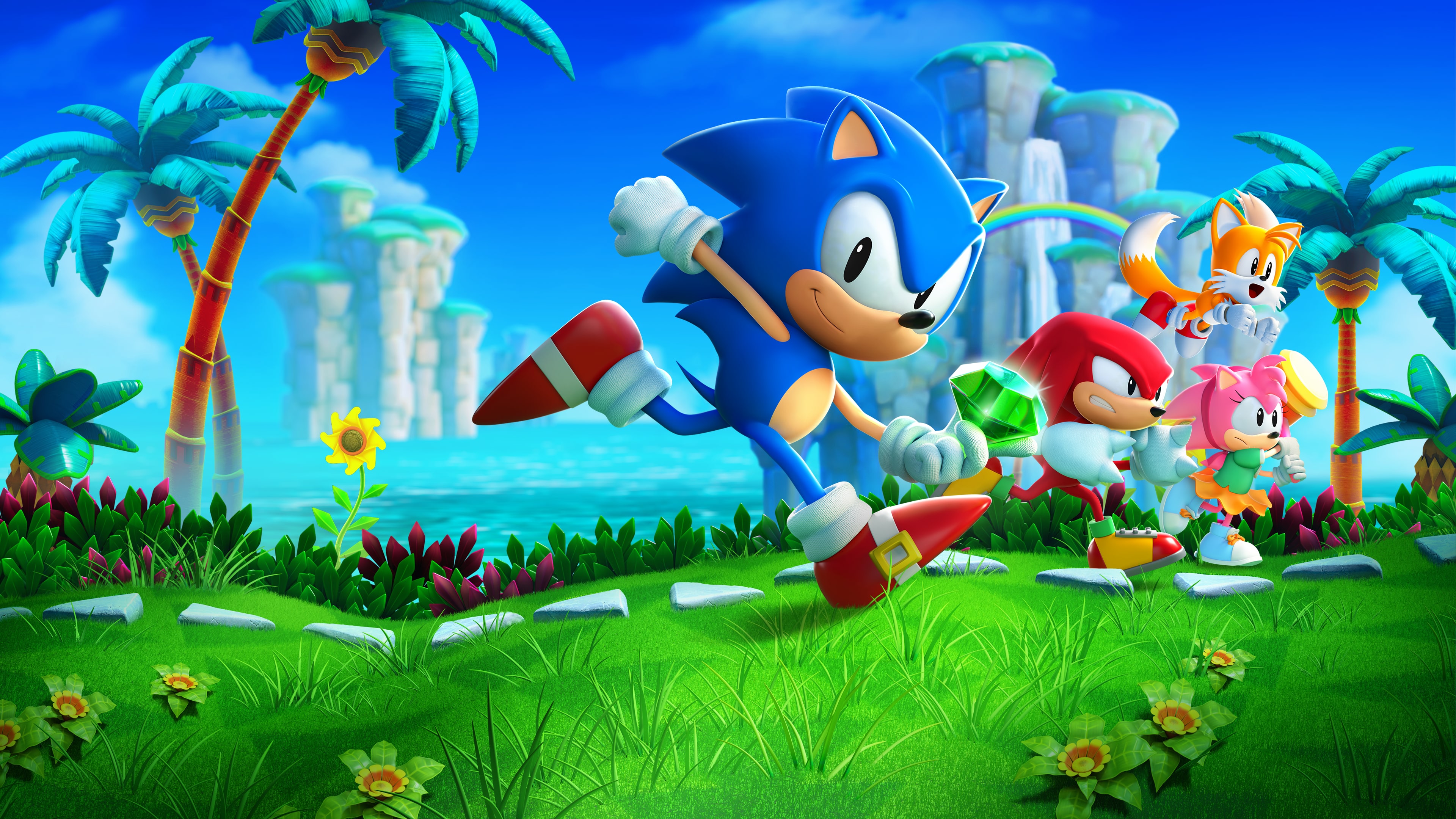
The clash between Sonic the Hedgehog and Doctor Ivo Robotnik defines Sega's flagship franchise. Since its debut in 1991, this rivalry has pitted relentless momentum against industrial control. It isn't just about a fast blue mammal stopping a mad scientist; it's a foundational struggle between individual freedom and mechanical tyranny that shaped platforming game design.
When Sega released Sonic the Hedgehog on the Mega Drive, the company needed an answer to Nintendo's Mario. They didn't want a generic mascot. They wanted a character born from momentum and attitude, directly opposed to the grey, mechanized oppression of Doctor Robotnik. That narrative contrast turned a simple side-scrolling platformer into an enduring battle of ideologies.
The Genesis of Speed Versus Machine
In 1991, the narrative setup was elegant in its simplicity. Robotnik captured defenseless forest animals and imprisoned them inside robotic shells, turning living ecosystems into fuel for his empire. Sonic countered by shattering these machines to liberate the wildlife.
This core loop established a clear philosophical divide:
- Organic Agency: Sonic represents fluid movement, instinct, and the wild, untamed energy of nature.
- Synthetic Order: Robotnik embodies rigid grids, automation, factory smoke, and the absolute control of the industrial complex.
Every stage in the classic titles physically mirrored this tension. Players didn't just dodge hazards; they navigated complex factories, oil oceans, and labyrinthine industrial zones that felt hostile to living creatures. Defeating a boss meant tearing down a piece of that infrastructure.
Design Philosophies That Built an Empire
The rivalry worked because the game design backed up the story. Sonic's physics engine rewarded momentum, timing, and risk-taking. If you kept your speed, you sailed past obstacles. If you hesitated, you hit walls and lost your hard-earned rings.
Robotnik's contraptions operated on the exact opposite principle. They demanded patience, pattern recognition, and precise positioning. You had to wait out a piston's rhythm, dodge a swinging spiked ball, or time a strike against an erratic hovercraft.
This created a compelling gameplay friction. Sonic's kinetic freedom constantly crashed against Robotnik's structural walls. Winning required mastering the environment rather than just button mashing. You can read more about how early mascot rivalries shaped the industry via Sega Retro.
Narrative Evolution and Character Shifts
Both characters underwent significant shifts as the franchise expanded across hardware generations and media adaptations.
Doctor Robotnik started as a slightly comical, egg-shaped despot in the West and Doctor Eggman in Japan. Over time, his ambitions escalated from local animal trapping to reality-warping schemes involving chaos emeralds, space stations, and temporal manipulation. Across modern media—including acclaimed cinematic adaptations detailed on Paramount Pictures—the character retained his core intellect and arrogance while gaining sharper comedic timing.
Sonic also evolved. He transitioned from a silent, foot-tapping sprite into a distinct persona defined by fierce independence and loyalty to his friends. The introduction of allies like Tails, Knuckles, and Amy created a social circle around Sonic, contrasting sharply with Robotnik's isolated, machine-driven domain.
Titles like Sonic Frontiers later introduced themes of introspection and ancient technology, proving that the core conflict could adapt to open-zone environments without losing its emotional anchor.
Cultural Impact and Modern Relevance
The enduring appeal of the Sonic-Robotnik dynamic stems from its visual clarity. Anyone can instantly grasp what a blue hedgehog running at the speed of sound represents when pitted against a menacing, mustache-twirling industrialist.
Beyond gaming, this rivalry influenced environmental themes in 1990s media, showing younger audiences the dangers of unchecked industrialization and habitat destruction. It turned abstract concepts of freedom and resistance into a colorful, high-speed interactive experience.
As gaming technology shifts toward hyper-realistic graphics and complex narratives, the simple, kinetic opposition of Sonic and Robotnik remains a masterclass in character design. It proves that compelling rivalries don't need endless exposition—they just need clear stakes, sharp contrasts, and a relentless drive forward.
Frequently Asked Questions
Why was Doctor Robotnik renamed Doctor Eggman?
The character was originally named Doctor Ivo Robotnik in Western regions, while his Japanese name was Doctor Eggman, referencing his round, egg-like physique. Sega officially unified the name globally in later titles, though "Robotnik" remains a beloved staple among longtime fans.
What inspired Sonic's signature speed?
Sega wanted a character who could utilize a momentum-based physics engine effectively. Designers also wanted a sharp contrast to Nintendo's slower, jump-heavy platforming style, making continuous movement the core gameplay differentiator.
Are Sonic and Robotnik related in any canon?
No. In main game continuities, they are entirely unrelated entities—one is a mutated or natural hedgehog with superhuman speed, and the other is a human scientific genius driven by megalomania. Certain comic book adaptations explored alternate origins, but they remain separate in core games.
How do the Chaos Emeralds fit into their rivalry?
The Chaos Emeralds represent raw, ultimate power. Robotnik constantly attempts to harness them to conquer time, space, or entire dimensions, while Sonic uses them to access his Super form, tipping the scales back toward natural balance and freedom.



