When law enforcement installs a surveillance tool to log the numbers dialed from a home phone, does that action constitute a search protected by the Constitution? Decades before smartphones tracked real-time GPS locations and web browsers mapped our daily habits, this exact question landed before the highest court in the United States. The resulting decision—rooted directly in a Maryland criminal case—created a foundational pillar of modern surveillance law known as the third-party doctrine. Understanding this ruling reveals how the legal system evaluates personal privacy when data passes through corporate servers.
The core search intent behind queries on this topic involves tracing the origins of digital surveillance law, specifically how state and federal courts handle metadata and electronic privacy rights. While casual readers look for a quick summary of how historical precedents affect modern data security, legal professionals and researchers seek precise analyses of the constitutional balance between state power and individual expectation of privacy. This article breaks down the mechanics of the ruling, its immediate fallout, and its ongoing friction with modern technology.
The Origins of the Case and the Trial Court Battles
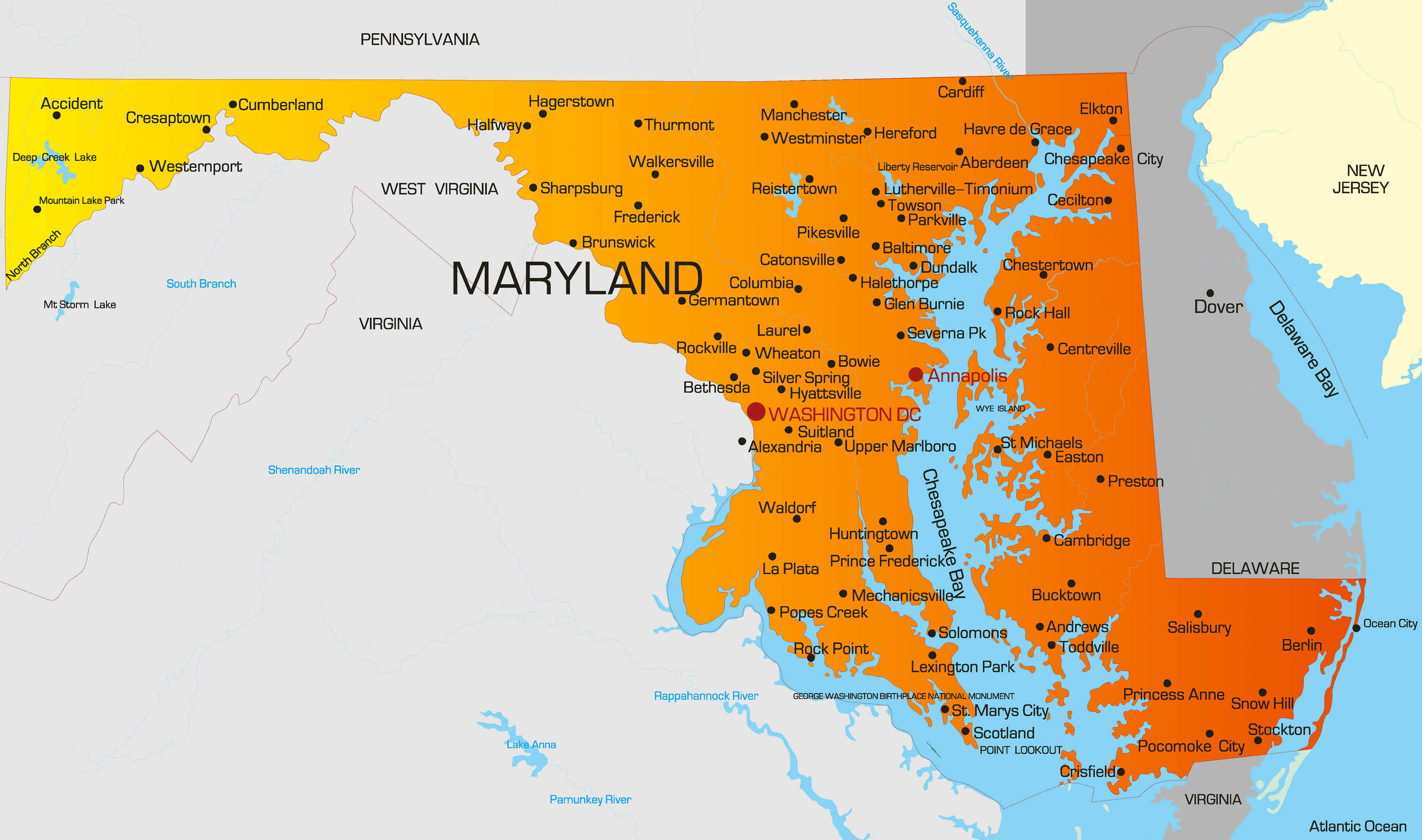
The legal confrontation began in Baltimore, Maryland, in March 1976. Following a robbery, the victim began receiving threatening phone calls from a man who identified himself as the perpetrator. Police suspected Michael Lee Smith after noting his car parked near the victim's residence. Without securing a search warrant, law enforcement officers asked the local telephone company to install a pen register—a device that records all numbers dialed from a specific telephone line—at the telephone company's central offices.
The pen register recorded that a call had been dialed from Smith's home to the victim's residence. Armed with this evidence, police obtained a search warrant for Smith's home, where they found a phone card matching the victim's description. Smith was subsequently tried and convicted of robbery in a Maryland trial court. More information on this are covered by Associated Press.
Throughout the initial proceedings, Smith's defense team argued that installing the pen register without a warrant violated his Fourth Amendment rights against unreasonable searches and seizures. Both the trial court and the Maryland Court of Special Appeals rejected this argument, ruling that the use of a device at the telephone company's office did not invade Smith's privacy. When the Maryland Court of Appeals denied review, the case moved upward to the Supreme Court of the United States, setting the stage for a nationwide precedent.
The Supreme Court Decision and the Third-Party Doctrine
In June 1979, the U.S. Supreme Court issued a 5-3 ruling in Smith v. Maryland, affirming the lower court's decision and holding that the installation of a pen register was not a "search" under the Fourth Amendment. Justice Harry Blackmun, writing for the majority, based the opinion on two primary analytical steps.
First, the Court applied the two-pronged expectation of privacy test established in Katz v. United States. The justices evaluated whether Smith exhibited a subjective expectation of privacy in the numbers he dialed, and whether society was prepared to recognize that expectation as reasonable. The Court concluded that individuals using telephone systems realize that phone companies record numbers for billing and operational purposes. Therefore, users lack a legitimate expectation of privacy regarding the numbers they dial.
Second, and more importantly for future generations, the ruling cemented the third-party doctrine. The Court reasoned that a person has no legitimate expectation of privacy in information they voluntarily turn over to third parties. Because telephone subscribers convey phone numbers to the telephone company when making calls, they assume the risk that the company—or law enforcement working with the company—will reveal that data to the government.
Immediate Fallout and Civil Liberties Warnings
The immediate consequence of the Smith v. Maryland ruling was a clear expansion of law enforcement surveillance capabilities. Police departments across the country gained the green light to use pen registers, trap-and-trace devices, and toll records without needing to satisfy the Fourth Amendment's probable cause requirement or obtain a judicial warrant.
Dissenting opinions at the time warned of the sweeping implications of treating routine business records as completely unprotected by the Constitution. Justice Potter Stewart, joined by Justice William Brennan, argued that a phone number dialed from a home is an intimate detail of personal life, revealing political associations, medical inquiries, and religious affiliations. Justice Thurgood Marshall penned a sharp dissent emphasizing that citizens have little choice but to use telephone infrastructure to participate in modern society, making the concept of "voluntary" disclosure a legal fiction.
- American Civil Liberties Union (ACLU) provides ongoing legal analysis regarding digital tracking and surveillance reform.
- Electronic Frontier Foundation (EFF) tracks modern courtroom battles over digital privacy rights and metadata collection.
How the Ruling Shapes Modern Digital Privacy
While Smith v. Maryland concerned analog telephone switches and rotary dials, its legal architecture governs the internet age. Every time a user visits a website, sends an email, or streams media, metadata—such as IP addresses, uniform resource locators, and routing logs—flows through third-party servers operated by internet service providers, cellular networks, and tech platforms.
Under the strict logic of the third-party doctrine, courts long maintained that internet users surrender privacy rights over data handed to network operators. However, the sheer volume and depth of digital trails have forced modern courts to confront the breaking points of 1970s legal doctrines. For instance, in landmark decisions like Carpenter v. United States, the Supreme Court ruled that historical cell site location records are protected by the Fourth Amendment, signaling that the digital era requires new boundaries for old precedents.
Despite these modern corrections, state-level privacy battles continue to test the limits of what counts as protected communication versus unprotected metadata. As seen in recent state court litigation across Maryland, plaintiffs challenging corporate data sharing or police data grabs frequently run into statutory roadblocks where courts draw sharp lines between actual message content and backend metadata.
Common Misconceptions About Digital Privacy Law
- Misconception 1: Privacy policies guarantee constitutional protection. Many people believe that corporate terms of service or privacy promises prevent law enforcement from accessing data. In reality, Fourth Amendment boundaries are set by constitutional law, not corporate policy.
- Misconception 2: Metadata is always unprotected. While historical doctrines stripped privacy protection from routing data, modern jurisprudence increasingly recognizes that aggregated digital metadata can reveal intimate details of a person's life, prompting targeted exceptions to older rules.
- Misconception 3: State laws mirror federal standards exactly. State constitutions and state wiretap statutes often provide greater privacy protections than federal baselines, meaning outcomes can vary significantly depending on jurisdiction.
Frequently Asked Questions
What was the primary legal question in Smith v. Maryland?
The case examined whether the police use of a pen register to record dialed telephone numbers without a search warrant violated the Fourth Amendment prohibition against unreasonable searches.
What is the third-party doctrine?
Established largely through cases like this one, the third-party doctrine is a legal rule stating that individuals do not maintain a reasonable expectation of privacy in information they voluntarily share with third parties, such as banks, phone companies, or internet providers.
Does the ruling still apply to modern smartphones and the internet?
Yes, core principles from the ruling continue to influence how courts analyze digital metadata, though modern exceptions—such as protections for real-time location tracking—have placed limits on its absolute application.
How do state laws differ from federal privacy rulings?
Individual states possess the authority to grant broader privacy protections through state constitutional law or state-specific wiretap statutes than the minimum standards set by the federal Constitution.



