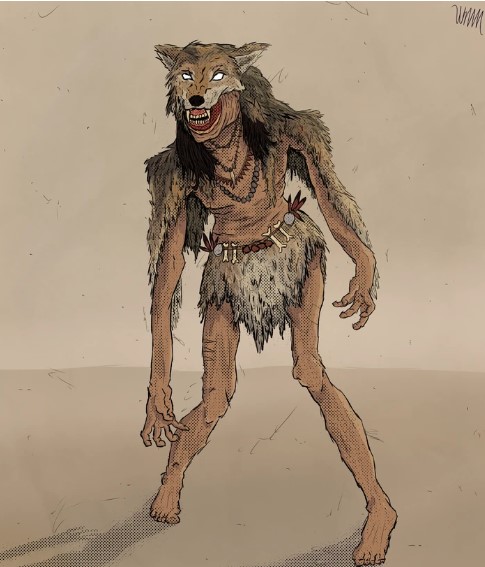
When people talk about cryptids in the American Midwest, the conversation usually turns to Bigfoot, the Mothman of Point Pleasant, or the Loveland Frog. Over the past decade, however, reports of skinwalkers—beings rooted deep in Navajo spiritual tradition—have begun appearing in rural Ohio. From the dense woods of the Wayne National Forest to isolated backroads near Athens, residents and internet forums swap eerie stories of shape-shifters tracking cars and mimicking human voices.
To understand skinwalkers in Ohio, we have to separate traditional Indigenous folklore from modern internet creepypastas and urban legends. While the concept of a shape-shifter holds profound spiritual and cultural weight within Diné (Navajo) society, its migration to the Midwest is a fascinating study in modern folklore transmission. This article breaks down what skinwalkers actually are, why they don't historically belong in Ohio, and what's really driving the local encounters people report today.
What is a Skinwalker in Traditional Lore?
In traditional Navajo culture, a skinwalker is known as yee naaldlooshii, which translates roughly to "by means of it, it goes on all fours." Unlike the shapeshifters of European werewolf lore or modern Hollywood movies, a Navajo skinwalker is a human—specifically a medicine person or witch—who has chosen to use their spiritual power for evil.
According to cultural beliefs, these individuals gain supernatural abilities by violating sacred taboos, most notably committing acts of desecration or severe harm against family members. Once initiated into this dark path, they gain the power to take the form of animals—most commonly wolves, coyotes, foxes, or owls—to spy on neighbors, bring bad luck, or cause illness.
In Navajo communities, discussing skinwalkers openly outside of specific cultural contexts is often discouraged because the topic carries heavy spiritual danger and taboo. Traditional practitioners view them as human criminals who have corrupted sacred knowledge, not as wild monsters roaming the woods.
How the Legend Migrated to Ohio
The geographic distance between the American Southwest (the traditional homelands of the Navajo Nation) and Ohio is roughly 1,500 miles. Historically and culturally, the Indigenous peoples native to Ohio—such as the Shawnee, Delaware, and Wyandot—did not have skinwalker legends in their oral traditions, though many regional tribes possessed rich histories of animal spirits and transformation myths.
So how did skinwalkers end up in Ohio? The transition happened primarily through three modern channels:
- The Internet and Creepypasta Culture: Platforms like Reddit (specifically subreddits like r/NoSleep), YouTube narrative channels, and TikTok transformed regional folklore into a globalized genre. Writers borrowed the term "skinwalker" because it sounded exotic and terrifying, applying it to any unexplained woodland encounter.
- The Blur of Cryptid Narratives: Modern storytelling frequently mixes disparate monster lore together. Bigfoot sightings, dogman reports, and Wendigo stories (another Indigenous concept heavily sensationalized and misapplied online) often get lumped under the skinwalker umbrella.
- The Appeal of Isolated Landscapes: Ohio features vast stretches of heavily forested terrain, abandoned industrial zones, and rural highways at night. When people experience high-strangeness events in these isolated pockets, they search for an existing monster label to explain the unexplainable.
Common Tropes in Ohio Skinwalker Sightings
If you read accounts on regional paranormal forums or listen to Ohio ghost-story podcasts, modern skinwalker encounters tend to follow a distinct pattern. Witnesses rarely report seeing a full animal-to-human transformation. Instead, they describe specific unsettling phenomena along rural routes like State Route 33 or deep inside the Hocking Hills region.
The Voice in the Woods
One of the most frequent claims involves hearing a familiar voice—often a distressed relative, a crying child, or a friend—calling out from the dark woods late at night. In traditional lore, skinwalkers are infamous for mimicking human voices to lure victims away from safety. In modern Ohio accounts, campers or homeowners report hearing these calls just beyond the edge of their campfires or porches.
Unnatural Movement and Appearance
Witnesses often describe seeing a creature that looks canine or humanlike, but wrong. It might run on all fours at impossible speeds, move with jerky, disjointed mechanics, or stand upright on two legs while possessing animalistic proportions. Glowing or reflective eyes that do not scatter light the way a normal deer or coyote's eyes would are another staple of these reports.
Roadway Stalking
Drivers on unlit Ohio backroads occasionally report being followed for miles by an animal that keeps pace with their vehicle at high speeds, or an entity that darts across the road just fast enough to avoid a collision before vanishing into a steep ravine or thicket.
Cultural Sensitivity and Misappropriation
The widespread use of the skinwalker label in mainstream media and internet culture has drawn significant criticism from Native American scholars and members of the Navajo Nation. Taking a sacred, culturally specific religious belief and turning it into a generic "monster of the week" strips away its original context.
For the Navajo, skinwalkers represent real spiritual trauma and community fears of betrayal from within. Treating the concept as a spooky campfire tale or applying it to geographic regions thousands of miles away from the Southwest ignores the actual cultural heritage of the Indigenous nations who historically and presently inhabit Ohio. Respectful exploration of folklore means recognizing where stories originate rather than flattening distinct cultural traditions into generic horror tropes.
Rational Explanations for Ohio's Creepy Encounters
While the psychological impact of a night in the woods can feel intensely real, most bizarre encounters have grounded, logical explanations. When people experience terror in dark, isolated environments, several natural phenomena often come into play:
- Mange and Wildlife Anomalies: Coyotes, foxes, and raccoons suffering from severe mange lose their fur, appear emaciated, and can develop strange gaits that make them look terrifyingly alien to an untrained eye at night.
- Auditory Pareidolia: The human brain is hardwired to pick out familiar sounds—like human speech or crying—from random environmental noises, such as wind howling through hollow trees or the territorial screams of red foxes and great horned owls.
- The Isolation Effect: Pitch-black darkness and sensory deprivation trigger adrenaline spikes, causing normal shadows and sounds to register as immediate threats.
Frequently Asked Questions
Can you become a skinwalker?
In traditional Navajo belief, becoming a yee naaldlooshii requires a conscious, malicious choice to violate profound cultural taboos and inflict harm on others. It is not an infectious curse or a biological condition that anyone can randomly catch.
Are Wendigos and skinwalkers the same thing?
No. While both originate from Indigenous American traditions and are often conflated in modern horror media, they are entirely different concepts. Wendigos come from Algonquian-speaking folklore in the northern United States and Canada and are associated with winter, famine, and cannibalism, whereas skinwalkers are specific to the Navajo and involve human witchcraft.
Why do people associate skinwalkers with Ohio?
The association is entirely modern and driven by internet culture. Because Ohio has plenty of rural woods and local ghost stories, storytellers and content creators frequently transplant popular cryptid labels onto local urban legends to generate scares online.
How do you protect yourself from a skinwalker in stories?
According to internet lore, traditional protective measures vary, but modern retellings often suggest avoiding looking the creature in the eyes, ignoring voices calling your name in the woods, or using blessed objects. However, in authentic Navajo tradition, protection involves spiritual healing, community unity, and avoiding the taboo behaviors associated with witchcraft.