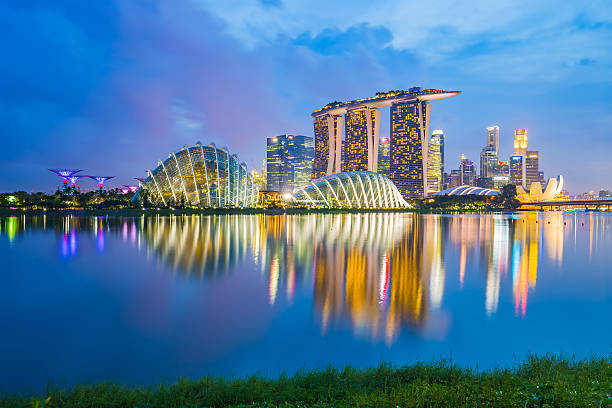
Singapore operates as a premier financial epicenter, trade gateway, and innovation anchor in Southeast Asia. This compact island nation punches far above its geographic weight class. It attracts multinational headquarters, foreign capital, and elite global talent through disciplined governance, world-class infrastructure, and a strategic location bridging East and West.
Understanding why this city-state dominates international business requires looking past generic tourist views. Its success stems from a calculated mix of trade connectivity, legal reliability, tax structures, and human capital development.
Strategic Location and Trade Connectivity
Geography gave Singapore a natural head start at the southern tip of the Malay Peninsula. Sitting directly along major maritime trade corridors connecting Europe, the Middle East, and East Asia, the nation capitalized on its position to build one of the world's most efficient transshipment hubs.
Port of Singapore operations integrate advanced automation with rapid customs clearance. Cargo moves from vessel to rail or truck with minimal friction. This logistical efficiency reduces shipping costs and supply chain delays for international manufacturers and exporters.
Beyond maritime prowess, Changi Airport functions as a crucial aviation super-hub. It connects hundreds of cities globally, ensuring executives and cargo reach regional markets within hours. This dual sea-and-air connectivity makes the country an indispensable logistics anchor for global supply chains.
A Business-Friendly Regulatory and Legal Framework
Companies expand into Singapore primarily because of regulatory transparency and operational predictability. The government maintains a pro-business stance characterized by low corporate tax rates, straightforward incorporation processes, and strict anti-corruption enforcement.
The legal system operates on English common law principles, providing foreign investors with familiar, enforceable contracts and robust intellectual property protection. Commercial disputes resolve through specialized institutions like the Singapore International Arbitration Centre, giving corporations confidence that their agreements hold up under impartial judicial review.
- Corporate tax framework: A flat headline corporate tax rate capped at seventeen percent, paired with numerous exemptions for new startups.
- Ease of setup: Business registration takes less than a day through online portals like BizFile+.
- IP security: Stringent intellectual property laws protect patents, trademarks, and proprietary technology.
Human Capital and Global Talent Policies
Infrastructure and tax incentives mean little without skilled labor. Singapore invests heavily in education, vocational training, and selective immigration policies to ensure a steady supply of qualified professionals.
The nation balances local workforce upskilling with open immigration channels for specialized global talent. Schemes like the Employment Pass allow multinational firms to bring in senior executives and technical experts. Meanwhile, local universities consistently rank among the top institutions globally, producing engineering, finance, and data science graduates who meet international standards.
Innovation, Technology, and Smart Nation Initiatives
Government planning drives continuous economic evolution. Through long-term strategies like the Research, Innovation and Enterprise plan, billions of dollars flow into advanced manufacturing, biotechnology, artificial intelligence, and green energy research.
The Smart Nation initiative embeds digital infrastructure into everyday urban life. From automated traffic management systems to cashless public transit and digital government services, technology reduces administrative overhead for both citizens and corporate entities. This digital readiness attracts tech giants seeking a stable testbed for cutting-edge products before scaling across the wider Indo-Pacific region.
Common Challenges and Realities
Despite its successes, operating or living in Singapore presents distinct hurdles.
- High cost of living: Real estate prices, private vehicle ownership through the Certificate of Entitlement system, and general consumer costs rank among the highest globally.
- Resource scarcity: As a landlocked city-state, the country imports nearly all its food, water, and raw materials, making it vulnerable to external supply shocks.
- Talent competition: Tight labor markets mean businesses face fierce competition and rising salary demands when hiring top-tier professionals.
Frequently Asked Questions
Why do multinational corporations set up regional headquarters in Singapore?
Firms choose Singapore for its political stability, strategic location within Southeast Asia, reliable legal system, and favorable corporate tax policies that simplify regional management.
How does Singapore manage its water and food security?
The nation relies on diversified strategies including NEWater (reclaimed wastewater), desalinated water, deep reservoirs, local high-tech agriculture, and stable food import partnerships with multiple countries.
Is Singapore expensive for expatriates and foreign workers?
Yes. Housing rentals, international schooling, and private transport carry significant costs, though personal income tax rates remain relatively low and progressive.
What languages are spoken in business and daily life?
English serves as the primary language for business, administration, government, and education, ensuring seamless communication for international workers and investors. Mandarin, Malay, and Tamil are also official languages.



