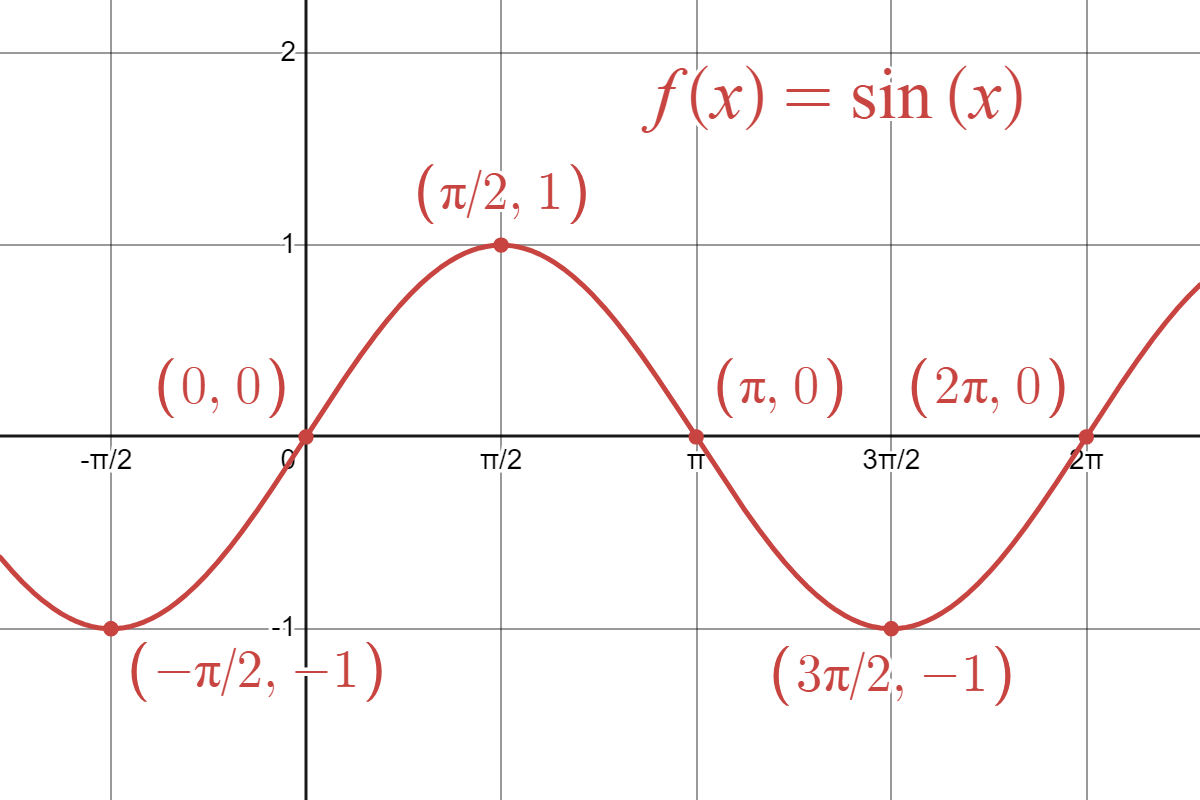
Sine, cosine, and tangent form the mathematical backbone of modern infrastructure, video games, and satellite navigation. Without these three functions, global positioning systems couldn't triangulate your location, and engineers couldn't calculate structural load distribution for skyscrapers.
At its core, trigonometry converts angles into measurable lengths. When you can't physically measure a distance—such as the width of a canyon or the height of a transmission tower—the relationships between the sides of a triangle allow you to calculate those dimensions remotely.
Defining the Core Trigonometric Ratios
Right-triangle geometry gives these functions their initial, intuitive definitions. For any acute angle inside a right-angled triangle, the ratios remain constant regardless of the triangle's overall size.
- Sine (sin): The ratio of the length of the side opposite the angle divided by the length of the hypotenuse.
- Cosine (cos): The ratio of the length of the adjacent side divided by the length of the hypotenuse.
- Tangent (tan): The ratio of the opposite side divided by the adjacent side, which also equals sine divided by cosine.
Generations of students have memorized these relationships using the acronym SOH-CAH-TOA. While this mnemonic is useful for academic exercises, practical applications extend far beyond basic geometry. When designing a wheelchair ramp with an incline of 5 degrees and a vertical rise of 2 meters, you use the sine function to determine the total physical length of the ramp required.
Beyond Triangles: The Unit Circle
Right triangles restrict angles to between 0 and 90 degrees. To model cyclical phenomena like sound waves, alternating electrical current, and orbital mechanics, mathematicians map these ratios onto the unit circle.
The unit circle is a circle with a radius of exactly one, centered at the origin of a coordinate plane. As a ray rotates around the origin, the cosine of the resulting angle corresponds to the horizontal x-coordinate, while the sine corresponds to the vertical y-coordinate. The tangent represents the slope of that rotating line.
This shift transforms static geometric shapes into dynamic wave generators. Every audio file you play, radio signal you transmit, and alternating current running through your home relies on sine waves generated by these cyclical mathematical properties.
According to the National Institute of Standards and Technology, precise wave modeling and frequency calibration are vital for maintaining global telecommunications standards.
Real-World Engineering and Infrastructure
Civil and mechanical engineers don't just use these functions on paper; they bake them into the physical safety margins of our world.
Consider roof trusses and suspension bridges. Forces don't always act straight down. Wind loads and dead weight hit structures at oblique angles. Engineers resolve these diagonal force vectors into horizontal and vertical components by multiplying total force values by the sine and cosine of the structural angles. This ensures that load distribution vectors counteract each other, preventing catastrophic structural failure.
In electrical power grids, alternating current (AC) voltage oscillates in a continuous sine wave. Because voltage and current can drift slightly out of phase due to reactive components like transformers and motors, engineers use cosine values to calculate the "power factor." Managing this factor prevents energy loss and protects industrial equipment from overheating.
Computer Graphics and Video Game Development
Every time a 3D video game renders an open world or rotates a character model, the engine executes millions of trigonometric calculations per second.
Transforming a 3D object on a flat 2D screen requires rotation matrices. These matrices rely heavily on sine and cosine values to recalculate vertex coordinates as an object spins around an axis. If you want a camera to orbit smoothly around a player character, you calculate the X and Z coordinates using cosine and sine multiplied by a fixed radius, creating a smooth circular path. Physics engines also rely on these ratios to calculate projectile trajectories, collision angles, and simulated wave motion in virtual oceans.
You can explore more about how graphics rendering pipelines manage spatial calculations through documentation provided by the Association for Computing Machinery.
Common Mistakes to Avoid
When working with trigonometric functions in software development or engineering calculations, a few common errors trip up practitioners:
- Degree versus radian mode: Calculators and programming languages default to radians rather than degrees. Passing 90 degrees into a function expecting radians will yield an incorrect result because 90 radians represents an entirely different point on the unit circle.
- Ignoring domain restrictions: The tangent function approaches infinity at 90 and 270 degrees because the cosine value drops to zero, resulting in division by zero. Failing to handle these undefined states causes runtime errors in software applications.
- Assuming linearity: You cannot distribute trigonometric functions across sums. For example, $\sin(a + b)$ does not equal $\sin(a) + \sin(b)$. Specialized angle-sum identities must be used instead.
Frequently Asked Questions
Why is tangent equal to sine divided by cosine?
In a right triangle, sine is opposite over hypotenuse, and cosine is adjacent over hypotenuse. When you divide sine by the cosine, the hypotenuse terms cancel out, leaving opposite over adjacent, which is the exact definition of tangent.
How does GPS use trigonometry?
GPS receivers measure the time delay of signals coming from multiple satellites to calculate distances. By using a technique called trilateration, the receiver constructs overlapping spherical radii to pinpoint your exact latitude, longitude, and altitude on Earth.
Why do alternating current power systems use sine waves?
The rotation of a wire coil within a magnetic field inside a generator naturally produces a current that varies sinusoidally. This smooth, continuous wave shape minimizes mechanical stress on generators and makes power transmission mathematically predictable.
What is the Pythagorean identity in trigonometry?
Derived directly from the Pythagorean theorem on the unit circle, the identity states that $\sin^2\theta + \cos^2\theta = 1$ for any angle. It acts as a primary check for consistency in complex engineering calculations.


