Right triangles govern physical measurement. When you look at sin cos tan, you aren't just memorizing high school geometry rules. You are looking at the core ratios that allow computers to render 3D space, smartphones to lock onto GPS satellites, and structural engineers to calculate bridge loads.
Sine, cosine, and tangent connect the angles of a right triangle to the ratios of its side lengths. These three functions form a dependable toolkit for mapping the physical world into numerical values. Understanding how they work in practice changes how you look at design, programming, and navigation.
The Core Mechanics of Sin Cos Tan
Every trigonometric calculation involving a right triangle starts with the relationship between an interior angle and the lengths of the triangle's three sides: the hypotenuse, the opposite side, and the adjacent side.
- Sine ($\sin$): The ratio of the length of the side opposite the angle divided by the hypotenuse.
- Cosine ($\cos$): The ratio of the length of the side adjacent to the angle divided by the hypotenuse.
- Tangent ($\tan$): The ratio of the opposite side divided by the adjacent side, which equals $\sin$ divided by $\cos$.
Mnemonic devices like SOH-CAH-TOA help remember these ratios, but the functional utility comes from solving for unknown values. If you know one side length and one angle, you can find every other dimension of that triangle. This principle scales from small workshop projects to planetary tracking.
Structural Engineering and Load Calculations
Civil engineers rely on sin cos tan to predict how forces distribute across physical structures. When weight rests on an inclined surface, gravity exerts force in multiple directions simultaneously.
For instance, consider a roof truss angled at $30^\circ$ supporting a heavy load. Engineers use cosine to determine the horizontal component of the force pushing outward on the exterior walls, and sine to calculate the vertical force pushing straight down onto the foundation.
- Roof Pitches: Builders determine rafter lengths by taking the building's span, dividing by two, and dividing by the cosine of the roof angle.
- Bridge Cables: Suspension bridges use diagonal stays where tension forces are resolved into horizontal and vertical vectors using basic trigonometric ratios.
Without these calculations, load-bearing margins would be guesswork, leading to structural failures under wind shear or heavy snow loads.
Positioning and Navigation Systems
Determining location relies entirely on triangulation and angular measurement. Whether tracking a ship across an ocean or mapping a hiking route using topographic maps, trigonometry translates angles into distances.
GPS receivers calculate position by measuring the time it takes radio signals to travel from multiple satellites orbiting Earth. Because the Earth is a sphere, these receivers solve spherical triangles using trigonometric functions to establish latitude, longitude, and altitude.
For example, if you know your distance from two known landmarks and the angle between them from your perspective, you can plot your exact coordinates on a grid. Inertial navigation systems in commercial aircraft use similar continuous calculations to track heading changes and compensate for crosswinds during flight.
Digital Signals and Wave Processing
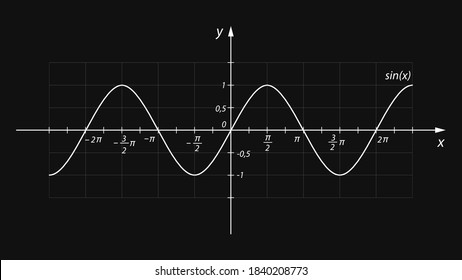
Modern electronics depend on alternating current (AC) electricity and digital audio signals, both of which travel in waves. These waves follow a sinusoidal pattern, meaning their voltage or sound pressure rises and falls over time according to sine and cosine values.
Engineers use Fourier analysis—a mathematical method built entirely on trigonometric functions—to break complex audio or radio signals down into individual sine waves.
- Audio Compression: MP3 and AAC formats strip away frequencies human ears can't hear by analyzing signal waves through trigonometric transformations.
- Noise Cancellation: Active noise-canceling headphones generate an exact inverse sine wave to neutralize ambient background noise in real time.
When you stream music or make a cellular phone call, millions of trigonometric calculations happen every second to encode, transmit, and decode the audio streams.
Computer Graphics and Game Engines
Rendering 3D environments on a 2D computer screen requires transforming spatial coordinates constantly. When a video game character turns around a corner or a camera pans across a landscape, the software executes rotation matrices filled with sine and cosine values.
Game engines calculate the trajectory of projectiles, such as an arrow fired at a $45^\circ$ angle, by splitting initial velocity into horizontal and vertical vectors using sine and cosine. Collision detection systems also use tangent ratios to determine the precise angle at which objects collide, ensuring realistic physics simulations.
Frequently Asked Questions
What is the easiest way to remember sin cos tan formulas?
The standard mnemonic SOH-CAH-TOA covers the basics: Sine is Opposite over Hypotenuse, Cosine is Adjacent over Hypotenuse, and Tangent is Opposite over Adjacent.
Why is tangent equal to sine divided by cosine?
Because sine is opposite/hypotenuse and cosine is adjacent/hypotenuse, dividing $\sin$ by $\cos$ cancels out the hypotenuse, leaving opposite/adjacent, which is the definition of tangent.
How do computers calculate sin cos tan values so fast?
Computers don't draw triangles or look up tables manually. They use polynomial approximations, such as Taylor series expansions, to compute trigonometric values in microseconds.
Are these functions used outside of right triangles?
Yes. While right triangles provide the easiest introduction, sine, cosine, and tangent apply to any triangle using the Law of Sines and Law of Cosines, and they model circular motion and wave cycles.



