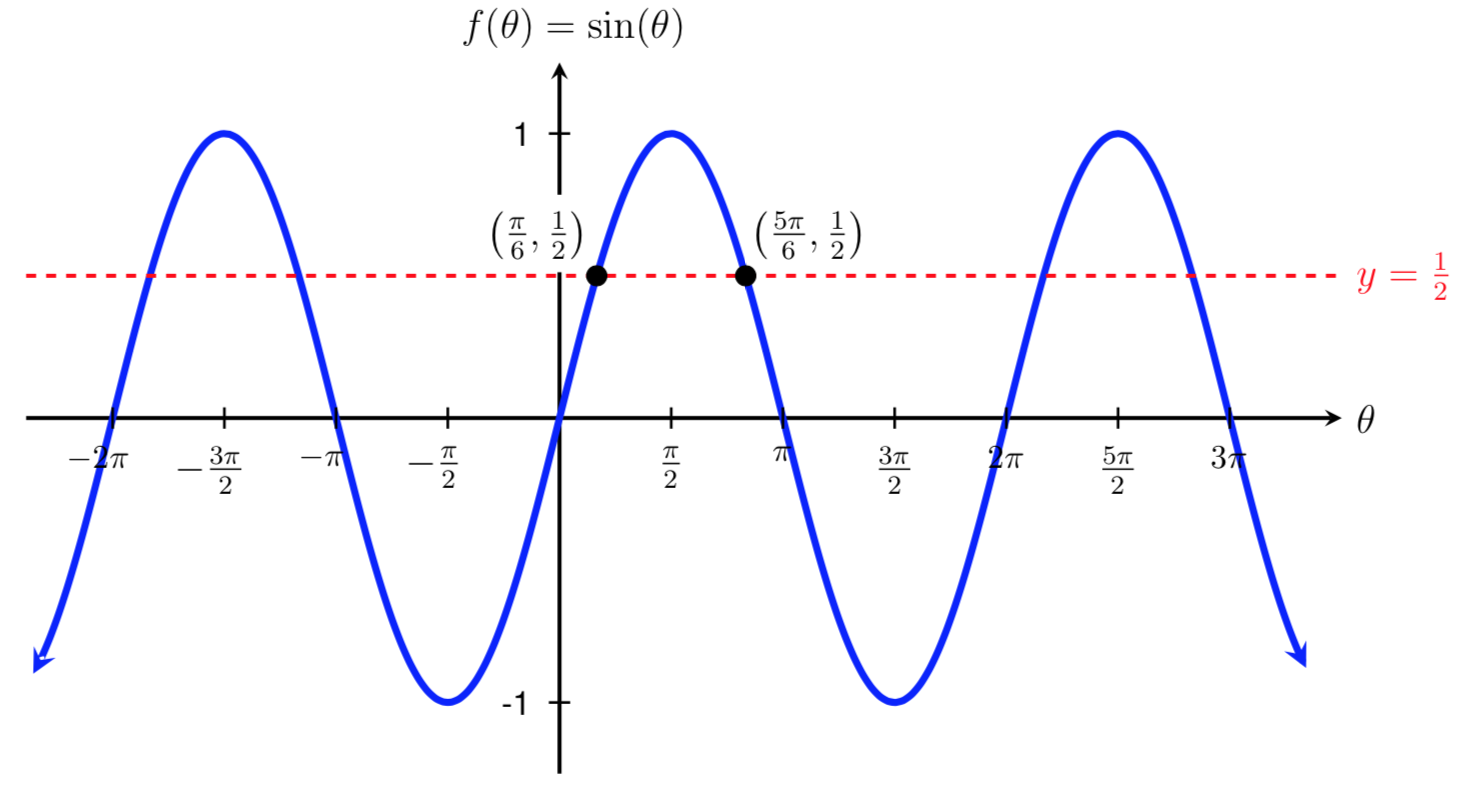
Sine, cosine, and tangent convert right triangle side lengths into predictable angular ratios. If you know two sides of a right triangle, or one side and one angle, these three functions let you calculate every remaining dimension. Far from being restricted to classroom geometry tests, these ratios form the structural core of civil engineering blueprints, video game physics engines, and satellite navigation systems.
This guide breaks down the core formulas, explains how to compute them without complex jargon, and shows how they operate in the physical world.
The Core Definitions: SOH CAH TOA
Every right triangle has a 90-degree corner. The side directly opposite that 90-degree angle is the hypotenuse, which is always the longest side. When you pick a target interior angle (let's call it $\theta$), the remaining two sides take specific roles: the opposite side sits straight across from $\theta$, while the adjacent side touches $\theta$ right next to the right angle.
The mnemonic SOH CAH TOA keeps the three core ratios straight: Related reporting on this trend has been published by BBC.
- SOH: Sine of an angle equals the opposite side divided by the hypotenuse. $\sin(\theta) = \text{Opposite} / \text{Hypotenuse}$.
- CAH: Cosine of an angle equals the adjacent side divided by the hypotenuse. $\cos(\theta) = \text{Adjacent} / \text{Hypotenuse}$.
- TOA: Tangent of an angle equals the opposite side divided by the adjacent side. $\tan(\theta) = \text{Opposite} / \text{Adjacent}$.
These ratios remain constant because of geometric similarity. If you scale a triangle up to double its size, both the opposite and hypotenuse double, leaving their fraction identical.
A Quick Calculation Example
Imagine you're standing 12 meters away from the base of a flagpole, looking up at the top at a 45-degree angle. You want to know how tall the flagpole is.
- You know the adjacent distance ($12\text{ meters}$).
- You want to find the opposite height ($x$).
- The function that connects opposite and adjacent is tangent ($\text{TOA}$).
Set up the equation: $\tan(45^\circ) = x / 12$. Because the tangent of $45^\circ$ is exactly $1$, you get $1 = x / 12$, meaning the flagpole stands $12\text{ meters}$ tall.
The Unit Circle and Standard Angles
While right triangles work well for angles under 90 degrees, real-world engineering deals with full rotations, waves, and negative trajectories. Mathematicians map these functions onto the unit circle, a circle with a radius of $1$ centered at coordinate $(0,0)$.
As a line rotates around the circle's origin, the $y$-coordinate of the outer tip represents the sine, and the $x$-coordinate represents the cosine. Tangent acts as the slope of that radius line, calculated as sine divided by cosine ($\sin / \cos$).
Memorizing standard angle values speeds up calculations without a calculator:
- $0^\circ$: $\sin = 0$, $\cos = 1$, $\tan = 0$
- $30^\circ$: $\sin = 1/2$, $\cos = \sqrt{3}/2$, $\tan = \sqrt{3}/3$
- $45^\circ$: $\sin = \sqrt{2}/2$, $\cos = \sqrt{2}/2$, $\tan = 1$
- $60^\circ$: $\sin = \sqrt{3}/2$, $\cos = 1/2$, $\tan = \sqrt{3}$
- $90^\circ$: $\sin = 1$, $\cos = 0$, $\tan$ is undefined (vertical line slope)
Real-World Applications
Trigonometry powers the systems we rely on daily, translating abstract angles into physical reality.
Architecture and Construction
Civil engineers and roofers rely on trigonometric ratios to calculate structural loads and building angles. When designing a gable roof, builders use cosine and sine to determine rafter lengths and pitch angles. If a roof slopes at too shallow an angle, rain pooling can cause structural failure; if it's too steep, wind resistance increases. Engineers use tangent calculations to pinpoint the exact rise-to-run ratio required for structural safety codes, matching standards set by regulatory bodies like the Occupational Safety and Health Administration.
Video Game Development and Physics Engines
Smooth character movement and projectile trajectories in 3D video games rely on sine and cosine waves. When a character jumps or an arrow arcs across a virtual map, the game engine calculates position changes along the $X$ and $Y$ axes using trigonometric components. Rotational physics, camera panning, and lighting reflections all depend on these formulas executing millions of times per second.
GPS and Satellite Navigation
Global Positioning Systems calculate your precise position on Earth through trilateration. Satellites orbiting the planet continuously transmit their exact spatial coordinates and timestamps. A smartphone receiver measures the microsecond delay of signals coming from at least four distinct satellites. By calculating the distance using spherical geometry and trigonometric wave equations, the device determines your exact latitude, longitude, and elevation. Learn more about how positional networks function via official resources like NASA's Space Geodesy Project.
Common Mistakes to Avoid
- Mixing up angle units: Calculators switch between Degrees and Radians. If your output looks wild, check whether your setting matches your input format ($\pi$ radians equals $180^\circ$).
- Misidentifying the hypotenuse: The hypotenuse is always opposite the 90-degree right angle. It never sits adjacent to the target angle.
- Inverting fractions: Remember that sine and cosine place the hypotenuse in the denominator (bottom). Because the hypotenuse is always the longest side of a right triangle, sine and cosine values can never exceed $1$. If you calculate a sine of $1.4$, your fraction is flipped.
Frequently Asked Questions
What is the easiest way to remember SOH CAH TOA?
Many students memorize it as a nonsense sentence like "Some Old Horse Caught Another Horse Taking Oats Away," or simply practice writing out SOH-CAH-TOA at the top of an exam page before starting math problems.
Can you use sine, cosine, and tangent on non-right triangles?
Directly using SOH CAH TOA requires a 90-degree right triangle. However, you can split any oblique triangle into two right-angled triangles using a perpendicular height line, or apply the Law of Sines and Law of Cosines.
Why is the tangent of 90 degrees undefined?
Tangent is calculated as opposite over adjacent ($\sin / \cos$). At $90^\circ$, the adjacent side shrinks to zero length. Because dividing any number by zero is mathematically undefined, the tangent value shoots off toward infinity.


