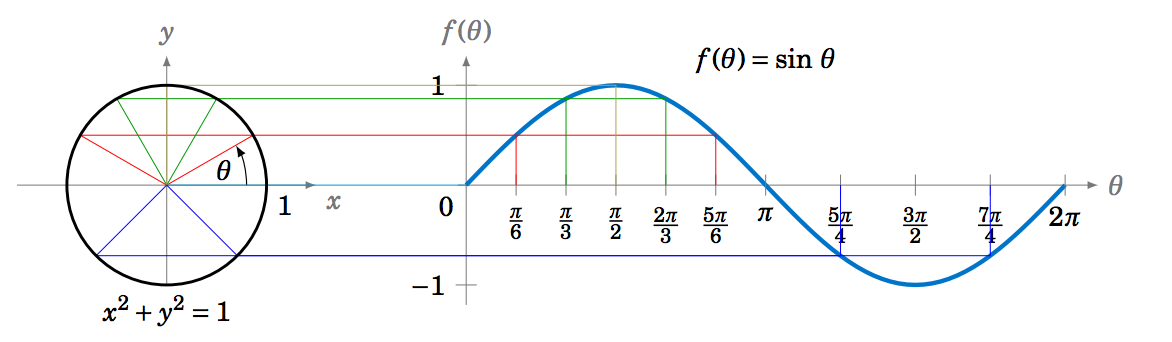
Mastering the sin cos and tan formula framework changes right-angle geometry from a puzzle of random memorization into a reliable mechanical system. If you've stared at a geometry textbook wondering how a bunch of triangles dictate everything from engineering blueprints to video game graphics, you're not alone. The core secret is that the ratio between the sides of a right triangle remains completely constant for any given angle, no matter how large or small the physical shape is drawn.
To solve these triangles without getting stuck, you need to master the three foundational ratios: sine, cosine, and tangent. This guide strips away the confusing fluff, breaks down the math into practical steps, and shows you exactly how to apply these formulas to find unknown side lengths and missing angles.
Anatomy of the Right Triangle
Before throwing formulas at a problem, you have to label your triangle correctly. A right triangle always features one 90-degree angle. The sides surrounding this right triangle take specific names based on where your working angle (usually labeled as $\theta$) sits:
- Hypotenuse: The longest side of the triangle. It always sits directly across from the 90-degree right angle. It never changes position.
- Opposite side: The side that lies directly across the triangle from your target angle $\theta$.
- Adjacent side: The side next to your target angle $\theta$ that helps form the angle itself, sitting right between the angle and the right angle.
If you shift your perspective to look from a different acute angle inside the same triangle, your opposite and adjacent sides swap roles. The hypotenuse, however, stays put. Getting these labels wrong is the single most common reason students get stuck on basic trigonometry problems.
Unpacking SOHCAHTOA: Sine, Cosine, and Tangent
The easiest way to remember how side lengths relate to your angles is the classic mnemonic SOHCAHTOA. Split into three chunks, it spells out the exact ratio for each function:
- SOH: $\sin(\theta) = \frac{\text{Opposite}}{\text{Hypotenuse}}$
- CAH: $\cos(\theta) = \frac{\text{Adjacent}}{\text{Hypotenuse}}$
- TOA: $\tan(\theta) = \frac{\text{Opposite}}{\text{Adjacent}}$
These equations serve as your bridge between measurements you know and measurements you need to find. If you know an angle and one side length, you can easily calculate the other sides. Conversely, if you know two side lengths, you can uncover the exact angle.
The Sine Function in Practice
You use sine when your problem involves the opposite side and the hypotenuse.
Imagine you're designing a ramp. The ramp stretches at an angle of $30^\circ$ from the ground, and its total sloping length (the hypotenuse) measures 20 feet. You need to know how high the top of the ramp reaches off the ground (the opposite side).
- Write down your formula: $\sin(30^\circ) = \frac{\text{Opposite}}{20}$
- Look up or calculate $\sin(30^\circ)$, which equals $0.5$.
- Set up the equation: $0.5 = \frac{\text{Opposite}}{20}$
- Multiply both sides by 20 to isolate the unknown: $\text{Opposite} = 20 \times 0.5 = 10$ feet.
The ramp reaches exactly 10 feet high.
The Cosine Function in Practice
You use cosine when your problem deals with the adjacent side and the hypotenuse.
Suppose a 15-foot ladder leans against a wall, making a $60^\circ$ angle with the ground. You want to know how far the base of the ladder sits away from the wall (the adjacent side).
- Write down your formula: $\cos(60^\circ) = \frac{\text{Adjacent}}{15}$
- Evaluate $\cos(60^\circ)$, which evaluates to $0.5$.
- Set up the equation: $0.5 = \frac{\text{Adjacent}}{15}$
- Multiply both sides by 15: $\text{Adjacent} = 15 \times 0.5 = 7.5$ feet.
The base of the ladder sits 7.5 feet away from the wall.
The Tangent Function in Practice
You use tangent when you are working with the opposite and adjacent sides, leaving the hypotenuse entirely out of the equation. This makes tangent extremely useful for finding heights or distances when you don't know the diagonal length.
Picture yourself standing 50 feet away from the base of a tall tree. You measure the angle from your line of sight up to the top of the tree at $45^\circ$. How tall is the tree?
- Write down your formula: $\tan(45^\circ) = \frac{\text{Opposite}}{50}$
- Evaluate $\tan(45^\circ)$, which equals $1$.
- Set up the equation: $1 = \frac{\text{Opposite}}{50}$
- Multiply both sides by 50: $\text{Opposite} = 50 \times 1 = 50$ feet.
The tree stands 50 feet tall.
Finding Missing Angles with Inverse Trigonometric Ratios
What happens when you know all the side lengths of a triangle, but the angle itself is missing? You use inverse functions: $\sin^{-1}$, $\cos^{-1}$, and $\tan^{-1}$. These functions take a ratio and output the corresponding degree measure.
For example, suppose a right triangle has an opposite side of 3 inches and a hypotenuse of 5 inches. You want to find angle $\theta$.
- Set up the ratio using sine: $\sin(\theta) = \frac{3}{5} = 0.6$
- Apply the inverse sine function to both sides: $\theta = \sin^{-1}(0.6)$
- Punch this into your calculator (ensuring it's set to degrees): $\theta \approx 36.87^\circ$
This same logic applies to cosine and tangent when dealing with adjacent-over-hypotenuse or opposite-over-adjacent layouts. For deeper insights into advanced geometric properties, you can review the Khan Academy Trigonometry Course.
Common Mistakes to Avoid
Even experienced students stumble over a few recurring traps when working with trigonometric triangles. Keep these pitfalls in mind to protect your grade:
- Calculator Mode Errors: Your calculator must be set to Degrees rather than Radians when working with standard architectural or high school geometry problems. Failing to switch modes yields completely incorrect decimal outputs.
- Misidentifying the Hypotenuse: The hypotenuse is always the longest side and always sits opposite the right angle. If you accidentally use an adjacent or opposite side in place of the hypotenuse during a sine or cosine calculation, your entire fraction falls apart.
- Confusing Inverse Trig with Reciprocals: Writing $\sin^{-1}(x)$ is not the same thing as $\frac{1}{\sin(x)}$. The minus-one notation indicates an inverse function that finds an angle, whereas a reciprocal function like $\frac{1}{\sin(x)}$ yields the cosecant.
Frequently Asked Questions
What does SOHCAHTOA actually stand for?
It stands for Sine is Opposite over Hypotenuse, Cosine is Adjacent over Hypotenuse, and Tangent is Opposite over Adjacent. It acts as a memory shortcut for the three core trigonometric ratios in right triangles.
Can I use sin, cos, and tan on a triangle that doesn't have a 90-degree angle?
No. Basic SOHCAHTOA formulas only function on right-angled triangles. For non-right triangles, you must use the Law of Sines or the Law of Cosines.
Why do my calculator answers look completely wrong?
Your calculator is almost certainly stuck in radian mode instead of degree mode. Check your settings menu, switch to degrees, and recalculate your expression.
When should I use tangent instead of sine or cosine?
Use tangent when your math problem involves the opposite and adjacent sides, but you neither know nor care about the length of the hypotenuse.


