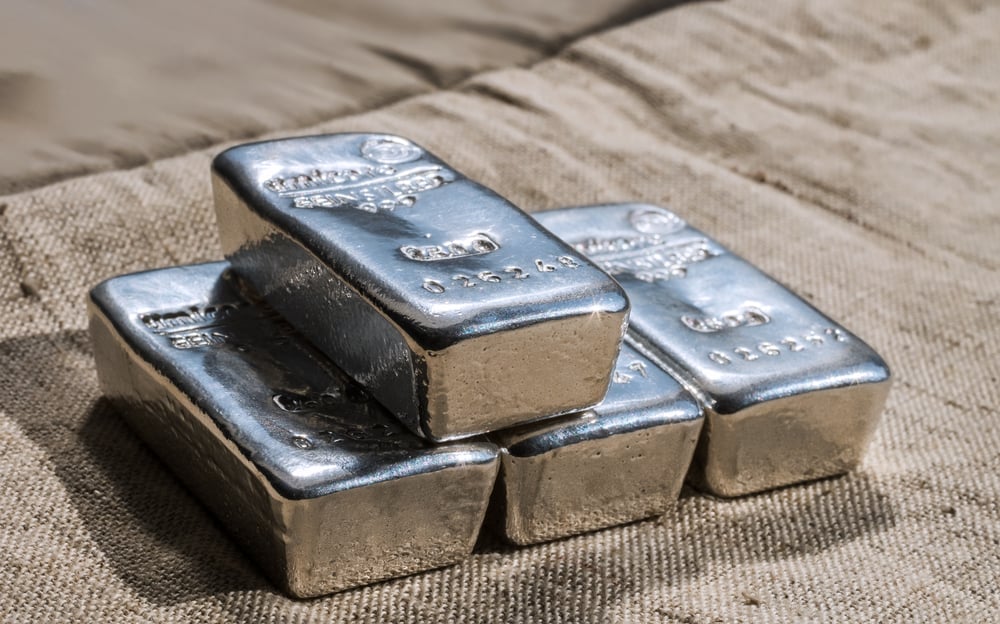
Understanding the silver ion electron configuration requires looking past standard textbook rules into how transition metals manage their outermost electrons. While neutral silver breaks expected filling patterns to achieve stability, forming a silver ion changes the equation entirely by removing that single valence electron. This shift dictates everything from silver's chemical reactivity to how it bonds with other compounds.
Silver sits in group 11 of the periodic table with an atomic number of 47. Before exploring what happens when silver loses an electron to become an ion, you need to grasp the baseline configuration of the neutral atom and the quantum rules driving its structure.
Neutral Silver Electron Configuration
A neutral silver atom possesses 47 electrons. If you follow the standard Aufbau principle strictly, you might expect the electron configuration to end with a filled $5s^2$ orbital and nine electrons in the $4d$ orbital ($[Kr] 4d^9 5s^2$). Nature, however, prefers a lower energy state achieved through symmetry.
Instead of an incomplete $4d$ subshell and a full $5s$ subshell, one electron promotes itself from the $5s$ orbital into the $4d$ orbital. This gives neutral silver a ground-state configuration of $[Kr] 4d^{10} 5s^1$.
- Krypton Core ($[Kr]$): Represents the inner 36 electrons, matching the noble gas configuration.
- $4d^{10}$ Subshell: Completely filled, providing extra thermodynamic stability.
- $5s^1$ Orbital: Contains a single valence electron sitting in the outermost shell.
Completely filled subshells like $4d^{10}$ experience enhanced spherical symmetry and lower electrostatic energy. This configuration explains why silver resists oxidation better than neighboring transition metals.
Formation and Electron Configuration of Silver Ion
When silver reacts chemically, it almost exclusively forms the standard silver ion ($Ag^+$) by losing its single outermost valence electron. This process involves the $5s$ orbital, because outermost electrons experience more shielding and sit farther from the positive nucleus.
When you remove one electron from neutral silver ($[Kr] 4d^{10} 5s^1$), it leaves the $5s$ orbital empty. Therefore, the silver ion electron configuration is:
$$[Kr] 4d^{10}$$
Expressed in expanded form across all atomic shells, the electron configuration of $Ag^+$ is $1s^2 2s^2 2p^6 3s^2 3p^6 3d^{10} 4s^2 4p^6 4d^{10}$. Every single occupied orbital from the first shell through the fourth shell is completely full.
Why the 5s Electron Leaves First
Students often wonder why the $5s$ electron departs before the $4d$ electrons, even though $4d$ orbitals fill after $5s$ during Aufbau building. Once the multi-electron atom is fully formed, radial distribution functions change. The $5s$ orbital has higher penetration near the nucleus but spends a significant amount of time further out, shielding the inner $4d$ electrons.
When ionization energy is applied, the outermost $5s^1$ electron requires less energy to remove than pulling an electron out of the tightly bound, compact $4d^{10}$ core. According to data from the Royal Society of Chemistry, this single valence ionization establishes silver's predictable +1 oxidation state in most common salts like silver nitrate and silver chloride.
Higher Oxidation States: Ag2+ and Ag3+
While $Ag^+$ dominates chemistry, forcing silver into higher oxidation states like +2 or +3 is possible under aggressive laboratory conditions with strong oxidizing agents.
- Silver(II) ($Ag^{2+$): Results from losing a second electron, yielding an electron configuration of $[Kr] 4d^9$. Because a $4d^9$ configuration lacks the complete symmetry of $4d^{10}$, these species act as powerful, highly unstable oxidizers.
- Silver(III) ($Ag^{3+$): Results from losing three electrons, yielding $[Kr] 4d^8$. Compounds featuring $Ag^{3+}$ are exceedingly rare and decompose rapidly unless stabilized in specialized lattice structures.
These uncommon states confirm that the stability of silver is fundamentally tied to keeping the $4d$ shell completely full. Any departure from $4d^{10}$ requires significant energy input.
Common Mistakes in Electron Configuration
Evaluating transition metal configurations frequently leads to predictable errors. Avoiding these pitfalls keeps your calculations accurate.
- Forgetting Anomalies: Assuming silver follows standard textbook diagonal filling rules without accounting for the stability of $d^{10}$ half-filled and full-filled configurations. Neutral silver is $[Kr] 4d^{10} 5s^1$, not $[Kr] 4d^9 5s^2$.
- Removing Electrons from the Wrong Shell: When ionizing transition metals, electrons are always removed from the highest principal quantum number ($n$) shell first. For silver, that means emptying the $5s$ orbital before touching the $4d$ subshell.
- Confusing Core Notations: Miscounting electrons when expanding noble gas shorthand. Always add the atomic number of the noble gas core (Krypton = 36) to the electrons in the remaining subshells ($10 + 1 = 47$) to verify your work.
FAQ
What is the difference between neutral silver and silver ion configurations?
Neutral silver has one valence electron in the $5s$ orbital ($[Kr] 4d^{10} 5s^1$). When it ionizes into $Ag^+$, that single $5s$ electron is lost, leaving a stable, completely filled $4d^{10}$ subshell ($[Kr] 4d^{10}$).
Why does silver form a +1 ion instead of +2?
Removing the first electron from the $5s$ orbital requires relatively low ionization energy. Removing a second electron requires digging into the stable, tightly bound $4d^{10}$ core, which demands an impractically high amount of energy.
Is silver ion configuration paramagnetic or diamagnetic?
Neutral silver ($[Kr] 4d^{10} 5s^1$) is paramagnetic because it has one unpaired electron. In contrast, the silver ion ($[Kr] 4d^{10}$) has all electrons paired up in full subshells, making $Ag^+$ strictly diamagnetic. Learn more about elemental behaviors via the Silver Institute.
Does silver ever exhibit a negative oxidation state?
Under specialized conditions and cryogenic isolation, silver can form complexes or compounds where formal oxidation states dip below zero, though typical aqueous and solid-state chemistry restricts silver to 0, +1, +2, and +3.


