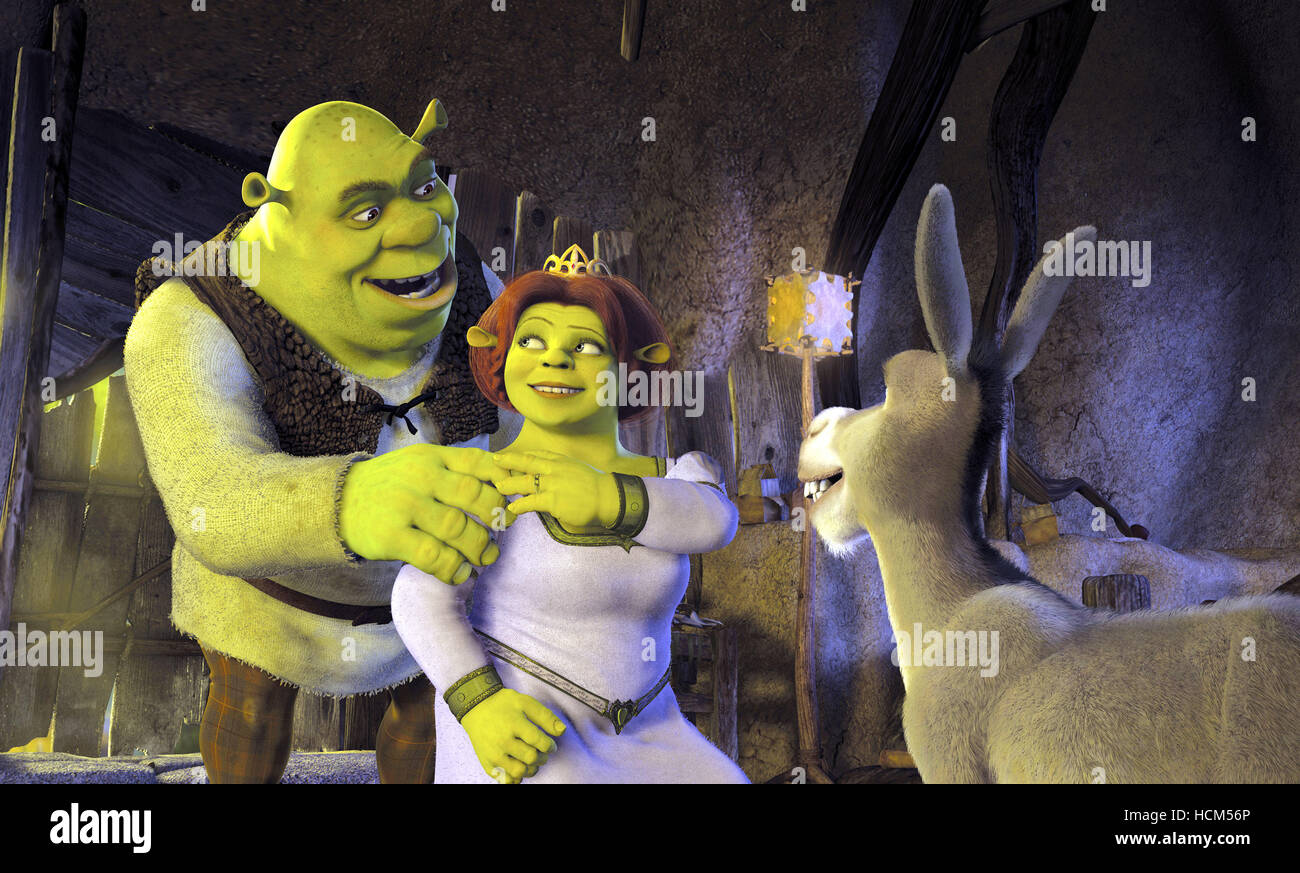
When Shrek 3—officially titled Shrek the Third—hit theaters in 2007, it carried the monumental weight of following two of the most successful animated films in cinema history. Directed by Chris Miller and Raman Hui, the movie shifted focus away from a simple fairy-tale parody toward a sprawling narrative about royal responsibility, impending fatherhood, and teenage awkwardness. At the heart of this transition was an expanded, star-studded ensemble that brought new layers to familiar names while introducing memorable figures.
The core voice cast returned intact, preserving the vocal chemistry that anchored the franchise. Mike Myers reprised his role as the reluctant ogre Shrek, Eddie Murphy returned as the motor-mouthed Donkey, Cameron Diaz voiced Princess Fiona, and Antonio Banderas brought his signature swashbuckling charm back as Puss in Boots. However, the 2007 sequel shook up its dynamics by introducing pop-culture icons like Justin Timberlake as Arthur Pendragon and Eric Idle as a neurotic wizard named Merlin.
The Returning Core Ensemble and Their Vocal Evolution
By the third installment, the primary actors had lived with their roles for nearly a decade, allowing for subtle tonal shifts in how they delivered lines.
Mike Myers continued to anchor Shrek with his distinct Scottish-influenced inflection, but the character's internal conflict required a different vocal vulnerability. Shrek wasn't just fighting villains; he was panicking over the prospect of ruling the land of Far Far Away and raising children. Myers balanced gruff comedic frustration with genuine anxiety, keeping the ogre grounded amidst the escalating chaos.
Eddie Murphy maintained his signature rapid-fire delivery as Donkey, though the sequel introduced a memorable physical comedy twist: Donkey and Puss in Boots accidentally swap bodies due to Merlin's botched spell. This required Murphy and Banderas to mimic each other's comedic timing and physical vocalizations, a technical hurdle they cleared with precision. Banderas leaned into Donkey’s high-energy whining, while Murphy attempted to capture Puss's suave, Latin-accented bravado.
Princess Fiona, voiced by Cameron Diaz, stepped into a leadership role. Alongside her mother, Queen Lillian (Julie Andrews), and a cohort of fairy-tale princesses, Fiona spearheaded an internal resistance movement against Prince Charming's coup. Diaz kept Fiona fierce, practical, and emotionally steady, contrasting sharply with the damsel-in-distress tropes subverted throughout the sequence.
New Additions: Royalty, Rebels, and Magic
To expand the universe, the casting directors recruited a massive wave of celebrity talent to populate the kingdom and the surrounding countryside.
Justin Timberlake as Artie
Pop superstar Justin Timberlake took on the role of Arthur Pendragon—known simply as Artie—a scrawny, unpopular high school outcast who happens to be the rightful heir to the throne of Far Far Away. Timberlake delivered a performance characterized by adolescent insecurity, nervous vocal cracks, and defensive bravado. Artie's arc required him to transition from a bullied teenager into a confident leader who could reason with villains rather than fight them.
Eric Idle as Merlin
Monty Python veteran Eric Idle brought his signature British absurdism to the character of Merlin, a retired, neurotic high school magic teacher who suffers from nervous breakdowns. Idle's delivery turned Merlin into a parody of New Age self-help culture, using hesitant pauses and eccentric inflections to signal a wizard whose powers are entirely unreliable.
Rupert Everett as Prince Charming
Returning as the primary antagonist, Rupert Everett infused Prince Charming with theatrical vanity and bitter resentment. Charming's plot to hijack the kingdom relies on mobilizing displaced fairy-tale villains in a local tavern. Everett played the role like a failing Shakespearean actor taking himself far too seriously, which amplified the inherent comedy of his grand ambitions falling flat.
The Princess Resistance and Celebrity Cameos
One of the most distinct choices in the voice direction was the reimagining of classic fairy-tale princesses. Instead of passive victims, characters like Snow White (Amy Poehler), Cinderella (Amy Sedaris), Sleeping Beauty (Cheri Oteri), and Rapunzel (Maya Rudolph) formed an action squad.
- Amy Poehler gave Snow White a sharp, deadpan edge, leaning into a quirky persona that treated combat like an afternoon club activity.
- Maya Rudolph played Rapunzel, whose eventual betrayal of the group added a layer of comedic treachery to the royal coup.
- Amy Sedaris and Cheri Oteri brought eccentric comedic timing to Cinderella and Sleeping Beauty, skewering traditional animation tropes with deadpan line readings.
Other notable voice cameos included John Krasinski as the overly confident knight Sir Lancelot, Ian McShane as the gravelly voiced Captain Hook, and talk-show host Larry King as the ugly stepsister Doris. These performances kept the background of Far Far Away dense with recognizable comedic timing.
Recording Dynamics and Studio Logistics
Unlike many animated features where actors record lines entirely isolated in sound booths, the production of the franchise often utilized ensemble recording sessions when schedules allowed. This approach was especially critical for Myers, Murphy, and Banderas, whose off-the-cuff banter frequently resulted in unscripted verbal loops that animators later translated into visual gags.
For the newer cast members, such as Timberlake and Idle, recording required adapting to the frantic, improvisational pace established by the veteran leads. Directors Chris Miller and Raman Hui encouraged actors to play with alternative line readings, ensuring the dialogue retained a modern, conversational cadence despite taking place in a medieval fantasy setting. You can read more about how DreamWorks managed its vocal pipelines through industry histories documented on Variety.
Common Misconceptions About the Voice Cast
Viewers often confuse certain minor roles or assume specific actors returned when they didn't.
- Lord Farquaad: John Lithgow did not return for a major role since his character was digested by the dragon in the first film, though archival sound was utilized.
- The Ogre Babies: Shrek and Fiona's newborns—Farkel, Fergus, and Felicia—were voiced by child actors and additional vocal artists including Dante James Hauser and Jordan Alexander Hauser, rather than adult comedians altering their pitch.
- The Magic Mirror: The mirror's role was significantly scaled back compared to earlier entries, shifting lines to other ensemble members to keep the runtime focused on the royal succession plot.
Frequently Asked Questions
Did Justin Timberlake voice Artie in Shrek 3?
Yes. Justin Timberlake voiced Arthur Pendragon (Artie), Shrek's awkward teenage cousin who is next in line for the throne of Far Far Away.
Who voiced Merlin in Shrek the Third?
Comedian and actor Eric Idle, best known for his work with Monty Python, voiced the neurotic, retired magic teacher Merlin.
Why did Donkey and Puss in Boots change voices midway?
They didn't change voice actors; rather, characters Donkey (Eddie Murphy) and Puss in Boots (Antonio Banderas) switch bodies due to a magical mishap, prompting Murphy and Banderas to imitate each other's distinct vocal styles.
Which princesses featured prominent voice cameos?
The princess resistance squad featured Amy Poehler as Snow White, Maya Rudolph as Rapunzel, Amy Sedaris as Cinderella, and Cheri Oteri as Sleeping Beauty. Additional production background is archived on IMDb.



