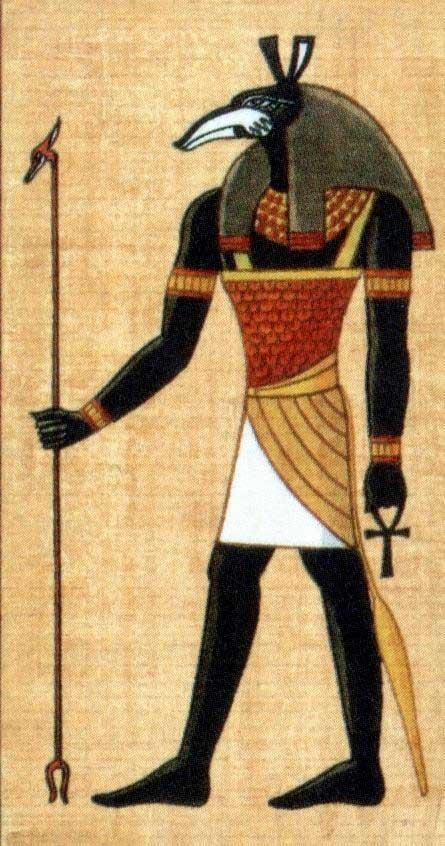
Seth stands as one of the most polarizing deities in the ancient Egyptian pantheon. Often reduced to a simple villain who murdered his brother Osiris, this god of the desert, storms, and foreign lands held a much more complex position in the minds of the Nile Valley inhabitants. He wasn't just a force of mindless destruction. Instead, Seth represented the necessary, raw chaos (isfet) that gave definition and meaning to order (ma'at). Without his unpredictable power, the ancient worldview held that stability and renewal couldn't exist.
Examining historical texts, archaeological finds, and shifting political landscapes reveals how Seth transformed from a vital defender of the cosmos into a demonized outcast. Understanding this evolution requires looking past popular media tropes and exploring the primary sources and scholarly consensus surrounding this enigmatic figure.
The Dual Nature of Seth: Order and Disorder
Ancient Egyptian cosmology didn't view the universe as a simple battleground between absolute good and absolute evil. Instead, the cosmos depended on a delicate equilibrium between ma'at (truth, justice, and cosmic order) and isfet (chaos, violence, and disorder). Seth sat squarely at the center of this dynamic tension.
While other deities like Horus and Osiris upheld ma'at, Seth embodied the unpredictable forces that threatened it. Yet, the Egyptians recognized that these destructive forces played a vital role in natural cycles. For instance, violent thunderstorms and desert winds were destructive, yet they were also necessary for seasonal transitions and ecological balance.
According to studies on ancient Egyptian religion available through the British Museum, Seth's identity shifted depending on which aspect of the natural world he governed:
- Lord of the Red Land: The Egyptians divided their world into the Kemet (the black, fertile land along the Nile) and the Deshret (the red, barren desert). Seth ruled the desert, a dangerous place of thirst and isolation, but also a vital barrier against foreign invasions.
- Master of Storms: Thunder, lightning, and sudden sandstorms were attributed to Seth's volatile temper. These weather events disrupted daily life but were essential for breaking oppressive heatwaves.
- Protector of the Sun God: In early mythologies, Seth stood on the prow of the solar barque of Ra, using his immense strength to spear the chaos serpent Apep every single night, ensuring the sun would rise again.
The Osiris Myth and Political Allegory
The most famous narrative involving Seth is the murder of Osiris. In this foundational myth, Seth grows envious of his brother Osiris, who rules Egypt justly. Seth traps Osiris in a decorated chest, throws him into the Nile, and later tears his body into pieces to prevent resurrection. Isis, the grieving wife of Osiris, gathers the pieces and resurrects him long enough to conceive their son, Horus.
This dramatic tale established the eternal feud between Seth and Horus, representing the struggle for the throne of Egypt. Generations of pharaohs used this myth to legitimize their own rule, framing themselves as living embodiments of Horus defeating the chaotic usurper Seth.
Historians note that this myth wasn't static. It evolved alongside political shifts in the Nile Valley. During periods of civil unrest or foreign invasion, the story took on heavier political weight, turning Seth from a controversial protector into a clear antagonist.
Historical Evolution: From Defender to Demon
Seth's reputation didn't remain constant across the three thousand years of ancient Egyptian civilization. His standing rose and fell based on who held political power and where their capital was located.
The Early Dynastic Period and Old Kingdom
During the early eras of Egyptian history, Seth enjoyed high status. Rulers frequently incorporated his name into their royal titles, and his cult centers thrived, particularly in Upper Egypt. He was revered as a fierce warrior god whose strength kings wanted to emulate.
The Second Intermediate Period and Hyksos Rule
The turning point for Seth's reputation occurred around 1650 BCE when foreign rulers known as the Hyksos invaded the Nile Delta. Because Seth was already associated with foreigners and the eastern desert, the incoming rulers adopted him as a primary deity. When native Egyptian pharaohs from Thebes eventually expelled the Hyksos and reunited the country, they associated Seth with the hated invaders.
Pharaohs of the New Kingdom systematically altered temple reliefs, chipped away Seth's name, and recast him as a murderer and traitor. Despite this demonization, military pharaohs still invoked Seth's raw power to grant them victory on the battlefield, showing that his martial prowess remained respected even as his moral standing plummeted.
The Enigmatic Set Animal
One of the most enduring mysteries surrounding this deity is the creature that represents him. Known to Egyptologists as the Set animal, this beast bears no direct counterpart in the modern animal kingdom.
- Physical Characteristics: The Set animal features a slender, canine-like body, squared-off ears, a curved, downturned snout, and a stiff, forked tail pointing upward.
- Theories of Origin: Scholars have proposed various real-world inspirations, including the aardvark, the fennec fox, the wild hunting dog, or an extinct prehistoric mammal. None of these theories have gained universal acceptance.
- Symbolic Function: The ambiguity of the creature itself mirrors the god it represents. It is a composite beast, unnatural and unsettling, designed to evoke the alien and untamable aspects of the wilderness.
Frequently Asked Questions
Was Seth considered the Egyptian equivalent of the Devil?
No. While later Christian and Greek interpretations attempted to equate Seth with the Christian Devil or Typhon, ancient Egyptians viewed him differently. Seth was a destructive force, but he was still a legitimate member of the divine pantheon who maintained a necessary cosmic function, such as defending Ra from Apep.
Where was Seth primarily worshipped?
Seth's main cult centers were located in Upper Egypt, particularly at Naqada (ancient Ombos), as well as in parts of the Western Oases and the Eastern Delta.
Why did pharaohs adopt names associated with Seth?
Early dynastic rulers, such as Peribsen and Khasekhemwy, incorporated Seth into their royal names to project supreme military strength and to unite factions from different regions of Egypt under a powerful martial deity.
Did Seth have any consorts or children?
Yes. Seth was occasionally paired with goddesses such as Nephthys, his sister, as well as foreign deities introduced from the Levant, including Astarte and Anat.



