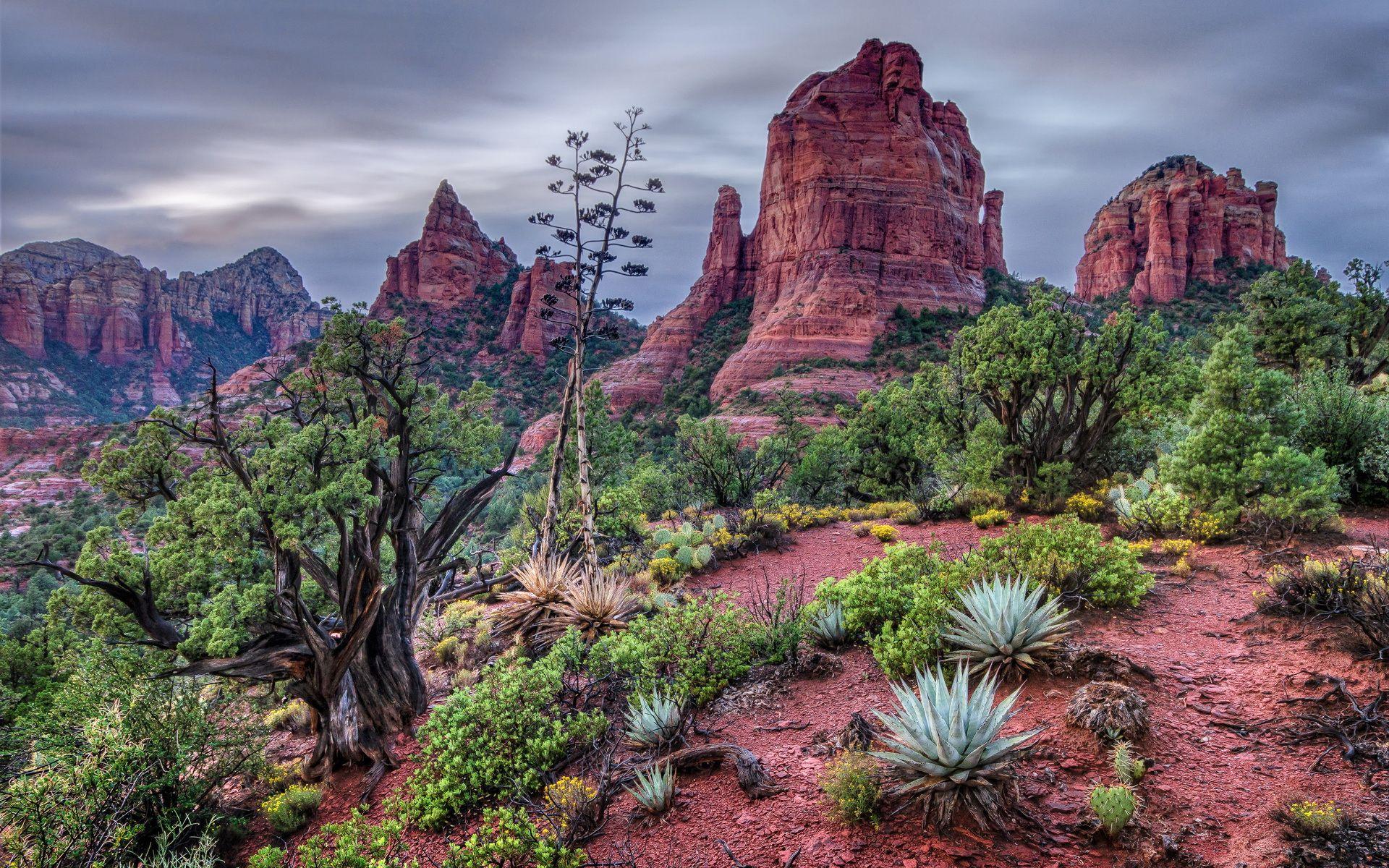
Planning a trip to Arizona's red rock country requires understanding how elevation shapes local conditions. Sedona weather by month varies dramatically, shifting from crisp winter mornings where snow dusts the sandstone to soaring summer afternoons. Sitting at roughly 4,500 feet, Sedona stays cooler than Phoenix, but seasonal shifts dictate everything from trail availability to hotel pricing.
Knowing what to expect month by month helps you avoid scorching heat waves, navigate summer monsoon downpours, and time your visit for ideal hiking conditions.
Spring Weather in Sedona (March to May)
Spring stands as the premier time to experience Sedona. Daytime highs climb from the mid-60s into the low 80s, creating comfortable conditions for exploring the Coconino National Forest.
- March: Highs average 65°F and lows hover around 42°F. Wildflowers begin emerging across the desert floor, though early spring winds can pick up on exposed ridges.
- April: Widely considered one of the absolute best months, with average highs reaching 72°F and minimal rain. Skies remain clear, making it prime time for iconic hikes like Devil's Bridge.
- May: Temperatures jump quickly, hitting an average high of 81°F. Mornings stay cool and crisp, but afternoon sun requires hydration and sun protection on long treks.
Crowds peak during these months. Parking lots at popular trailheads fill up before sunrise, requiring early arrivals or utilization of the Sedona Shuttle system.
Summer Weather in Sedona (June to August)
Summer brings intense heat, though elevation keeps temperatures slightly below desert floors further south. June marks the start of the dry heat phase, while July and August introduce the seasonal monsoon.
- June: The driest month of the year, averaging just 0.3 inches of rain. Daytime highs spike to 91°F or higher, pushing outdoor activities into the early morning hours.
- July: Typically the hottest month, with average highs of 93°F and lows around 69°F. Afternoon humidity ticks upward as the monsoon pattern develops.
- August: The wettest month of the year, averaging over 2 inches of rainfall. Rapid afternoon thunderstorms bring dramatic cloud formations, lightning, and flash flood risks in narrow canyons.
While crowds thin out during mid-summer due to the heat, savvy travelers find lower lodging rates and enjoy cooler evenings after sunset.
Fall Weather in Sedona (September to November)
Autumn matches spring in popularity, offering a gradual cooling trend and vibrant foliage along Oak Creek Canyon.
- September: Summer heat lingers with an average high of 85°F, but the atmosphere dries out significantly by mid-month.
- October: Frequently ranked by locals as the finest month of the year. Highs average a pleasant 76°F with crisp night lows around 53°F. Cottonwoods and sycamores turn brilliant shades of gold along the water.
- November: Temperatures drop further to an average high of 63°F and a chilly low of 42°F. Mornings require jackets, but midday sun is ideal for steady climbing.
Tourism surges again during these months. Securing accommodations and Jeep tours weeks in advance is essential.
Winter Weather in Sedona (December to February)
Winter offers a quiet, budget-friendly escape for travelers willing to pack cold-weather gear.
- December: The coldest month, featuring average highs of 55°F and overnight lows dipping to 36°F. Occasional winter storms drop light dustings of snow on the red rocks, creating striking photography opportunities before melting quickly in the sun.
- January: Crisp, clear days dominate, though morning temperatures frequently sit near freezing. Trails are peaceful and empty compared to peak seasons.
- February: Winter transitions toward spring with daytime highs climbing back to 59°F. Sunny afternoons feel warmer than the thermometer suggests.
Choosing the Best Time to Visit Based on Your Goals
The right month depends entirely on your primary goal for the trip:
- For Hiking: Target April, May, or October to secure ideal daytime temperatures without oppressive heat.
- For Solitude and Savings: Plan your trip between December and February, when hotel rates drop and crowds vanish.
- For Photography: Visit in August for dramatic monsoon skies or late October for peak fall foliage along Oak Creek.
Frequently Asked Questions
Does it snow in Sedona during winter?
Yes, snow does fall in Sedona, but heavy accumulations are rare and short-lived. Storms usually drop a light dusting on top of the red rocks that melts away by noon on the following day.
When is monsoon season and is it safe to hike?
The Arizona monsoon runs from early July through August. While mornings are usually clear, violent afternoon thunderstorms can trigger flash floods in dry washes and slot canyons. Check forecasts constantly and avoid low-lying areas during stormy periods.
Are Sedona trails crowded year-round?
Spring and fall experience intense congestion, particularly on weekends. Winter and mid-summer weekdays offer much more solitude on popular paths like Cathedral Rock and Bell Rock.
What should I pack for spring or fall trips?
Layering is essential because temperatures fluctuate by 30 degrees between dawn and mid-afternoon. Pack a lightweight fleece or windbreaker for cool mornings, moisture-wicking shirts for hiking, and sturdy footwear.



