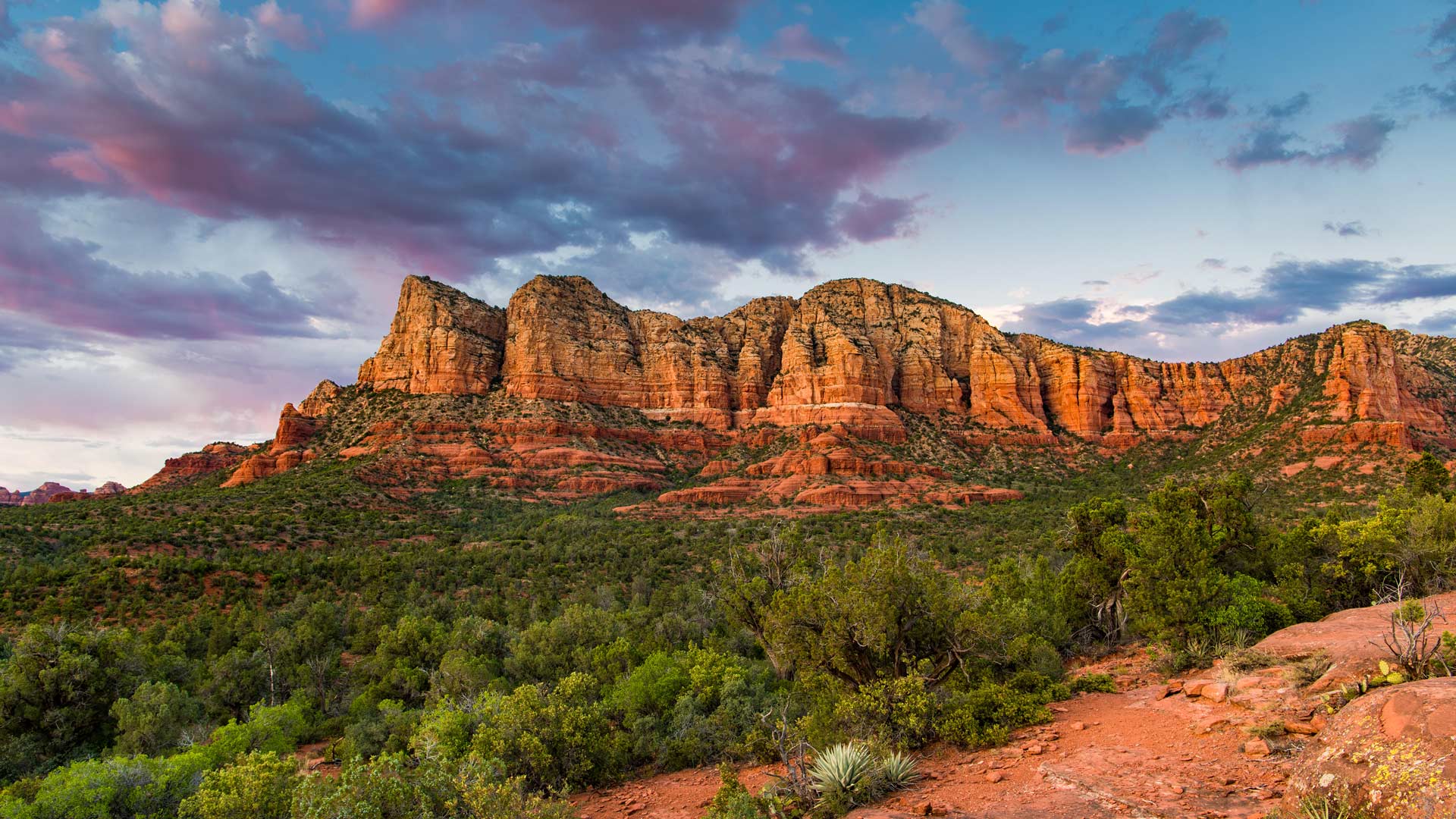
Knowing exact Sedona sunset times helps you plan hikes, beat parking restrictions, and catch the best red rock alpenglow without rushing. Because Arizona doesn't observe daylight saving time, the state remains on Mountain Standard Time year-round. This keeps sunset hours stable relative to the solar cycle, shifting from an early 5:15 PM in winter to roughly 7:45 PM during peak summer.
Finding accurate daylight windows requires looking past generic weather apps. Local topography features towering sandstone monoliths, canyon walls, and high-altitude horizons that block direct light earlier than official meteorological sunset. Planning an unforgettable desert evening means understanding seasonal shifts, matching your timeline to the right viewing ledge, and accounting for gate closures.
Monthly Sedona Sunset Schedule
Sunsets in the high desert vary significantly from January through December. The table below outlines approximate monthly windows, helping you estimate when twilight begins:
- January: 5:10 PM to 5:35 PM
- February: 5:35 PM to 6:20 PM
- March: 6:20 PM to 6:40 PM
- April: 6:40 PM to 7:05 PM
- May: 7:05 PM to 7:30 PM
- June: 7:30 PM to 7:45 PM
- July: 7:45 PM to 7:30 PM
- August: 7:30 PM to 7:00 PM
- September: 6:55 PM to 6:15 PM
- October: 6:15 PM to 5:35 PM
- November: 5:35 PM to 5:15 PM
- December: 5:15 PM to 5:25 PM
These ranges provide a baseline for your itinerary. For precise minute tracking on a specific day, reference official local schedules through resources like the National Weather Service Flagstaff office, which covers northern Arizona microclimates.
Seasonal Shifts and Daylight Nuances
Seasonal changes in the Verde Valley bring distinct weather patterns that alter how twilight looks and feels. Winter brings crisp, clear air and early sunsets around 5:30 PM. Temperatures drop rapidly the moment the sun dips below the horizon, so pack an extra jacket if you're staying out after dark.
Summer pushes sunsets past 7:45 PM, but afternoon monsoon storms frequently roll in between July and August. These heavy cloud buildups can block the sun entirely or create explosive, dramatic pink and purple skies if they clear out just before dusk. Spring and fall offer the most comfortable hiking temperatures, though spring wind gusts can kick up dust during the late afternoon.
Top Spots to Watch the Sunset
Where you stand matters just as much as knowing the time. Different formations react uniquely to the fading light.
Airport Mesa Overlook
This is one of the most popular and accessible viewpoints in the area. Located just off Airport Road, it offers panoramic vistas facing west toward Capitol Butte and the Mingus Mountains. Parking is limited, so arriving 45 minutes early ensures you secure a spot. You don't need to hike here, making it ideal for casual visitors.
Red Rock Crossing (Crescent Moon Picnic Site)
If you want to see the classic reflection of Cathedral Rock in Oak Creek, head here. Note that this site is managed by a private concessionaire, meaning standard federal recreation passes aren't accepted, and an entry fee applies. Pay close attention to the gate closing hours; during winter, the entrance closes early, locking out late arrivals.
Doe Mountain
For active travelers willing to earn their view, Doe Mountain provides a flat, mesa-top viewing area after a short, switchback-heavy climb. You'll get 360-degree views of the surrounding wilderness. Bring a reliable headlamp for the descent, as hiking down in the dark requires careful footing.
Common Planning Mistakes to Avoid
Travelers often miscalculate their evening timelines, leading to frustrating logistical hurdles.
- Forgetting the Mountain Shadow Effect: The sun disappears behind the high red rock monoliths 15 to 30 minutes before the official sunset time. If you arrive right at sunset, you'll be standing in deep shadow.
- Ignoring Parking Restrictions: Popular lots like Airport Mesa fill up long before golden hour. Relying on the City of Sedona Official Site for parking updates and shuttle schedules prevents unexpected parking tickets or towed vehicles.
- Leaving Immediately: The most vibrant colors—known as alpenglow—often ignite on the eastern rock faces 10 to 20 minutes after the sun dips below the western horizon. Stick around after the sun sets to catch the best photography light.
Frequently Asked Questions
Does Arizona change its clocks for daylight saving time?
No. Arizona remains on Mountain Standard Time all year, except for the Navajo Nation in the northeastern corner of the state. This means Sedona's time matches Pacific Daylight Time during the summer months and Mountain Standard Time during the winter.
How early should I arrive at a sunset parking lot?
Plan to arrive at least 45 minutes before sunset. This accounts for finding a parking stall, walking to the viewing ledge, and letting your eyes adjust before the light changes.
Are dogs allowed at Sedona sunset viewpoints?
Most outdoor trails and overlooks allow dogs on leashes, but restricted areas like certain state park zones have specific rules. Always pack extra water for your pet, as the desert air dries them out quickly.
Can I use a standard Red Rock Pass at Crescent Moon Picnic Site?
No. Red Rock Crossing / Crescent Moon Site requires a separate daily fee managed by a local operator, and federal passes do not apply. Keep cash or a card ready at the entrance kiosk.



