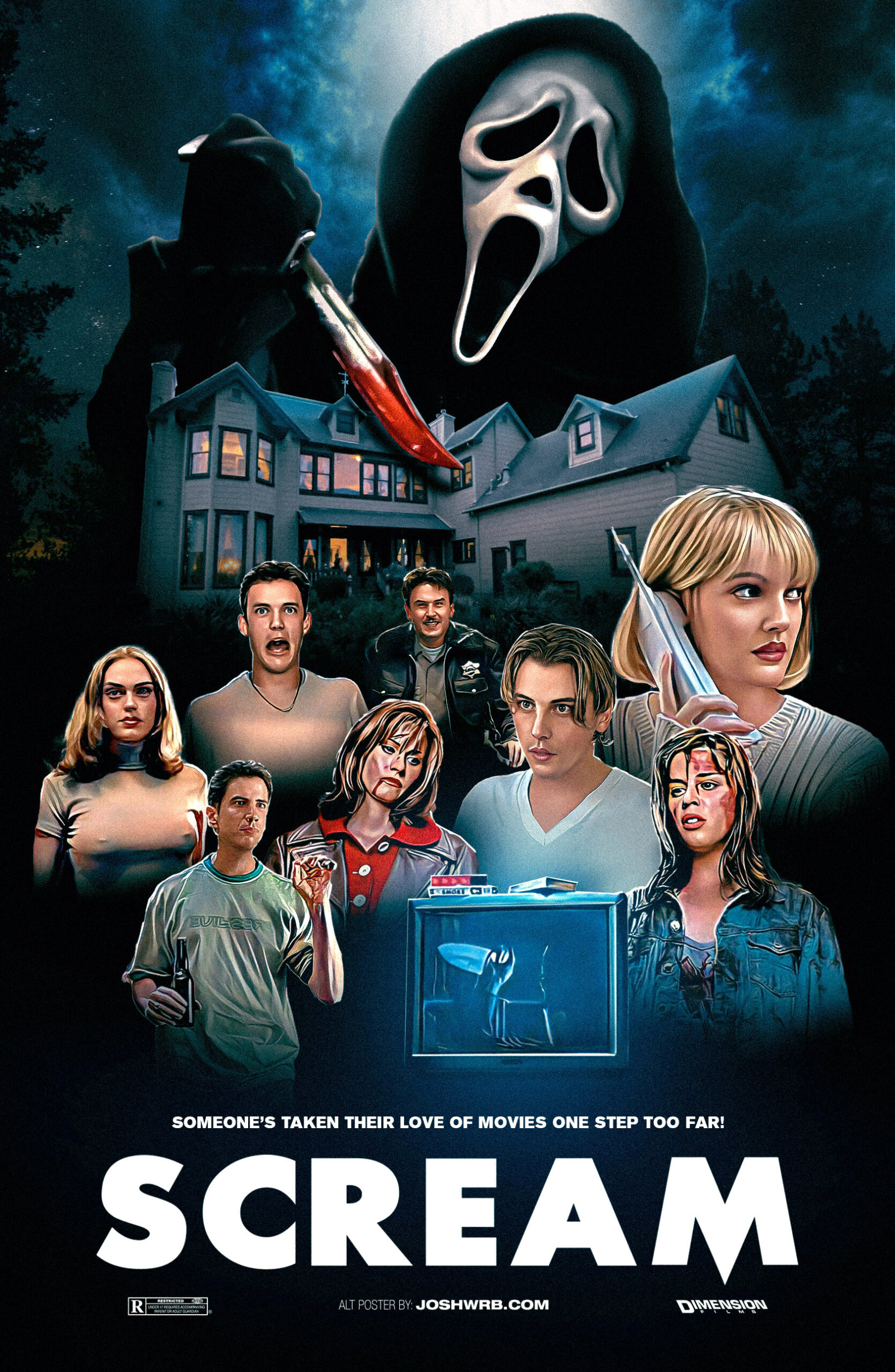
Ghostface isn't just a costume; it's a social weapon that turns everyday paranoia into a cinematic art form. Wes Craven's 1996 slasher didn't just revitalize a dying genre by counting off movie rules—it weaponized the human mind, shifting horror from supernatural monsters to the terrifying realization that the killer is someone sitting right next to you on the couch.
When we look past the voice-changer and the iconic rubber mask, Scream characters dismantle traditional slasher tropes through deep-seated psychological realism. They aren't cardboard cutouts waiting to be slashed in the woods. They're broken teenagers, ambitious reporters, and obsessive film nerds whose deepest insecurities drive both the violence and the survival. This breakdown explores how these characters completely redefine psychological horror by making vulnerability and motive far scarier than any knife.
The Subversion of the Final Girl and the Outsider
Traditional slashers rely on a rigid hierarchy where the pure, virginal final girl outlasts her peers through sheer endurance. Scream flips this script immediately by introducing protagonists who carry trauma, neuroses, and complex histories long before the first phone rings.
Sidney Prescott doesn't survive because she's lucky or untouchable. She survives because she refuses to stay a victim, turning her processing of grief and betrayal into active survival strategies. Her psychological arc across multiple films sets a new standard for horror protagonists:
- Active Resilience: Instead of cowering in closets, Sidney confronts her attackers with tactical awareness and emotional grit.
- The Burden of Legacy: Her character explores how trauma lingers long after the physical threat is gone, mirroring real-world PTSD.
- Distrust as a Defense Mechanism: She learns that safety is an illusion, forcing her to question every relationship she builds.
Meanwhile, characters like Randy Meeks represent the meta-textual outsider who uses horror film rules as a coping mechanism. Randy's obsession with movie tropes isn't just comic relief. It's a psychological shield against a world that doesn't make sense. By verbalizing the rules of survival, he exposes how modern audiences process real-world violence through the comforting distance of fiction.
Motive and Madness: When the Killer is Your Peer
The true psychological genius of the Scream franchise lies in unmasking ordinary people rather than immortal ghouls. In classic slashers, you fear a supernatural force like Michael Myers or Jason Voorhees. In Woodsboro, you have to fear your boyfriend, your best friend, or the quiet kid in your English class.
This shifts the psychological terror from external dread to acute social paranoia. When Billy Loomis and Stu Macher drop their masks, the horror isn't just that they've killed—it's that they did it out of sheer boredom, broken homes, and peer influence mixed with cinematic obsession.
- Peer Betrayal: The terror stems from shattered intimacy. Trust becomes the most dangerous commodity a character can own.
- Banality of Evil: The killers don't possess dark mystical powers. They're teenage boys with camera equipment and petty grudges, proving that real monstrosity wears a human face.
- Societal Echoes: Later entries in the franchise explore how social media culture, clout-chasing, and online radicalization warp modern killers into performing for an unseen digital audience.
According to a Rotten Tomatoes retrospective on horror subversion, shifting the killer's identity from an outside monster to an insider peer permanently altered how audiences view cinematic suspense.
The Media, Fame, and the Psychology of the Spectacle
Few horror franchises bake media critique directly into their character dynamics as sharply as Scream. Gale Weathers starts as an opportunistic tabloid journalist willing to exploit local tragedy for career advancement, but her character arc dissects the public's morbid obsession with true crime.
Gale and Deputy Dewey Riley represent two opposing psychological responses to public trauma. Dewey channels his vulnerability into protective duty, masking his physical and emotional scars behind a badge of service. Gale channels her ambition into investigative control, using media exposure to regain power over a chaotic world.
- Exploitation as Survival: Gale learns that understanding the killer's need for an audience is the key to predicting their next move.
- The Performance of Trauma: The characters must constantly navigate news crews and public scrutiny while bleeding out in hallways.
- Deconstructing Celebrity: The franchise correctly predicted how society turns violent criminals into infamous pop-culture antiheroes, a theme explored heavily in Rolling Stone analyses of modern horror villains.
Frequently Asked Questions
Why are Scream characters considered more psychologically realistic than classic slashers?
Unlike supernatural villains driven by mindless rage or ancient curses, Scream characters deal with identifiable human motivations like peer pressure, parental abandonment, revenge, and the toxic desire for fame. Their fears and flaws mirror real adolescent psychology.
How does meta-commentary affect the psychological tension?
When characters talk about horror movie rules out loud, it breaks the fourth wall just enough to make the audience hyper-aware of their own vulnerability. It creates a smart, self-conscious atmosphere where characters try to outsmart the genre conventions governing their lives.
What makes Ghostface effective despite different people wearing the mask?
Ghostface isn't defined by a single person's physical strength or supernatural stamina. The mask represents an idea—anonymous terror, societal decay, and the weaponization of modern communication through voice modulators and burner phones. Anyone can pick up the mantle, making the threat universal.
How do supporting characters enhance the horror?
Supporting figures like Tatum Riley or Kirby Reed provide emotional stakes. Because the writing builds genuine friendship dynamics and witty banter before the violence starts, the eventual betrayal or loss cuts much deeper for both the characters on screen and the audience watching.



