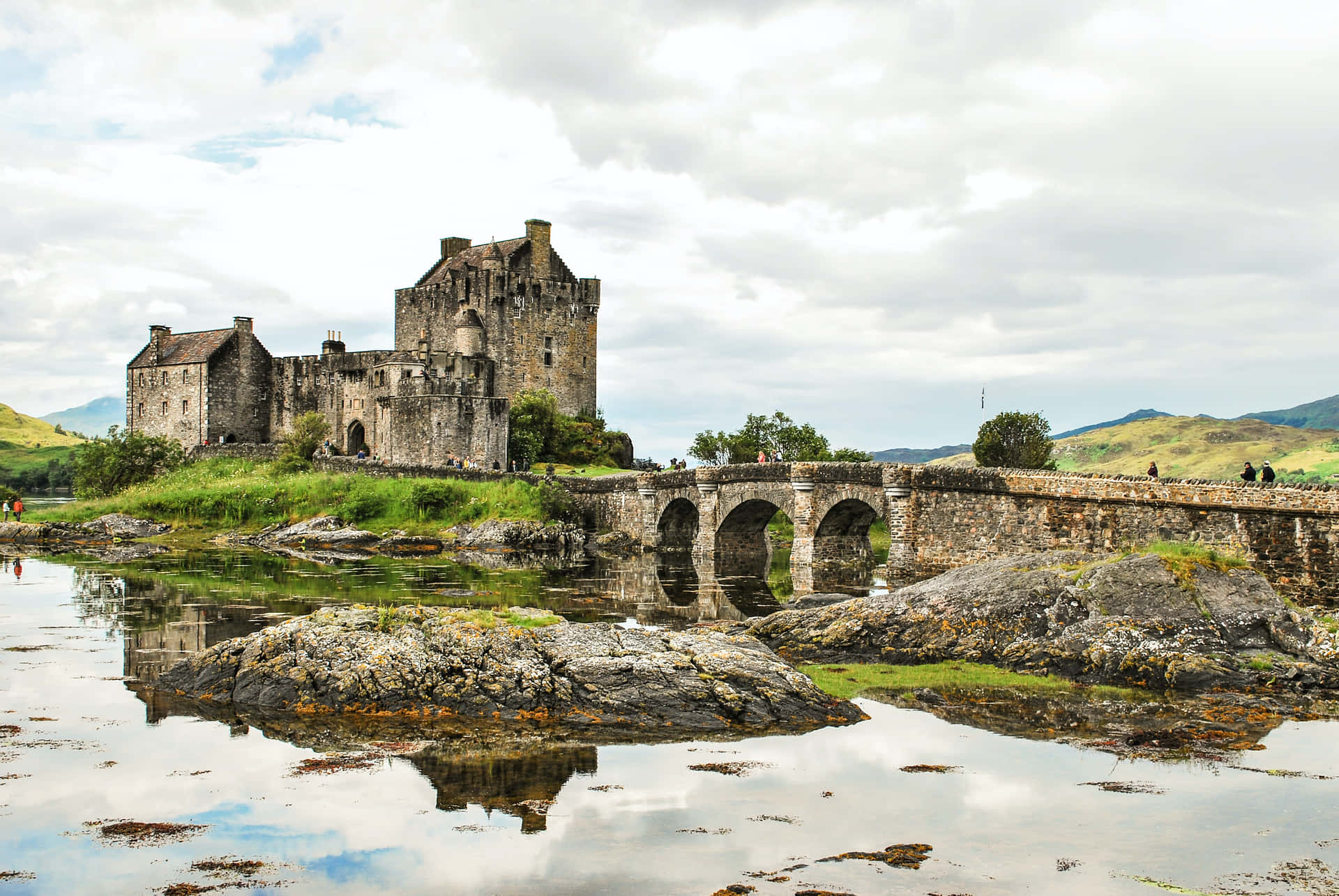
Is Scotland a country? Yes, Scotland is widely recognized as a historic country and a constituent nation of the United Kingdom. Yet, its exact legal and political status often causes confusion because it isn't a sovereign independent state in the eyes of international law. Instead, it shares a complex constitutional framework with England, Wales, and Northern Ireland. Understanding how this relationship works requires looking past everyday labels and examining the actual mechanisms of British constitutional law, devolution, and sovereignty.
The confusion over Scotland's status stems from the fact that the word "country" has multiple meanings. In cultural, geographic, and historical terms, Scotland is undeniably a distinct nation with its own legal system, national church, education structure, and cultural symbols. However, in terms of global diplomacy and international law, the United Kingdom is the singular sovereign state recognized by the United Nations. Let's break down how this dual reality shapes modern politics, law, and everyday governance.
Historical Foundation: The Acts of Union 1707
The political architecture of modern Britain dates back to the early eighteenth century. Prior to 1707, Scotland and England were separate sovereign kingdoms that shared a monarch. Financial strain from the failed Darien scheme and ongoing political pressures led to negotiations for a closer union.
The resulting Acts of Union 1707, passed by both the Parliament of England and the Parliament of Scotland, dissolved both legislative bodies. In their place, they created a new single kingdom known as Great Britain, governed by a unified parliament at Westminster.
Despite this political merger, the treaty preserved several core Scottish institutions to secure agreement from northern elites. Crucially, Scotland retained:
- A separate legal system: Scots law operates independently from English law, with distinct principles, courts, and a separate criminal and civil jurisprudence.
- The Church of Scotland: The treaty protected the Presbyterian church structure, keeping it separate from the Church of England.
- Distinct educational and financial traditions: Local administrative practices largely continued under separate boards and laws.
These preserved elements meant that even inside a unified state, Scotland never became a mere administrative region or county. It entered the union as a distinct legal entity, a fact that underpins modern constitutional arguments today.
Devolution and the Scottish Parliament
For nearly three centuries following 1707, all major legislation for Scotland passed through the UK Parliament in Westminster. That dynamic shifted dramatically in the late 1990s following a public referendum.
The UK Parliament passed the Scotland Act 1998, which established the modern Scottish Parliament at Holyrood and created the Scottish Executive (now the Scottish Government). This process, known as devolution, transferred specific powers from London to Edinburgh while keeping ultimate sovereignty with Westminster.
Devolved matters include areas where Scotland exercises substantial independent control:
- Health and Social Care: The National Health Service in Scotland operates under separate administrative boards and funding priorities.
- Education: Curriculum design, school qualifications, and university funding structures are managed entirely within Scotland.
- Justice and Policing: Scots criminal and civil law, court administration, and the police service are run independently.
- Environment and Agriculture: Land reform, national parks, and farming subsidies are handled by Scottish ministers.
Meanwhile, reserved matters remain under the exclusive control of the UK Parliament. These include foreign policy, defense, macroeconomic policy, immigration, and the constitution itself.
Sovereignty vs. Self-Determination
A frequent point of debate in constitutional law is the location of sovereignty. Under the doctrine of the UK constitution, the Westminster Parliament is sovereign, meaning it holds the legal power to make or unmake any law and can theoretically alter or even abolish devolved institutions.
However, constitutional convention has evolved. The Sewel Convention dictates that the UK Parliament will not normally legislate with regard to devolved matters without the consent of the Scottish Parliament. While the UK Supreme Court has affirmed that this convention is a political rule rather than a legally enforceable restriction, it remains an important norm in British politics.
The debate over whether Scotland should take the next step toward full independence led to the 2014 independence referendum, where voters chose to remain part of the UK by 55% to 45%. That vote demonstrated both sides of Scotland's status: the UK government recognized Scotland's right to hold a referendum on its constitutional future, confirming its status as a willing partner in a union, while the legal outcome reaffirmed that altering that status requires specific legal mechanisms under the UK constitutional framework.
For more details on how legislative power is divided, you can read the official guidance on UK Devolution or review historical context provided by the UK Parliament Living Heritage.
Common Misunderstandings About Scotland's Status
People often mix up international recognition with internal constitutional terms. Here are a few frequent errors to avoid:
- Calling Scotland a "province": Provinces are typically administrative divisions created by a central government. Scotland is a historic kingdom and constituent nation, not a province.
- Assuming Scots law is a subset of English law: They are entirely separate legal traditions with different historical roots, court structures, and terminologies.
- Believing devolution is permanent by default: While politically entrenched, devolved powers are technically delegated by Westminster, which distinguishes devolution from federalism where regional powers are constitutionally guaranteed against central interference.
Frequently Asked Questions
Is Scotland recognized as an independent country by the United Nations?
No. The United Nations recognizes the United Kingdom as a single member state. Scotland does not hold a separate seat at the UN general assembly because it is not an independent sovereign state under international law.
Can the Scottish Parliament hold another independence referendum without Westminster's approval?
The UK Supreme Court ruled in 2022 that the Scottish Parliament does not have the legal competence to pass legislation for an independence referendum without the consent of the UK Parliament, because the constitution is a reserved matter.
Does Scotland issue its own currency?
Scotland does not have an independent sovereign currency. Scottish clearing banks issue their own banknotes, but these are legal currency pounds sterling rather than a separate floating currency, and they circulate alongside Bank of England notes.
Why does Scotland have its own legal system if it is part of the UK?
Under the terms of the Treaty of Union in 1707, Scotland insisted on protecting its native legal traditions and courts. This structural separation was explicitly preserved to ensure continuity in civil and criminal justice for Scottish citizens.


