A scientific coefficient is a constant multiplier attached to a variable that quantifies the strength, rate, or proportional relationship between physical or mathematical factors. Without these numerical constants, scientific equations remain abstract descriptions rather than predictive tools. They bridge the gap between qualitative theory and quantitative reality.
When analyzing how variables interact, researchers rely on coefficients to translate observations into actionable formulas. Whether you're calculating drag force in fluid dynamics or determining price elasticity in economics, coefficients provide the specific scaling factor needed to make an equation work for real-world data.
What is a Scientific Coefficient?
In mathematical terms, a coefficient is a multiplicative factor in front of a variable or term. For example, in the linear equation $y = mx + b$, the letter $m$ represents the coefficient that dictates the slope of the line. If $x$ increases by one unit, $y$ increases by $m$ units.
In scientific contexts, coefficients carry physical units or represent dimensionless ratios. They encapsulate complex underlying physics, chemistry, or biological parameters into a single usable number. For instance, the drag coefficient ($C_d$) in aerodynamic engineering condenses fluid viscosity, object shape, and surface roughness into a single value used to calculate wind resistance.
Scientists determine these values through empirical experimentation and statistical regression. By gathering data points from controlled experiments, researchers fit models to observations and extract the exact numerical coefficients that minimize error.
Primary Types of Coefficients in Science
Different scientific disciplines utilize specific classes of coefficients to model phenomena. Understanding these variations helps clarify how different fields interpret mathematical relationships.
Linear and Proportional Coefficients
Linear coefficients describe a constant, direct relationship where changes in one variable produce proportional changes in another.
- Hooke's Law uses the spring constant ($k$), a linear coefficient defining how much a spring stretches per unit of force applied.
- Ohm's Law relies on resistance as a coefficient relating voltage drop to electrical current.
Exponential and Growth Coefficients
Exponential coefficients govern systems where the rate of change is proportional to the current value itself, leading to rapid acceleration or decay.
- Radioactive decay equations use a decay constant to predict how many isotopes remain over time.
- Population biology models use growth rate coefficients to project how quickly species populations expand under optimal conditions.
Dimensionless Coefficients
Many advanced scientific fields utilize pure numbers without units to compare systems of varying scales.
- The Reynolds number serves as a dimensionless coefficient in fluid mechanics, determining whether flow inside a pipe remains laminar or turbulent.
- The coefficient of friction is a dimensionless ratio comparing frictional force to normal force between two contact surfaces.
The Role of Coefficients in Mathematical Modeling
Mathematical models allow scientists to simulate real-world systems, from global climate patterns to cellular metabolic pathways. Coefficients form the core infrastructure of these models.
When building a model, researchers adjust coefficients through calibration against historical data. If a climate model overestimates global temperature rises, scientists recalibrate the feedback coefficients governing greenhouse gas retention.
This process highlights a critical distinction: coefficients are not universal laws of physics like the speed of light. They are parameters measured within specific contexts and boundary conditions. Changing the temperature, pressure, or material composition often alters the coefficient's value.
Common Pitfalls in Interpreting Coefficients
Working with mathematical coefficients requires precision, as misinterpreting their values leads to flawed scientific conclusions.
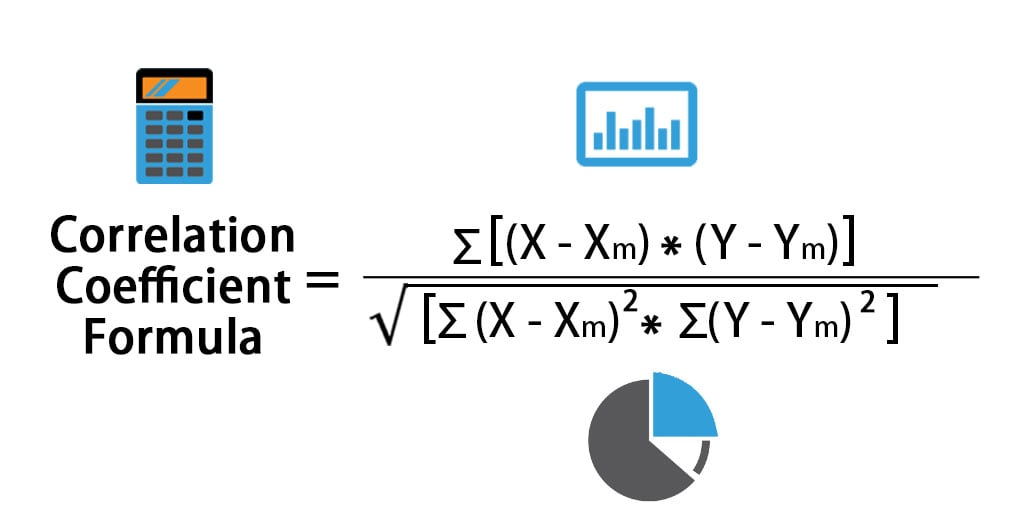
- Confusing correlation with causation: A regression coefficient in a statistical model shows how variables move together, but it doesn't automatically prove that one causes the other.
- Ignoring boundary limits: Many coefficients only remain accurate within specific operational ranges. Applying a linear friction coefficient at supersonic speeds produces massive errors because aerodynamic behavior changes fundamentally.
- Overlooking units: Some coefficients are dimensionless, while others incorporate complex combinations of mass, length, and time. Failing to track units during calculations invalidates the output.
Frequently Asked Questions
Are coefficients constant in all environments?
No. Many coefficients depend heavily on environmental factors such as temperature, pressure, and chemical composition. For example, the thermal conductivity coefficient of a material changes as it heats up.
How do researchers find unknown coefficients?
Researchers use empirical data collection and curve-fitting algorithms, such as least-squares regression, to determine the value of unknown coefficients that best match observed experimental data.
What is the difference between a coefficient and a variable?
A variable represents a quantity that can change or vary within an experiment, such as time, temperature, or position. A coefficient is a fixed numerical factor that scales that variable under specific conditions.
Why do some coefficients have no units?
Dimensionless coefficients are ratios of similar quantities—such as force divided by force, or length divided by length. The units cancel out during division, leaving a pure number useful for scale-invariant comparisons. Learn more about dimensional analysis through NIST Reference on Constants, Units, and Uncertainty.



