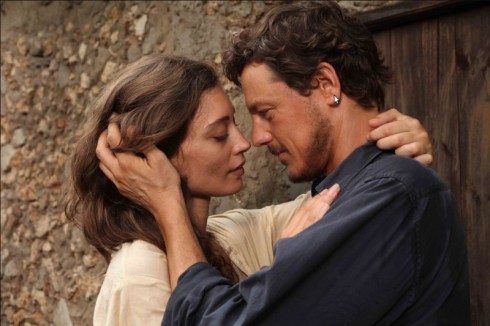
Steven Spielberg’s 1993 historical drama stands as a landmark achievement in cinematic history, largely because its cast grounded unimaginable historical horrors in deeply human terms. The film chronicles Oskar Schindler, a German industrialist who saved more than one thousand mostly Polish-Jewish refugees from the Holocaust during World War II by employing them in his factories. Rather than relying solely on grand historical scale, the movie succeeds through raw, intimate performances that translate statistical tragedy into individual faces, choices, and moral transformations.
The production brought together an ensemble of seasoned international actors and lesser-known talents, many of whom grappled heavily with the emotional weight of portraying real people caught in the machinery of genocide. Examining these performances reveals how the casting choices elevated a standard historical biopic into an enduring cultural touchstone.
Liam Neeson as Oskar Schindler: The Anatomy of a Transformation
At the center of the narrative is Oskar Schindler, played by Liam Neeson in a career-defining role that earned him an Academy Award nomination. When audiences first meet Schindler, he's a flashy, opportunistic war profiteer and member of the Nazi Party who views the wartime invasion of Poland as a lucrative business opportunity. He exploits cheap Jewish labor to line his own pockets, moving through upscale restaurants and black-market deals with suave detachment.
Neeson portrays Schindler's gradual moral awakening with subtle restraint. There is no single lightning-bolt epiphany. Instead, the change unfolds incrementally through silent glances and tightening jawlines as he witnesses the liquidation of the Kraków Ghetto. Neeson balances charm with a creeping internal horror. By the time Schindler breaks down at the end of the film—regretting that he could have saved more people if he had sold his car or his Nazi pin—the emotional payoff feels earned because Neeson refuses to paint Schindler as a saint from frame one. He remains a flawed, complex man who ultimately chose decency over profit.
Ben Kingsley as Itzhak Stern: The Moral Compass and Quiet Resistance
If Schindler is the body and face of the operation, Itzhak Stern, played by Ben Kingsley, is the moral backbone. Stern, Schindler’s Jewish accountant and administrator, navigates an impossible tightrope of bureaucratic survival inside a regime designed to destroy him. Kingsley brings a quiet, dignified intensity to the role, anchoring the screen with his watchful eyes and meticulous posture.
Kingsley avoids historical caricature, presenting Stern as a man of immense intellect and ironclad pragmatism. The dynamic between Neeson and Kingsley drives the emotional core of the first half of the film. Stern initially views Schindler with cool suspicion, recognizing him as just another exploitative capitalist. Over time, their transactional relationship evolves into a profound mutual respect. Kingsley shows how resistance under totalitarianism didn't always involve weapons; sometimes it looked like altering administrative lists to classify violinists, teachers, and accountants as essential metalworkers.
Ralph Fiennes as Amon Göth: The Banality and Terror of Evil
To portray SS Hauptsturmführer Amon Göth, Spielberg needed an actor who could embody casual, psychopathic cruelty without descending into mustache-twirling villainy. He found that presence in Ralph Fiennes, who gained nearly thirty pounds for the role and delivered a terrifying masterclass in human detachment.
Fiennes captures the horrific duality of Göth: a man who can casually sip coffee and murder prisoners from his villa balcony one minute, then play the gracious host or experience warped romantic fixation the next. Fiennes didn't play Göth as a monster from another planet; he played him as a deeply fractured, insecure, and miserable human being whose internal emptiness manifested as boundless sadism. It's an uncomfortable performance because Fiennes forces the viewer to look directly at the banality of evil—showing how ordinary psychological weakness can curdle into systematic mass murder when given absolute power.
Supporting Performances that Ground the Tragedy
Beyond the central trio, the supporting cast expands the emotional landscape of the film, capturing the diverse facets of survival, collaboration, and complicity.
- Caroline Goodall as Emilie Schindler: Playing Oskar's estranged yet remarkably steadfast wife, Goodall brings quiet dignity and moral clarity to scenes where she witnesses her husband's transformation from afar.
- Embeth Davidtz as Helen Hirsch: As Göth’s Jewish maid, Davidtz portrays stark, palpable terror. Her interactions with Fiennes form some of the most tense, psychologically harrowing sequences in modern cinema, illustrating the daily physical and mental torment experienced by camp prisoners.
- Jonathan Sagall as Poldek Pfefferberg: Sagall portrays the real-life survivor who helped preserve Schindler's story, acting as a crucial bridge between the black-market underground and the factory workers.
The Psychological Toll on the Cast and Crew
Recreating the atrocities of the Holocaust took a heavy psychological toll on everyone involved in the production. Shooting in the authentic locations of Kraków and the purpose-built replica of the Plaszów concentration camp just outside it meant the cast walked daily through environments steeped in historical trauma.
Fiennes reportedly terrified extras on set simply by staying in character in his SS uniform between takes. To decompress from the suffocating darkness of the material, cast members regularly gathered in hotel lobbies in the evenings to share meals, listen to music, and converse. Ben Kingsley noted that after a day spent simulating hell, actors and crew alike desperately needed human warmth and camaraderie to remember what they were fighting to preserve.
The Lasting Legacy of the Cast and Real-Life Counterparts
The impact of the performances extends far beyond box office numbers or Academy Awards. The film forged a permanent bond between the actors and the surviving individuals they portrayed—known as the Schindlerjuden (Schindler's Jews).
At the conclusion of the film, surviving Schindlerjuden, paired alongside the actors who played them, walk to Oskar Schindler’s actual grave in Jerusalem to place stones on the marker. This blending of historical reality and cinematic performance created a unique cultural artifact. According to historical archives documented by institutions like the United States Holocaust Memorial Museum, the film single-handedly expanded public awareness of the Holocaust for an entire generation.
By avoiding simplistic hero worship and focusing on complex human choices, the cast of Schindler's List transformed a historical footnote into a living, breathing testament to moral courage. They showed that even inside absolute darkness, individual agency still exists.
Frequently Asked Questions
Did any real-life Schindlerjuden appear in the film?
Yes. Several survivors who were actually saved by Oskar Schindler appeared as extras throughout the movie. In the final scene at the cemetery in Jerusalem, the surviving Schindlerjuden walk hand-in-hand with the actors who portrayed them.
Why was the film shot primarily in black and white?
Director Steven Spielberg and cinematographer Janusz Kamiński chose a black-and-white documentary style to mirror the historical archive footage of World War II. The sole exception is the famous appearance of the "Girl in Red," which visually symbolizes the shifting awareness of the protagonist and the world toward the hidden atrocities.
How accurate were the portrayals of historical figures like Amon Göth?
Survivors who knew the real Amon Göth noted that Ralph Fiennes' physical resemblance and eerie mannerisms were startlingly accurate. Mila Pfefferberg, a survivor who met Fiennes on set while he was in full SS costume, reportedly shook with fear because he looked and moved so much like the real camp commandant.
Did Liam Neeson meet Oskar Schindler before filming?
No, Oskar Schindler passed away in 1974, long before pre-production began. Neeson relied heavily on archival recordings, historical documents, and interviews with surviving Schindlerjuden to build his interpretation of the complex industrialist.



