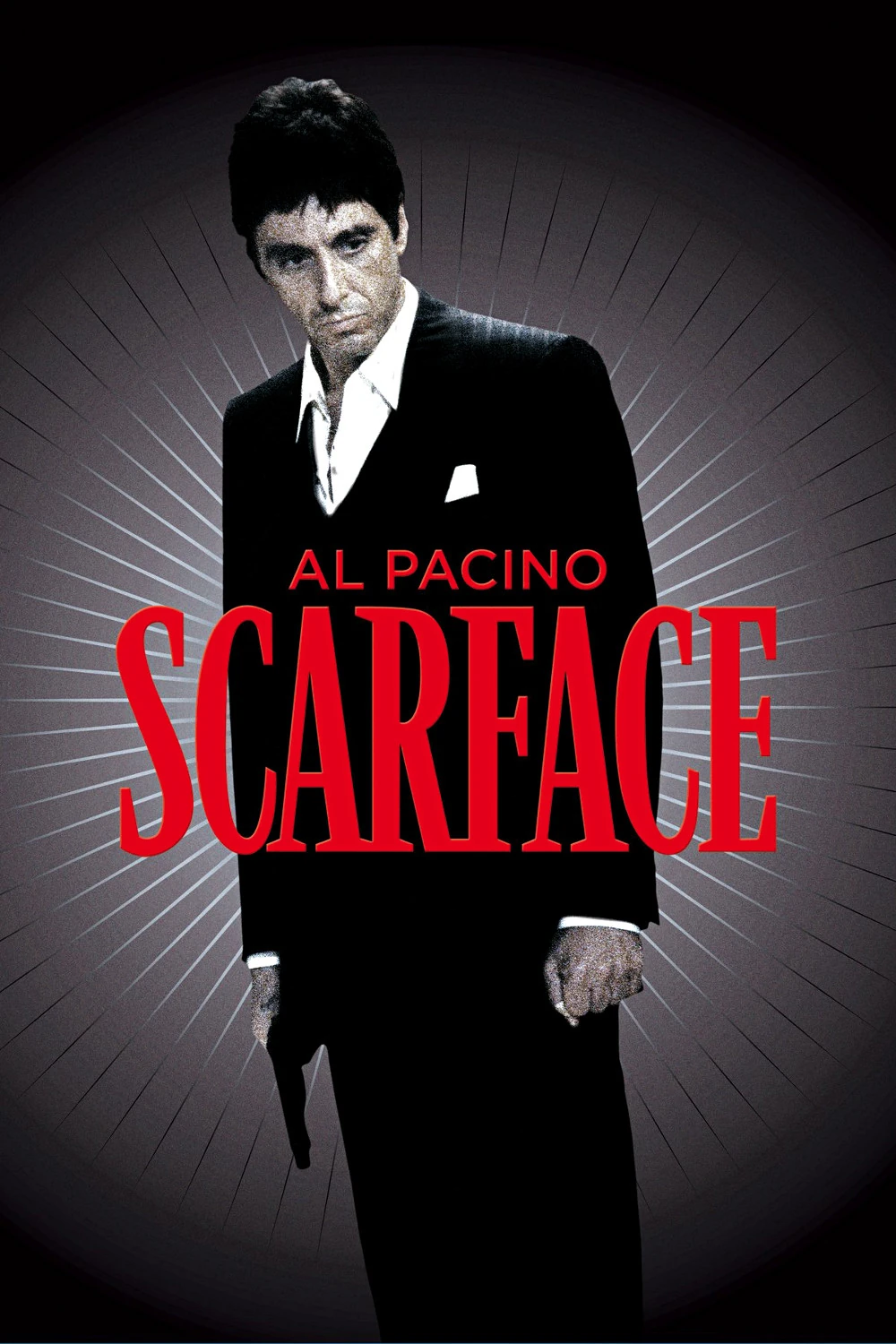
The climactic finale of Brian De Palma's 1983 crime masterpiece Scarface leaves very little room for ambiguity, yet moviegoers still debate the exact mechanics of Tony Montana's violent downfall. When Alejandro Sosa's assassin sneaks behind Tony in his mansion's sprawling office, he delivers a shotgun blast straight to Tony's back. That single shot sends the drug lord tumbling over his indoor fountain and into the murky water below, ending his reign over Miami's cocaine empire.
While the film makes it visually clear that a hired hitman pulled the trigger, the deeper question involves who orchestrated the hit, how Tony's reckless paranoia brought it upon himself, and what the famous neon globe meant as his life drained away. Understanding the bloody final scene requires looking past the cinematic chaos to examine the script, the historical context of the drug trade, and the tragic inevitability of Tony's code.
The Assassin in the Shadows: Skull and the Hit Squad
The man who actually kills Tony Montana is a minor character within Sosa's syndicate, often identified in production scripts and credits simply as the assassin Skull. While Sosa's main enforcer, Alberto, was supposed to plant a car bomb in New York earlier in the film, Tony famously stopped him at the last second upon realizing children were in the vehicle. That choice cost Alberto his life when Sosa executed him, but it also meant Sosa had to send an entire wave of heavily armed mercenaries to wipe out Tony's Miami estate.
During the chaotic gunfight, Tony cuts down dozens of Sosa's soldiers with his grenade launcher-equipped M16. However, he becomes blinded by his own cocaine consumption, alcohol abuse, and arrogance. He fails to notice Skull creeping up the balcony stairs directly behind him. The shotgun blast to the spine severs Tony's nervous system instantly, destroying any chance he had to defend himself as he plunges into the indoor pool beneath the "The World Is Yours" statue.
Why Sosa Ordered the Hit on Tony Montana
Many viewers wonder if Tony could have avoided his fate by simply cooperating with Alejandro Sosa. The conflict begins when Tony refuses to assassinate a journalist who is exposing Sosa's cartel operations in Bolivia. Tony looks at the journalist's wife and children in the car and refuses to push the detonator, telling Sosa he doesn't kill women and kids.
This refusal shatters the partnership. Sosa doesn't eliminate Tony out of petty anger; he views Tony as a liability who has grown unstable, addicted, and unreliable. In the illegal drug trade depicted in Oliver Stone's screenplay, loose ends get tied up permanently. Tony's code of honor—refusing to kill innocents while simultaneously murdering his own childhood friend Manny for secretly marrying Gina—highlights the twisted, contradictory nature of his character. By the time Sosa's men breach the gates, Tony has alienated every single person who ever cared about him.
The Symbolism of The World is Yours Statue
As Tony floats face down in the red-tinted water of his lobby fountain, the camera pans up to neon lettering glowing above him: The World Is Yours. This globe, stolen from a Pan Am advertisement in the script's early drafts, serves as the ultimate cinematic irony. Tony spent his entire life clawing his way from a Cuban refugee camp to the top of Miami's underworld, believing that wealth and power equated to owning the world. In the end, his world shrinks to a bullet-riddled room, a pool of his own blood, and a statue mocking his grand ambitions.
Director Brian De Palma modeled the mansion's interior on opulent neoclassical sets, blending high-society wealth with brutal cartel violence. This visual contrast emphasizes how hollow Tony's American Dream turned out to be. He gained the mansion, the tiger, and the mountains of cash, but he lost his soul, his family, and eventually his life.
Common Misconceptions About the Ending
Audiences frequently misinterpret various elements of the final shootout. Clearing up these points helps reveal why the scene resonates so strongly decades after its release.
- Tony didn't survive: A popular urban legend claimed that alternate cuts or sequels showed Tony surviving his wounds. Director Brian De Palma and lead actor Al Pacino have repeatedly confirmed that Tony died instantly from the shotgun blast. The film is a classic tragedy where the protagonist must pay the ultimate price for his sins.
- It wasn't just one rival gang: The attackers weren't local street thugs or Omar Suárez's associates; they were professional paramilitary enforcers sent directly by Bolivian cocaine kingpin Alejandro Sosa. Their tactical precision and heavy weaponry overwhelmed Tony's personal security detail in minutes.
- Tony's death was self-inflicted: While Sosa pulled the trigger through his hitman, Tony engineered his own destruction. By murdering Manny, driving Gina into hysterics, and alienating Chi-Chi and the rest of his crew, Tony isolated himself entirely before the attack even began.
Frequently Asked Questions
Did Al Pacino get injured during the final shootout?
Yes, Al Pacino suffered a minor hand burn during the filming of the final scene when he accidentally grabbed the barrel of the M16 rifle shortly after firing blanks. The production had to shut down for a short period while he recovered.
Was Scarface based on a true story?
The 1983 film is a remake of the 1932 movie directed by Howard Hawks, which was loosely inspired by the life and crimes of Chicago gangster Al Capone. However, Tony Montana's specific rise and fall in Miami's 1980s drug scene is a fictionalized account crafted by screenwriter Oliver Stone.
Why did Tony kill Manny?
Tony flew into a blind, protective rage when he found his sister Gina living with and marrying Manny, his closest friend and partner in crime. Tony had forbidden Gina from dating anyone, harboring a toxic, possessive obsession over her safety that ultimately led him to execute Manny without letting him explain.
What happened to Elvira after the ending?
Michelle Pfeiffer's character, Elvira Hancock, left Tony earlier in the film during a tense dinner party where Tony hurled insults at her drug addiction and lifestyle. Her exact fate isn't shown on screen, but she successfully distanced herself from Tony's collapsing empire before the final siege.



