Saudi Arabia occupies over 80% of the Arabian Peninsula, sitting at the intersection of Asia, Africa, and Europe. This geographic positioning has shaped its history as a trade corridor and its modern role in international logistics and energy markets. Spanning more than 2.15 million square kilometers, the country ranks as the largest state on the peninsula and shares borders with eight nations, including Jordan, Iraq, Kuwait, Qatar, the United Arab Emirates, Oman, and Yemen.
Understanding Saudi Arabia on the map requires looking beyond vast desert expanses like the Rub' al Khali, known as the Empty Quarter. The nation's physical geography is diverse, featuring the Asir mountain range in the southwest—where monsoon rains support seasonal agriculture—and extensive coastlines along both the Red Sea and the Persian Gulf. These maritime borders anchor distinct economic zones, connecting crude oil export terminals in the east with global shipping lanes and emerging tourism hubs in the west.
The Strategic Geography of Trade and Energy
For decades, the global economic significance of Saudi Arabia centered on its immense petroleum reserves, concentrated primarily in the Eastern Province. Facilities like the Ghawar Field and export hubs at Ras Tanura supply a significant portion of world energy. Pipelines and shipping routes through the Persian Gulf establish the kingdom as a vital node in international commerce.
Yet, geographic strategy is shifting inland and toward the Red Sea corridor. The Saudi Landbridge project and expanded rail networks are designed to turn the territory into a multi-modal logistics hub connecting Asian manufacturing centers to European markets. By leveraging its central location, the government aims to reduce transit times for freight passing between the Red Sea and the Gulf, transforming the national map from a resource extraction site into an international transit highway.
Urban Transformation: Riyadh, Jeddah, and NEOM
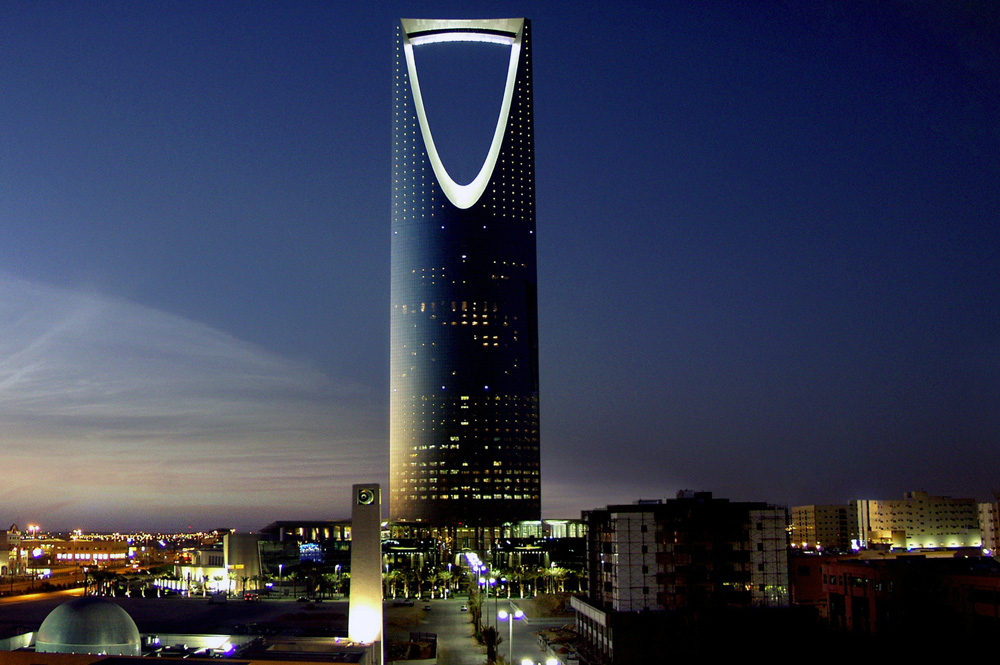
Urban centers across the kingdom are undergoing rapid expansion and architectural redesign. Riyadh, the inland capital, hosts a population nearing seven million and serves as the administrative and financial heartbeat of the country. Projects like the King Abdullah Financial District combine smart city infrastructure with desert-adapted design principles, while historic districts like Diriyah preserve the mud-brick architecture of the first Saudi state.
On the western coast, Jeddah functions as the primary commercial and cultural gateway. Its historic district, Al-Balad, features coral-stone tower houses that reflect centuries of Red Sea trade heritage. Meanwhile, coastal infrastructure upgrades along the Corniche aim to expand leisure and commercial capacity.
Further north, the NEOM development represents an unprecedented structural experiment. Spanning over 26,500 square kilometers, this planned cross-border region integrates linear urban concepts, renewable energy grids, and coastal industrial zones. Designed to operate entirely on clean energy, NEOM illustrates how remote desert and coastal tracts are being re-engineered for high-tech economic output.
Cultural Landscapes and Heritage Preservation
Saudi Arabia's cultural geography is anchored by Mecca and Medina, the two holiest cities in Islam. These sites draw millions of pilgrims annually, requiring specialized urban planning, high-capacity transit corridors, and crowd management systems to maintain safety and accessibility during peak religious seasons.
Beyond the holy cities, historical tourism is expanding rapidly. The oasis city of Al-Ula features monumental rock-cut tombs built by the Nabataeans over two millennia ago, sharing architectural lineage with Petra in Jordan. Preservation efforts across Al-Ula, the rock art sites of Hima, and historic villages in the Asir mountains aim to document ancient civilizational layers that predate the modern state.
- Al-Ula: Nabataean tombs, sandstone canyons, and ancient trade routes.
- Asir Region: Mountainous terrain, traditional stone villages, and agricultural terraces.
- Al-Balad (Jeddah): Coral-stone architecture and historic Red Sea mercantile culture.
Economic Diversification and the Green Transition
Under the Vision 2030 framework, the national economy is decentralizing away from absolute reliance on hydrocarbons. Industrial cities like Jubail and Yanbu continue to anchor petrochemical manufacturing, but new geographic zones focus on mining, renewable energy, and advanced technology.
Solar and wind farms are rising across the northern and western provinces to harness high solar irradiance and coastal winds. The Sakaka Solar Plant and planned green hydrogen facilities at NEOM indicate a shift toward domestic clean energy consumption and future export capacity. Similarly, the Red Sea Project develops low-impact luxury tourism across a sprawling archipelago, enforcing strict environmental protection standards to preserve coral reefs and desert wildlife.
Frequently Asked Questions
How large is Saudi Arabia compared to other countries?
Saudi Arabia spans approximately 2.15 million square kilometers, making it the 17th largest country globally and the largest nation on the Arabian Peninsula. Its landmass is roughly equal to one-fifth of the United States.
What are the main physical regions of Saudi Arabia?
The country features several distinct geographic zones: the vast sand seas of the Rub' al Khali in the south, the central Najd plateau, the Asir highlands in the southwest, and coastal plains along the Red Sea and the Persian Gulf.
What is the purpose of the NEOM project?
NEOM is a planned cross-border urban and industrial development in the northwestern province of Tabuk. It is designed as an innovation hub driven entirely by renewable energy, featuring advanced manufacturing, biotechnology, and sustainable tourism zones.
How is Saudi Arabia diversifying its economy?
Through structural reforms, the country is investing heavily in logistics, mining of untapped mineral reserves, domestic manufacturing, renewable energy production, and international tourism around historical and natural sites.



