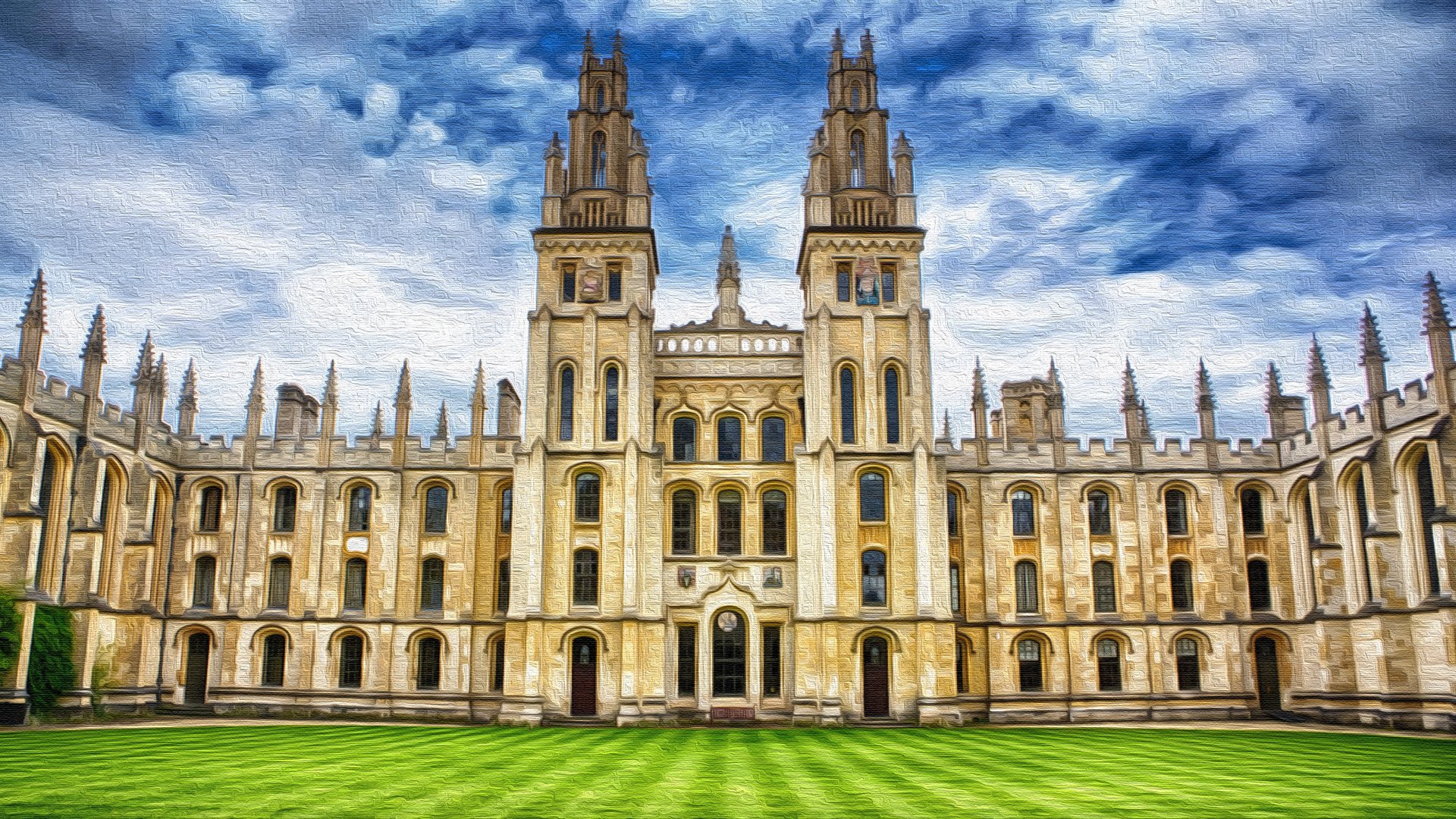
Sapienza University of Rome stands as one of the oldest and most influential institutions of higher education in Europe. Founded in 1303 by Pope Boniface VIII, it has evolved from a papal study center into a massive modern research powerhouse. Today, it shapes intellectual discourse, technological innovation, and academic standards across the continent.
Understanding Sapienza's enduring legacy requires looking beyond its ancient roots. We need to examine how a medieval institution adapted to modern scientific demands while maintaining its historic identity in the heart of Italy.
Origins and Evolution: From Papal Studio to Modern University
Pope Boniface VIII established the Studium Urbis in Rome to ensure that ecclesiastical and civil administration had access to locally trained legal and philosophical minds. Unlike universities in Bologna or Paris, which grew out of student or faculty guilds, Sapienza was born directly from papal authority. This direct link to the seat of power gave the institution unique prominence throughout the Renaissance and Counter-Reformation.
The university received its iconic name in the seventeenth century during the construction of the Sant'Ivo alla Sapienza church and courtyard designed by Francesco Borromini. The word sapienza translates to wisdom, reflecting the institution's classical pursuit of knowledge. Over subsequent centuries, the university weathered political upheaval, papal transitions, and the unification of Italy, eventually relocating from its historic downtown campus to the sprawling Città Universitaria designed by Marcello Piacentini in the 1930s.
Research Leadership and Scientific Contributions
Sapienza isn't just a historic monument; it's an active driver of contemporary European research. The institution consistently ranks among the top universities in Southern Europe, driven by prolific output in physics, engineering, archaeology, and medical sciences.
Key scientific milestones tied to the university include pioneering work in nuclear physics. During the 1930s, Enrico Fermi and the "Via Panisperna boys"—a group of young physicists working at the university—conducted groundbreaking experiments involving slow neutrons. This research laid the direct groundwork for nuclear fission and the development of the nuclear age.
Modern contributions span several high-impact fields:
- Space Exploration: Collaboration with international space agencies on planetary science missions, satellite engineering, and astrophysics data analysis.
- Archaeological Excavation: Leading field expeditions across the Mediterranean and the Middle East that redefine our understanding of ancient civilizations.
- Biomedical Engineering: Developing advanced prosthetics and diagnostic imaging techniques in partnership with major Roman teaching hospitals like Policlinico Umberto I.
Academic Structure and Student Life
With over 110,000 enrolled students, Sapienza operates more like a small city than a traditional campus. Its decentralized faculties span nearly every academic discipline imaginable, from classical letters and Oriental studies to cutting-edge computer science and aerospace engineering.
Navigating such a large institution requires understanding its unique decentralized layout. While the main campus in the San Lorenzo district houses administrative headquarters and science departments, humanities and specialized medicine faculties are scattered across historic palazzos throughout Rome. This layout integrates student life directly into the fabric of the city, allowing learners to utilize state archives, national libraries, and archaeological sites as everyday extensions of their classrooms.
Common Misconceptions About Studying in Rome
Prospective international students often encounter specific myths about Italian public universities like Sapienza. Addressing these misconceptions clarifies what to expect:
- Myth: Public universities in Italy lack modern resources due to their age.
- Reality: While historic buildings dominate certain faculties, central science laboratories, supercomputing facilities, and medical centers receive substantial European and national modernization grants.
- Myth: Admissions are entirely unstructured for international applicants.
- Reality: Programs taught in English or Italian have strict credential evaluations, specific entrance exams, and defined quotas for non-EU applicants.
Frequently Asked Questions
What is the primary language of instruction at Sapienza?
Most undergraduate and traditional graduate programs are taught in Italian. However, Sapienza offers a growing portfolio of bachelor's and master's degrees taught entirely in English, particularly in fields like economics, data science, engineering, and clinical medicine.
How does Sapienza support international research collaboration?
The university participates extensively in the Horizon Europe framework, Erasmus+ student and staff mobility programs, and bilateral agreements with hundreds of global partner institutions. Researchers have access to joint PhD programs and cross-border laboratory grants.
Is tuition affordable for international students?
As a public Italian university, tuition fees are calculated based on the student's family income using an indicator known as the ISEE. This means fees are generally lower than private institutions in North America or the UK, with numerous regional scholarships available for eligible students based on merit and financial need.
How do I apply for housing as an incoming student?
Sapienza provides limited university housing through Laziosud and regional student service agencies. Because demand vastly exceeds supply, most incoming international students secure private apartments or shared housing in neighborhoods near the main campus, such as San Lorenzo, Nomentano, or Pigneto.



