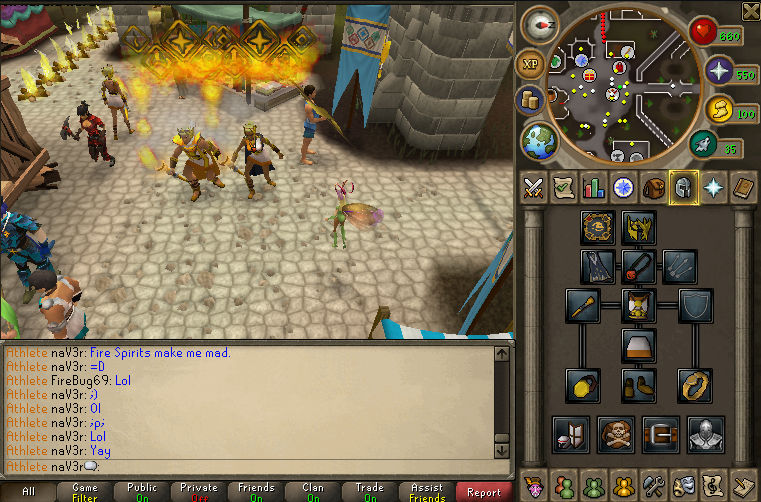
Long before modern service games dominated charts, a browser-based experiment written by two British brothers in a Nottingham bedroom quietly laid the foundation for modern persistent worlds. Launched in 2001, RuneScape didn't rely on cutting-edge graphical rendering or flashy marketing. Instead, it offered open-ended freedom, a classless skill system, and a persistent player-driven economy that turned casual explorers into lifelong devotees. Over two decades later, this digital world remains an industry anomaly, surviving structural overhauls, community splits, and shifting technology trends. Understanding its enduring success requires examining the architectural and design choices that set it apart from every competitor.
The core search intent behind exploring this phenomenon centers on why a primitive Java-based browser game evolved into a multi-billion-dollar franchise spanning multiple versions. Most analyses gloss over the mechanical reality: RuneScape survived because it treated player time as an investment rather than a disposable commodity. Every action, from mining copper ore to baking bread, feeds into a continuous progression loop that respects player agency. To understand how the game achieved this, we have to look past the nostalgia and dissect the structural mechanics that kept millions hooked for a quarter-century.
The Architectural Roots of Accessibility
When Andrew and Paul Gower began coding what would become RuneScape, their primary constraint was technical limitations. They needed a game that could run inside a web browser over dial-up connections without heavy hardware requirements. This forced simplicity became the game's greatest superpower.
By eliminating the barrier to entry, the creators captured an audience of players whose computers couldn't handle contemporary 3D titles like EverQuest. You didn't need a dedicated graphics card or a hefty installation wizard; you opened a browser, loaded a Java applet, and stepped straight onto the shores of Lumbridge.
- Zero Installation Friction: Instant browser loading meant players could log in from school libraries, home PCs, or public terminals.
- The Free-to-Play Funnel: A robust free tier offered dozens of hours of content, proving the value of the world before asking for a subscription commitment.
- Low-Bandwidth Netcode: Optimized data packets allowed stable sessions even on erratic early-internet connections.
This focus on universal access established a massive, diverse user base early on. Players weren't segmented by high hardware costs, creating a melting pot of casual gamers and hardcore grinders alike.
The Classless Skill Matrix
Most role-playing games lock you into rigid archetypes—you choose a mage, a warrior, or a rogue, defining your playstyle for the life of the character. RuneScape shattered this mold by introducing an open skill tree where a single character can master every discipline.
If you want to spend three weeks exclusively catching lobsters, you can. If you decide you'd rather pivot to training magic or crafting armor, your character simply adapts. This design choice removes the frustration of rerolling characters and encourages long-term commitment.
[ Player Action ] ---> [ Resource Gathering / Combat ] ---> [ XP Gain ] ---> [ Level Unlock ]
        ^                                                                          |
        |------------------- ( Loops Back into Economy ) <-------------------------|
This matrix creates natural pacing. When grinding a tedious skill gets boring, you can switch to questing or combat without losing progress. It is a self-directed loop that prioritizes individual goals over developer-mandated linear tracks.
Economy and the Player-Driven Market
An online world is only as vibrant as its trade. Early trading relied on crowded forums or chaotic open-air markets in world-2 Varrock, where players shouted offers over one another. While messy, this organic commerce taught players the value of supply, demand, and negotiation.
To solve rampant merchant spam and scams, Jagex introduced the Grand Exchange in 2007, an automated centralized marketplace. Rather than destroying player interaction, the Grand Exchange stabilized item values and provided transparent price histories.
- Item Sinks: Mechanics like Invention or high-level item breaking prevent hyper-inflation by permanently removing redundant gear from circulation.
- Interdependence: High-level combatants rely on gatherers for potions, food, and ammunition, ensuring low-level players always have profitable niches.
- Real Supply Chains: Rare drops require components sourced from dozens of different disciplines, binding the economy into a single cohesive ecosystem.
The Great Schrift: OSRS and RS3
Few gaming communities have experienced a fracture as dramatic as the one that split RuneScape in the early 2010s. Controversial updates—most notably the Evolution of Combat in 2012, which introduced ability bars akin to modern action-MMOs—alienated a massive portion of the veteran base.
Instead of letting disgruntled players drift away to private servers, Jagex took a bold step. They recovered a pristine August 2007 backup of the game code and launched Old School RuneScape (OSRS) in 2013.
- The Poll Booth System: No major update enters OSRS without passing a rigorous community vote requiring a 75% approval threshold.
- Parallel Evolution: While RS3 embraces modern visual polish and high-level complexity (including skills like Necromancy), OSRS expands retro mechanics through new, player-approved continents and raids.
- Preservation of Identity: This dual-track strategy allowed the developers to satisfy both modern progression chasers and purists simultaneously.
According to historical coverage by The Guardian, the franchise accumulated over 300 million accounts across its lifetime, proving that listening to player nostalgia pays off better than forcing unwanted modernization. For further historical milestones, official updates are regularly tracked on the Jagex Official Website.
Common Misconceptions About the Phenomenon
Outsiders often look at RuneScape and dismiss it as an archaic relic defined entirely by repetitive clicking and outdated visuals. That perspective misses how the game actually functions today.
- "It's just mindless clicking." Modern high-end boss encounters require precise tile manipulation, prayer switching, and split-second reaction times that rival competitive action games.
- "The graphics are too bad to enjoy." Art style and consistent world-building frequently trump polygon counts; Gielinor's charm lies in its distinct British wit and cohesive aesthetic.
- "You can't start fresh as a new player." Because early-tier materials remain in constant demand by veterans crafting end-game supplies, newcomers can easily make substantial gold by gathering basic resources.
Frequently Asked Questions
Can you still play RuneScape for free?
Yes. The free-to-play version gives access to a substantial portion of the game world, lower-tier skills, and classic quests. Subscribing unlocks the full map, advanced skills, and hundreds of additional quests.
What is the difference between RS3 and Old School RuneScape?
RS3 features modern graphics, a hotkey-based ability combat system, and regular high-end additions like the Necromancy skill. OSRS retains the 2007 aesthetic and classic point-and-click combat model, with all new content strictly vetted by community polls.
Is RuneScape available on mobile devices?
Both modern RuneScape and Old School RuneScape feature fully cross-platform mobile apps for iOS and Android, allowing players to share progress seamlessly between desktop and phone.
How does the game prevent inflation from ruining the economy?
Developers implement strict item sinks, taxation on Grand Exchange transactions, and crafting systems that consume redundant weapons and armor to generate raw materials, balancing the flow of gold over decades of play.



