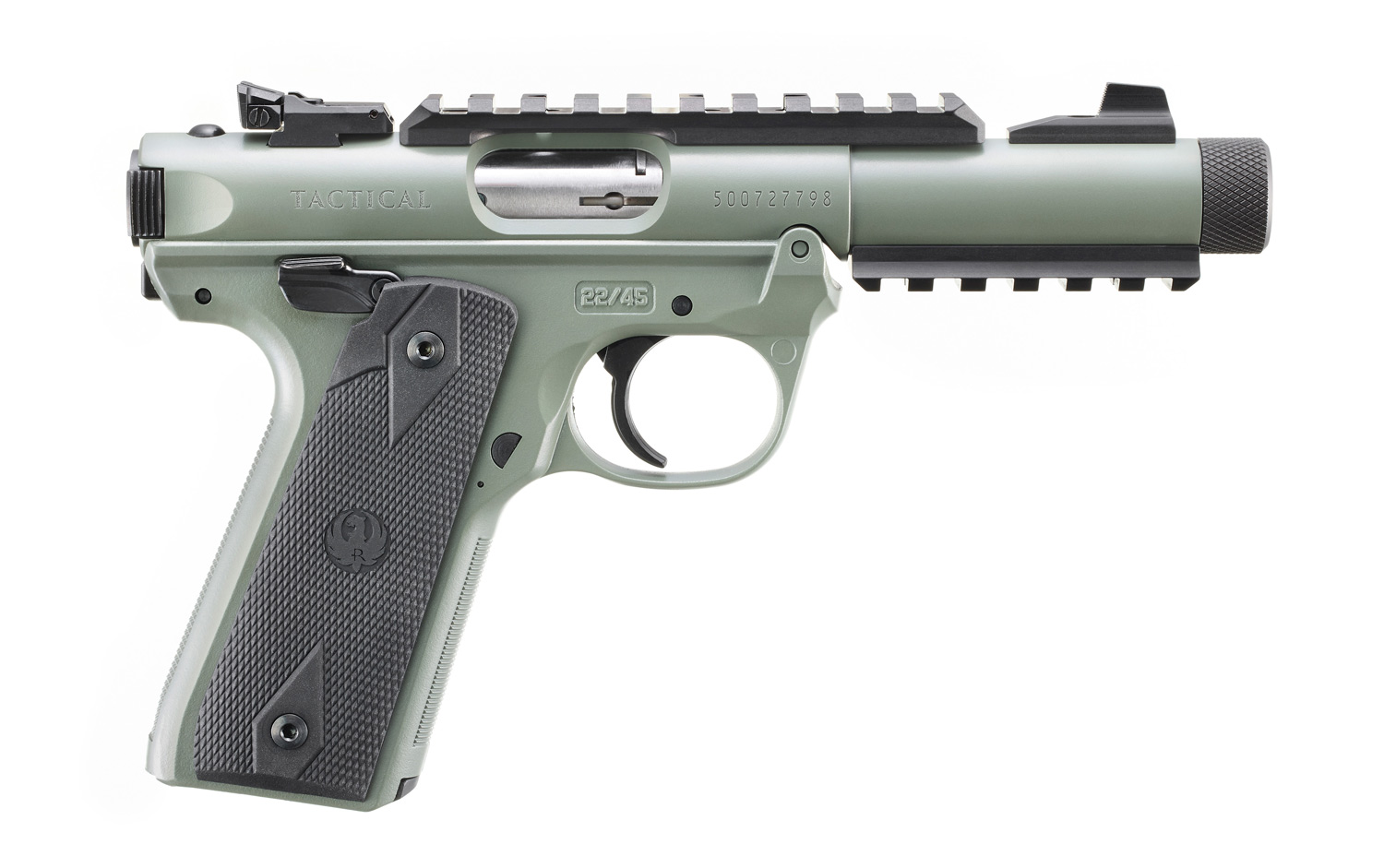
Choosing between rimfire handguns often comes down to two direct siblings in a legendary lineup. The Ruger Mark IV Standard and the Ruger Mark IV Target share the same reliable internal mechanics and iconic grip angles, but they serve entirely different masters at the shooting range. If you want a lightweight field companion for casual weekend plinking, you lean one way. If you want a heavier bull-barreled rig built for punching tiny paper groups at twenty-five yards, you look toward the other.
The Standard model captures the pure, uncluttered silhouette of the original 1949 design. It keeps things slim, light, and easy to pack on a hike. The Target model trades that slim profile for a heavy steel bull barrel and adjustable target sights, soaking up recoil and steadying your hands for precision work. Understanding how these structural changes affect handling, accuracy, and everyday use will help you pick the right tool for your range bag.
Core Design and Ergonomics
Both pistols benefit from the simplified takedown mechanism introduced in the Mark IV generation. A single push-button at the back of the frame lets the upper receiver pivot up and off, solving the notorious reassembly headaches of older Mark II and Mark III models. They both feature a crisp 10+1 capacity and an ambidextrous manual safety.
The physical handling diverges sharply the moment you pick them up. The Standard model uses a tapered barrel that keeps the muzzle light. It handles quickly and transitions fast between multiple targets. The Target model utilizes a thick, straight-walled bull barrel. That extra steel shifts the center of gravity forward, dampening tiny hand tremors and holding your sights steady against the target.
Weight, Balance, and Sights
Weight differences heavily influence how each firearm shoots during extended strings of fire.
- Ruger Mark IV Standard: Typically weighs around 25 to 28 ounces depending on barrel length. It feels nimble and light in the hand, making it ideal for younger shooters, small-framed adults, or anyone carrying a kit gun through the woods.
- Ruger Mark IV Target: Usually tips the scales around 35 to 42 ounces. The substantial weight absorbs the minimal recoil of standard velocity .22 Long Rifle ammunition, allowing for faster follow-up shots without losing your sight picture.
Sighting systems also separate the two variants. The Standard model traditionally comes with fixed iron sights suited for minute-of-can accuracy at close range. Modern variants are drilled and tapped, letting you mount a rail or optic, but out of the box, they require Kentucky windage if your point of impact drifts. The Target model features fully adjustable target sights (click-adjustable for windage and elevation) paired with a taller, wider front post that stands out sharply against paper targets.
Accuracy and Performance at Distance
When testing mechanical accuracy from a sandbag rest, both pistols punch well above their price point. The fixed-barrel design—where the receiver and barrel form a single rigid unit while the bolt cycles internally—inherently beats out tilting-barrel rimfire handguns for consistent grouping.
The Target model pulls ahead when shooting offhand at distances past fifteen yards. The added sight radius, heavier front end, and micro-adjustable rear sights give the shooter finer control over precision placement. If you feed it match-grade ammunition like CCI Standard Velocity or SK Standard Plus, a Target model readily chews out one-inch groups at twenty-five yards. The Standard model matches that intrinsic mechanical accuracy, but the lighter weight and fixed sights make it harder for the average shooter to squeeze out those same tight groups without a rest.
Customization and Aftermarket Support
One major advantage of buying into the Ruger Mark platform is the vast ecosystem of aftermarket parts available from companies like Volquartsen Firearms and TandemKross.
Because the serialized portion of a Mark IV is the upper receiver, you can technically swap complete top ends if you register or purchase them. However, changing a Standard model into a Target configuration later means buying a whole new upper assembly rather than just changing a barrel insert. If you think you will eventually want optics, suppressed shooting, or competition-grade triggers, checking out the Ruger Official Website helps clarify which factory SKU saves you upgrade money down the road.
Common Mistakes to Avoid
- Ignoring ammunition preferences: Rimfire handguns can be finicky. Buying a brick of cheap hyper-velocity bulk ammo often leads to stovepipes and wide groups. Test several brands to find what your specific pistol cycles best.
- Overlooking sight options: Buying a Standard model for precision bullseye shooting just to save a few ounces usually leads to frustration when fixed sights cannot be adjusted for a new load of ammunition.
- Neglecting cleaning intervals: Rimfire powder is notoriously dirty. Failing to clean carbon buildup out of the chamber and bolt face leads to feeding failures within a few hundred rounds.
Frequently Asked Questions
Can I mount a red dot sight on the Ruger Mark IV Standard?
Yes. Current production Mark IV Standard models are drilled and tapped at the factory. You can attach a low-profile picatinny rail adapter to mount a micro red dot sight, bridging the gap between traditional iron sights and modern setups.
Is the Target model too heavy for casual youth shooters?
It can be. At over 35 ounces, the heavy bull barrel tires young or inexperienced arms quickly during unsupported one-handed or two-handed shooting. The Standard or Lite models fit younger shooters much better.
Do both models use the exact same magazines?
Yes. Both pistols feed from standard Ruger Mark IV 10-round steel magazines. Note that 22/45 grip frame models require different baseplates, but standard and target frame models share identical magazine compatibility.
Which model offers better resale value?
Both variants retain their value exceptionally well due to Ruger's lifetime customer service reputation and steel construction. Target models often sell slightly faster on the used market because competitive rimfire leagues remain perennially popular.


