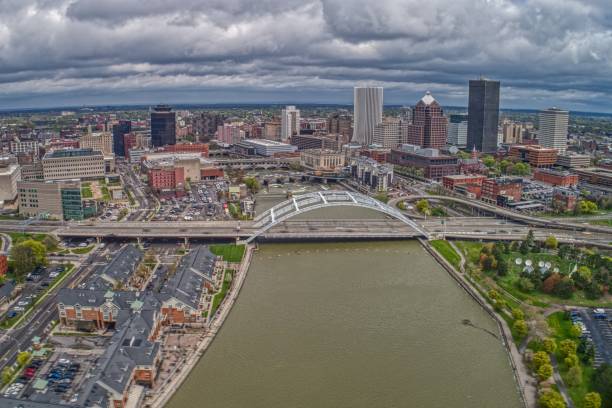
Evaluating the trajectory of Upstate New York cities requires looking past sweeping state narratives. The population puzzle in Rochester involves a delicate push-and-pull between urban contraction and suburban stabilization. While the city proper hovers near 205,000 residents, showing a slight tick down over recent census cycles, the broader Monroe County base stays relatively stable around 750,000. Analysts often debate whether this pattern signals persistent brain drain, a localized boom, or merely steady equilibrium.
Understanding these shifts demands looking closely at local migration patterns, economic drivers, and housing markets. Rather than broad generalizations, concrete neighborhood data and employment figures paint an accurate picture of what's happening on the ground in Western New York.
Deconstructing the Rochester Population Puzzle
The phrase "population puzzle" fits Rochester because standard economic indicators point in conflicting directions. On one hand, the city core has experienced gradual population erosion since its mid-century industrial peak. On the other hand, outer ring suburbs and select urban pockets report renewed vitality, driven by healthcare and higher education expansions.
Migration data from the U.S. Census Bureau indicates that while domestic migration out of Upstate New York historically leaned negative, Rochester retains a strong anchor through institutions like the University of Rochester and Rochester Institute of Technology. These universities act as powerful engines, drawing thousands of young adults to the region every year. The central question isn't just who arrives, but who stays after graduation. To understand the full picture, check out the detailed analysis by The New York Times.
Urban Core Versus Suburban Realities
Looking at Monroe County as a single entity masks the stark contrast between city limits and surrounding towns.
- City of Rochester: Maintains a younger median age and diverse communities, but faces ongoing challenges with poverty rates and older housing stock maintenance.
- Inner Ring Suburbs (Brighton, Irondequoit, Greece): Experience stable family residency, low volatility in home values, and steady school district enrollments.
- Outer Ring Suburbs (Webster, Victor, Penfield): See pockets of low-density residential expansion as families trade urban proximity for larger lots and newer construction.
The Brain Drain Debate: Myth Versus Reality
Brain drain remains a central talking point in regional economic discussions. For decades, the narrative suggested that Rochester educated brilliant minds only to watch them pack up for New York City, Boston, or tech hubs on the West Coast.
Recent labor metrics challenge a purely pessimistic view. While regional job growth figures fluctuate, the presence of advanced manufacturing, optics, photonics, and a massive healthcare sector via UR Medicine creates specialized career tracks that retain engineering and medical graduates locally.
Factors Retaining Talent
- Affordable Cost of Living: Housing remains significantly cheaper than in primary coastal metro areas, allowing young professionals to buy homes earlier.
- Niche Industry Clusters: Precision manufacturing and tech startups provide high-paying alternatives to traditional corporate hubs.
- Quality of Life: Shorter commute times, active arts scenes, and proximity to the Finger Lakes appeal to professionals seeking work-life balance.
Factors Driving Outflow
- Weather and Climate: Winters remain a persistent push factor for residents seeking milder climates.
- State Tax Pressures: New York's overall tax burden prompts some retirees and high earners to relocate southward.
- Upward Mobility Limits: Traditional corporate headquarters have shrunk compared to the era of Kodak, Xerox, and Bausch + Lomb, forcing some ambitious career seekers to look elsewhere for rapid promotion.
Balanced Growth and Economic Restructuring
Rather than an explosive economic boom or a terminal decline, Rochester represents a classic case of post-industrial economic restructuring. The city successfully transitioned from a single-employer manufacturing town into a diversified service, healthcare, and educational center.
This transition creates a slower, more resilient baseline of growth. Property values don't experience the wild spikes seen in Sun Belt boomtowns, which protects long-term residents from sudden displacement, even if it limits rapid speculative real estate development.
Frequently Asked Questions
What is the current population of Rochester, New York?
The city proper maintains a population of approximately 205,000 residents, while the wider Monroe County region accounts for roughly 750,000 people.
Is Rochester NY experiencing a brain drain?
Not entirely. While historical trends saw many young graduates leave for coastal cities, a stabilized local tech and healthcare sector retains a larger share of engineering and medical talent today.
How does Rochester's cost of living compare nationally?
Rochester consistently ranks well below the national average for housing and overall cost of living, making it an attractive destination for remote workers and first-time homebuyers.
What industries drive the local Rochester economy?
Higher education, healthcare systems, optics, photonics, and specialized manufacturing form the primary economic backbone of the region.



