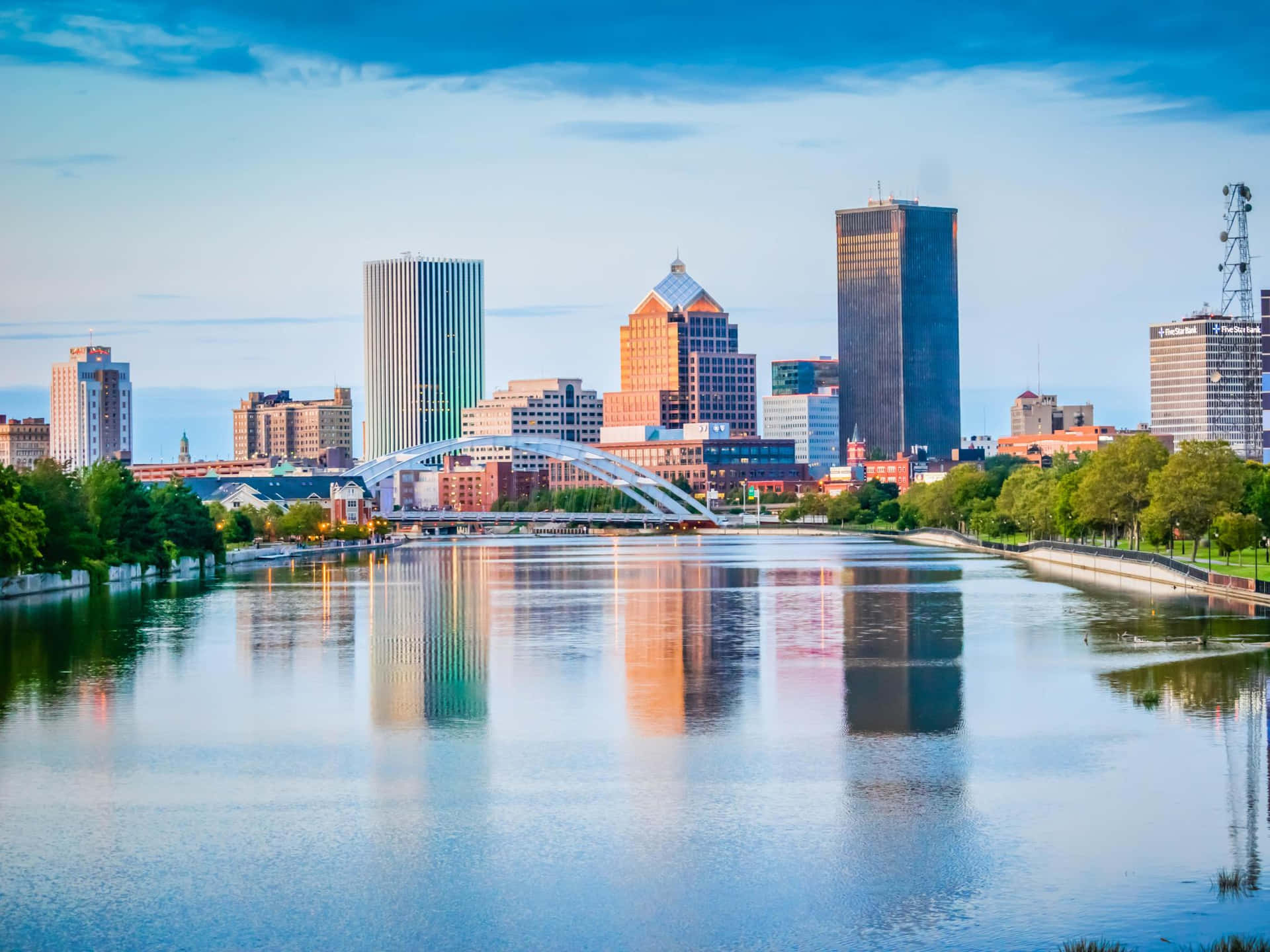
Rochester, New York holds a population of roughly 205,000 to 208,000 residents within city limits, positioning it as one of the most prominent urban centers in Upstate New York. While the wider Monroe County and the multi-county metropolitan statistical area house over a million people, the core city population reflects a dynamic mix of historical industrial heritage, academic migration, and ongoing demographic shifts tracked closely by the U.S. Census Bureau.
Understanding this urban population requires looking past a single headcount. The city's demographic fabric features a younger-than-average median age, a diverse racial and ethnic distribution, and unique household economics that separate the urban core from its surrounding suburban ring.
Historical Growth and Long-Term Population Trajectory
Rochester’s demographic story is tied to its evolution from a 19th-century manufacturing powerhouse—known as the "Flour City" and later the "Flower City"—into a modern hub for optics, imaging, and higher education.
During the mid-20th century, the city peaked in population at over 332,000 residents in the 1950 census. As corporate giants like Eastman Kodak, Xerox, and Bausch & Lomb scaled down their massive local workforces toward the end of the century, Rochester experienced decades of suburban flight and overall population decline.
Recent decadal counts show a stabilization pattern:
- 2010 Census: Recorded approximately 210,600 residents within city boundaries.
- 2020 Census: Registered a minor bump to roughly 210,700 residents, showcasing a brief stabilization period.
- Current Estimates: Recent American Community Survey data places the core city population between 205,000 and 208,000, indicating a mild recent downward adjustment.
Racial and Ethnic Composition
Rochester features a diverse racial and ethnic landscape that sets it apart from many smaller Upstate New York municipalities.
The city's residents break down across several major demographic groups:
- Non-Hispanic White: Represents roughly 36% to 39% of the population.
- Black or African American: Accounts for roughly 35% of residents.
- Hispanic or Latino: Makes up nearly 20% of the city’s population.
- Asian and Other Groups: Combined Asian, multi-racial, and Native populations account for the remaining share, with Asian residents making up approximately 3%.
This multicultural blend influences local neighborhoods, cultural institutions, and community leadership throughout the region.
Age Distribution and Household Dynamics
One of the most striking aspects of Rochester's population is its youth relative to the rest of New York State and the nation.
- Median Age: The median resident is approximately 33.7 years old, which is several years younger than the statewide and national medians. This youthful skew is driven heavily by the presence of major academic institutions like the University of Rochester and Rochester Institute of Technology (RIT), which draw thousands of students every year.
- Household Size: There are over 90,000 households in the city, with an average of roughly 2.1 to 2.2 people per household.
- Family vs. Non-Family: Non-family households—including single professionals and college roommates—make up a slight majority of living arrangements within city limits, contrasting with the heavily family-oriented suburbs surrounding it.
Economic Indicators Tied to Demographics
Population data intersects directly with economic realities in Rochester. The city's median household income hovers around $47,000, which is lower than the figures for Monroe County or the broader state economy.
Additionally, poverty remains a persistent challenge for the urban core, with a poverty rate approaching 28%. This economic divide highlights a structural contrast: while the surrounding suburban towns maintain higher median incomes and lower poverty rates, the city center absorbs a higher concentration of social support needs, lower-cost housing markets, and rental populations. Homeownership within the city sits at roughly 38%, meaning the majority of city residents rent their homes.
Frequently Asked Questions
How does the city population compare to the Rochester metropolitan area?
While the core city houses roughly 205,000 to 208,000 people, the broader Rochester Metropolitan Statistical Area—which includes Monroe, Livingston, Ontario, Orleans, and Wayne counties—contains over one million residents. Most of the metro population lives outside the direct city limits in surrounding suburbs.
Is Rochester's population growing or shrinking?
The population has experienced minor fluctuations. After a slight rebound during the 2020 census, recent annual estimates show a stabilization trend with a slight downward drift of less than one percent per year, mirroring broader rust-belt demographic trends across Upstate New York.
What drives Rochester's young median age?
Higher education plays a primary role. With institutions like the University of Rochester, RIT, and Monroe Community College enrolling tens of thousands of students, a high volume of young adults continuously enters the local demographic pool.
What is the population density of Rochester?
Rochester spans approximately 35.8 square miles. With a population hovering near 208,000, the city has a density of roughly 5,700 to 5,800 people per square mile, making it a densely packed urban environment relative to its surrounding county.



