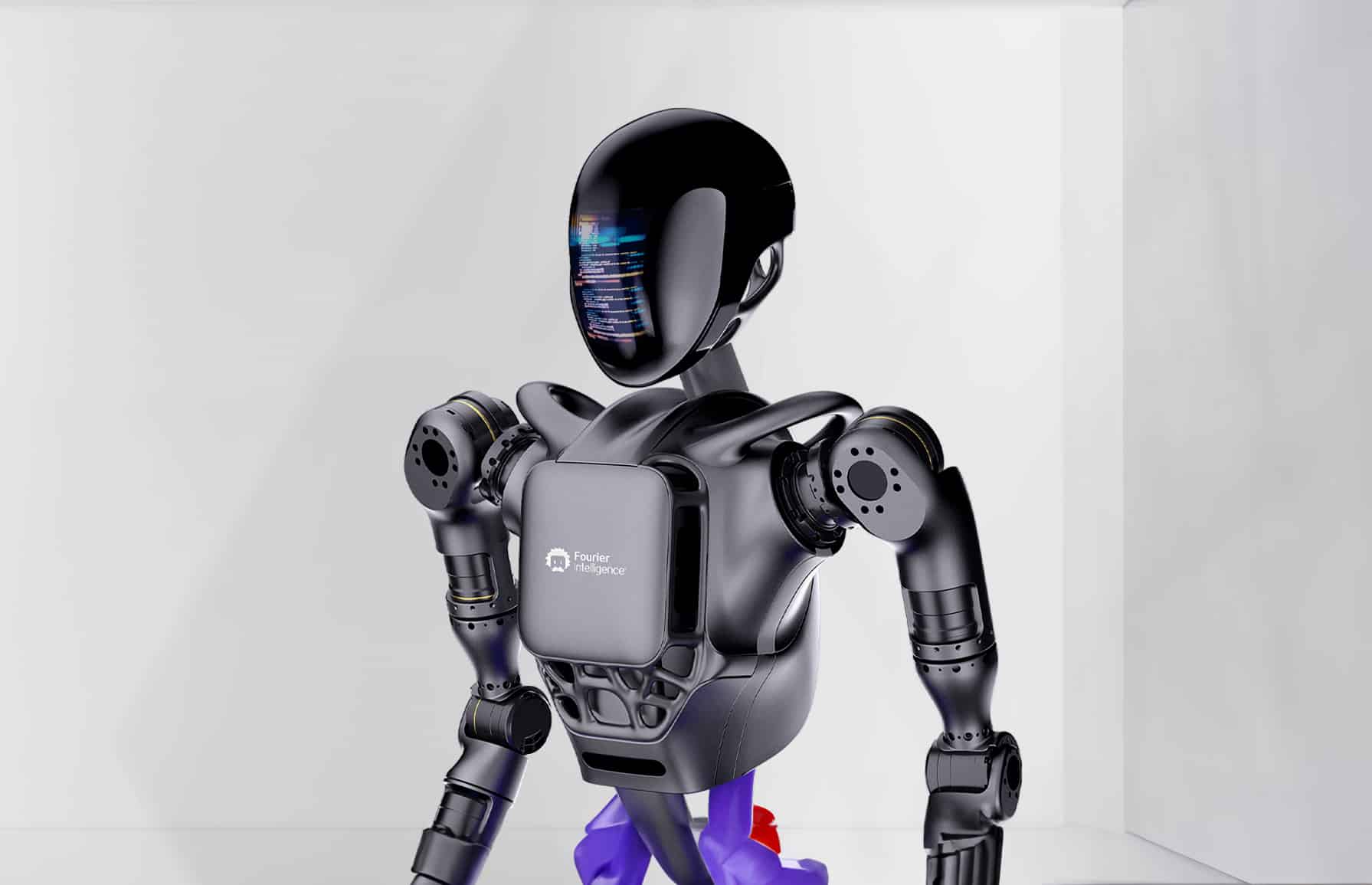
People often use robot and automaton interchangeably, but they represent entirely different eras of engineering and distinct philosophies of movement. An automaton relies on clockwork, gears, and rigid physical scripts to perform precise loops without knowing it exists. A robot evaluates its environment through sensors, processes data, and alters its path based on feedback. Understanding this boundary clarifies how mechanical mimicry evolved into modern autonomy.
Defining the Automaton
An automaton is a self-operating machine driven entirely by mechanical mechanisms like cams, springs, levers, or pinned cylinders. Historical inventors spent centuries perfecting these devices to imitate living creatures. The 18th-century mechanical duck created by Jacques de Vaucanson could digest food and flap its wings using internal weights and pipes.
These machines operate on a fixed loop. Once you wind the spring or start the mechanism, it executes a predetermined choreography. It doesn't notice if an object blocks its path, it doesn't measure temperature, and it can't correct its mistakes. Complexity doesn't equal intelligence here; an automaton can play an entire song on a miniature flute, yet it remains completely blind to its surroundings.
Defining the Robot
A robot is a programmable machine driven by the continuous loop of sensing, thinking, and acting. Unlike its clockwork ancestors, a robot relies on electronic sensors, microprocessors, and actuators to interact dynamically with an unpredictable world.
If a robot encounters an unexpected obstacle, it doesn't blindly push forward until something breaks. Instead, its sensors detect the resistance, and its control system recalculates a new trajectory. Robots trade rigid physical scripts for adaptable code. They respond to external conditions rather than simply repeating an internal cycle.
The Core Technical Divide: Feedback Loops
The fundamental difference between these two technologies comes down to feedback.
- Open-loop execution: Automatons run without feedback. The machine executes instruction step one through step fifty regardless of external chaos. If a gear slips, the rest of the performance falls out of sync permanently.
- Closed-loop adaptation: Robots depend on feedback loops. Optical encoders, infrared sensors, force transducers, and cameras constantly feed real-time data back to the central processor.
According to the National Institute of Standards and Technology (NIST), autonomous systems rely heavily on this closed-loop architecture to maintain operational safety and precision. Without feedback, a machine is merely performing a trick. With feedback, it is making operational decisions.
Historical Evolution: From Cams to Code
The transition from automaton to robot took place over centuries of industrial transformation.
Early mechanical figures laid the groundwork for precision manufacturing. The rotating pinned drums used in 18th-century music boxes directly inspired the punched cards utilized in early IBM computing and automated looms. Inventors realized that instructions could be separated from the physical motor.
When numerical control and computers emerged in the mid-20th century, machines gained the ability to store flexible programs rather than relying solely on physical gears. Yet, early industrial arms were still essentially programmable automatons. They repeated exact coordinates without checking if a workpiece was actually present. Only when developers integrated tactile sensors and computer vision did those factory arms truly become robots.
Common Points of Confusion
People often mix up these terms because motion feels alive to the human brain. When a mechanical doll writes a legible sentence with a quill pen, observers attribute intent to the machine.
Furthermore, modern marketing frequently blurs the lines. Manufacturers label simple automated timers or scripted software scripts as "intelligent robots" to capture consumer attention. True robotics requires perception and adaptability, while automation can often be achieved through dumb scripts or pure hardware linkages.
Frequently Asked Questions
Are all factory machines considered robots?
No. Most traditional factory machines are automated rather than robotic. They execute repetitive mechanical tasks on a fixed schedule without adapting to environmental changes.
Can an automaton have electronic parts?
Yes. An electronic toy that moves forward, hits a wall, and backs up using a simple analog bump switch is closer to an electronic automaton than an intelligent robot because it lacks variable decision-making pathways.
Does a robot require artificial intelligence?
Not necessarily. Simple robots use hard-coded logic trees responding to sensor inputs rather than machine learning models, yet they still qualify as robots because they close the sense-think-act loop.
Where can historical automatons be seen today?
Museums such as the Science Museum in London house incredible collections of historical mechanical automata created centuries before modern electronics.



