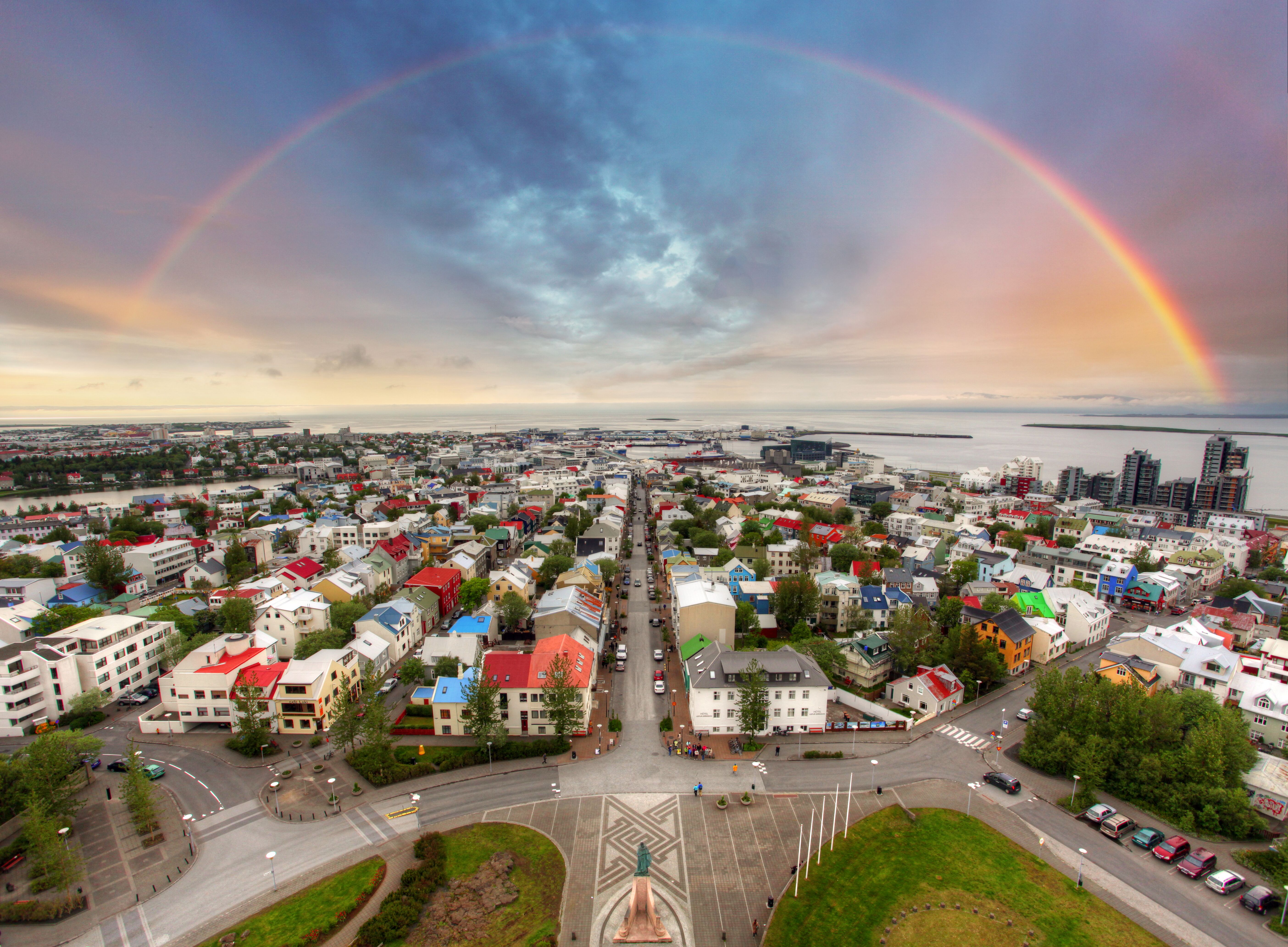
Reykjavik acts as the vibrant cultural anchor and political core of Iceland, blending a compact, highly walkable urban center with immediate access to raw wilderness. Home to roughly 140,000 residents, the world's northernmost capital doesn't feel like a sprawling metropolis. Instead, it operates as a creative hub lined with colorful corrugated iron houses, world-class modern architecture, and a culinary scene driven entirely by fresh local seafood and geothermal agriculture.
Positioned on Faxaflói Bay in southwestern Iceland, the city serves as both an independent destination and the primary staging ground for exploring the country's glaciers, geysers, and black sand beaches. Whether you're planning a quick weekend stay or using the city as a base camp for an Icelandic road trip, understanding how to navigate its urban core and surrounding landscapes makes all the difference.
Urban Landmarks and Creative Culture
You can easily explore Reykjavik's downtown core on foot. Start at the iconic Hallgrímskirkja church, whose striking concrete facade was inspired by the basalt column formations found throughout Iceland's volcanic terrain. Take the elevator to the top of the tower for a sweeping panoramic view of the city's colorful rooftops and the surrounding mountains.
From there, walk down Laugavegur and Skólavörðustígur, the city's main pedestrian-friendly commercial corridors. These streets are packed with independent design boutiques, local wool shops, and striking street art murals. Nearby along the coastline sits the Sun Voyager (Sólfar), a sleek steel sculpture resembling a Viking longship that faces out toward Mount Esja.
A short distance away stands the Harpa Concert Hall and Conference Centre, an architectural masterpiece featuring a honeycomb glass facade that catches the shifting Nordic light. Inside, you'll find regular performances, exhibitions, and public spaces that highlight the nation's thriving arts community. To dive deeper into local heritage, visit the National Museum of Iceland or the open-air exhibits at the Árbær Open Air Museum, which preserve historical turf houses from Iceland's rural past.
Culinary Scene: From Local Traditions to Modern Nordic
Icelandic food culture has evolved far beyond traditional staples into a dynamic culinary movement. While older preservation methods yielded fermented shark (hákarl) and smoked lamb (hangikjöt), contemporary kitchens focus on fresh Arctic char, line-caught cod, free-roaming lamb, and organic produce grown year-round using geothermal greenhouse energy.
For a casual bite, join the legendary queue at Bæjarins Beztu Pylsur, a downtown hot dog stand operating since 1937 that serves lamb-based hot dogs with all the traditional toppings. If you want variety, check out modern food halls like Grandi Mathöll or Hlemmur Mathöll, where multiple vendors offer everything from gourmet tacos to local craft beer.
Natural Wonders Right Outside the City
One of Reykjavik's greatest strengths is how quickly you can leave the urban environment behind and enter pristine wilderness.
- The Golden Circle: This classic 190-mile loop starts just a short drive east of the city. It covers Þingvellir National Park (where the North American and Eurasian tectonic plates are visibly pulling apart and Iceland's historic parliament was founded in 930 AD), the roaring Gullfoss waterfall, and the active geothermal valley of Haukadalur with its spouting geysers.
- Geothermal Pools and Spas: Swimming is a fundamental part of daily social life in Iceland. Within the city, public pools like Laugardalslaug feature geothermally heated water, steam rooms, and outdoor hot tubs. Just outside the city limits, world-famous destinations like the Blue Lagoon and the newer Sky Lagoon offer mineral-rich soaking experiences embedded directly into lava rock landscapes.
- Wildlife and Seasonal Skies: The Old Harbour serves as the departure point for whale-watching excursions where minke whales, humpbacks, and white-beaked dolphins are regularly spotted. In winter, the city's dark, crisp nights provide a viewing window for the Northern Lights (Aurora Borealis), though heading slightly outside city limits minimizes light pollution for optimal viewing. During summer, the Midnight Sun grants nearly 24 hours of daylight, letting you sightsee long past midnight.
Practical Travel Tips for Reykjavik
Navigating Iceland safely and efficiently requires understanding a few local logistics:
- Getting There and Around: Most international flights land at Keflavík International Airport (KEF), located about 30 miles (50 kilometers) southwest of the capital. Airport transfer buses, private shuttles, or rental cars handle the 45-minute drive into town. Once you're in Reykjavik, you won't need a car to explore the center; walking is faster and easier.
- Weather Realities: The local adage states that if you don't like the weather, wait five minutes. Conditions change rapidly. Pack layers, including a reliable windproof and waterproof outer shell, sturdy walking shoes, and a swimsuit.
- Managing Costs: Iceland is notoriously expensive for dining out and lodging. To keep costs manageable, pick up groceries at discount supermarkets like Bónus or Krónan, take advantage of bakery lunches, and enjoy free public attractions like the city's outdoor sculptures and coastal walking paths.
- Cultural Etiquette: Tipping is not customary or expected in Iceland, as service fees are baked into menu prices. Always shower thoroughly without your swimsuit before entering public geothermal pools, as strict hygiene rules keep the water clean without heavy chemical treatments.
Official tourism updates and travel advisories are available directly through Visit Iceland.
Frequently Asked Questions
Do I need to rent a car during my stay in Reykjavik?
No. If you're spending your entire time within the city limits, you can easily walk or use local public transit. However, if you plan to explore the Golden Circle, the South Coast, or the Reykjanes Peninsula independently, renting a car or booking organized day tours from downtown is necessary.
When is the best time of year to visit?
It depends entirely on your goals. Visit between June and August for the Midnight Sun, mild weather, and accessible interior highland roads. Visit between September and March if your primary objective is hunting for the Northern Lights and experiencing snowy winter landscapes.
Can I drink the tap water in Reykjavik?
Yes. Tap water across Iceland is exceptionally clean, pure, and safe to drink straight from the tap. You don't need to buy bottled water; bring a reusable bottle and fill it up anywhere.
Is English widely spoken in Reykjavik?
Nearly everyone in Iceland speaks fluent English, especially in the capital region. Street signs, menus, and public information are routinely provided in both Icelandic and English, making navigation seamless for international travelers.



